
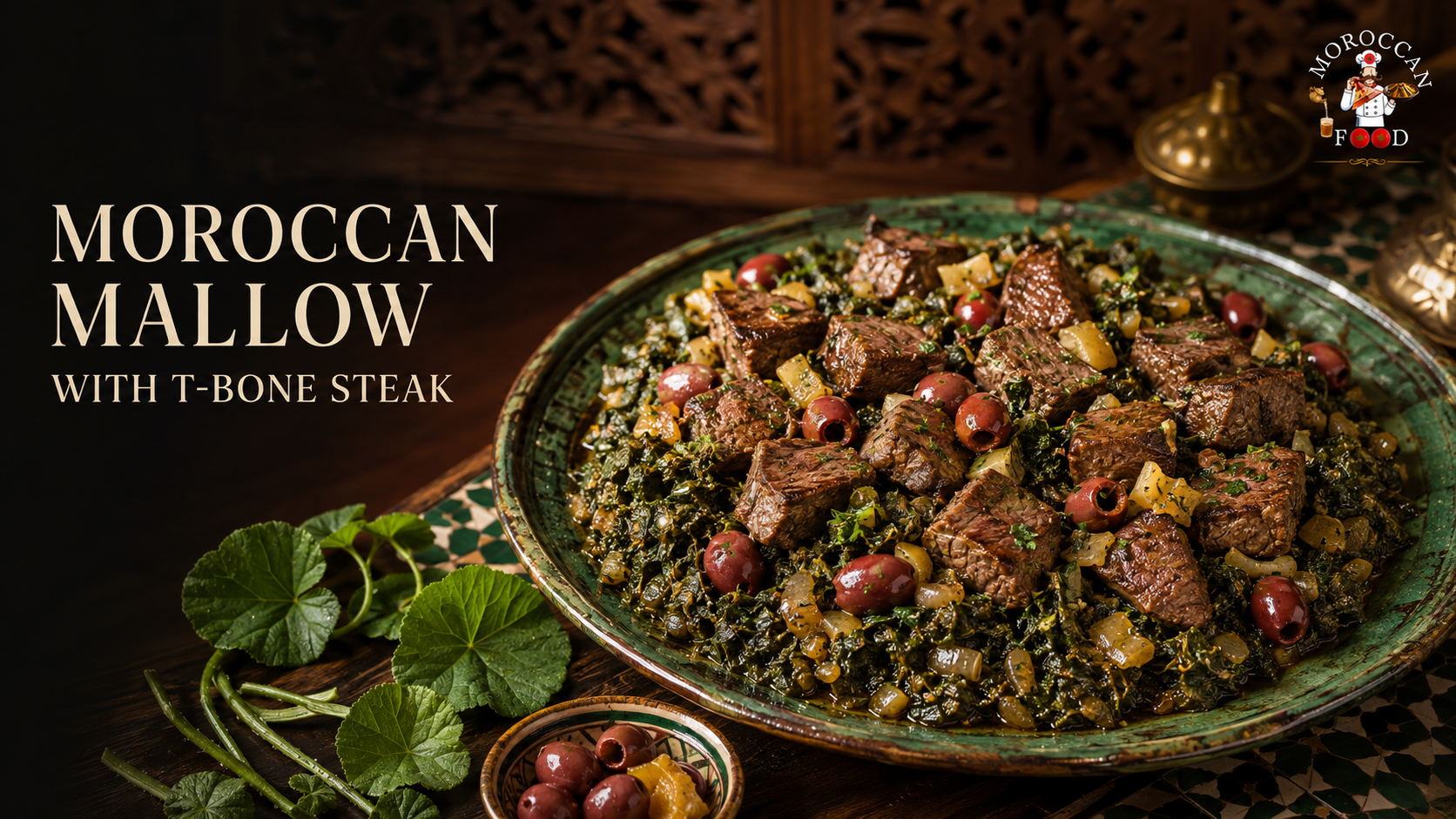
This Moroccan mallow recipe combines tender cubes of T-bone steak with khobiza—also known as mallow or bakoula—slowly sautéed with onion, garlic, fresh herbs and aromatic Moroccan spices. Preserved lemon adds a pleasantly tangy note, while pitted red olives complete the dish with an authentic Moroccan flavour. Serve it warm with Moroccan bread for a hearty lunch or dinner.
Servings: 4
Preparation time: 25 minutes
Cooking time: 35 minutes
Total time: 1 hour
Ingredients
For the T-Bone Steak
- 600 g boneless T-bone steak meat, cut into 2–2.5 cm cubes
- ½ medium onion, finely chopped
- 2 tablespoons olive oil
- 1 teaspoon sweet paprika
- ½ teaspoon ground cumin
- ½ teaspoon ground ginger
- ½ teaspoon turmeric
- ½ teaspoon freshly ground black pepper
- ½ teaspoon salt, or to taste
For the Mallow
- 400 g fresh edible mallow leaves and tender stems
- ½ medium onion, finely chopped
- 3 tablespoons olive oil
- 3 garlic cloves, crushed
- 2 tablespoons finely chopped fresh coriander
- 2 tablespoons finely chopped fresh parsley
- 1 teaspoon ground cumin
- 1 teaspoon sweet paprika
- ½ teaspoon ground ginger
- ¼ teaspoon turmeric
- ¼ teaspoon black pepper
- ¼ teaspoon cayenne pepper, optional
- ½ small preserved lemon, about 30 g
- 80 g pitted Moroccan red olives
- Salt, only if needed
- 2–4 tablespoons water, if needed during cooking

Preparation
1. Clean and Steam the Mallow
Sort the mallow carefully, keeping only the healthy leaves and tender stems. Discard any tough stalks, damaged leaves or unidentified plants.
Wash the mallow several times in plenty of cold water until the water runs completely clear. Drain well, then chop the leaves and tender stems into small pieces.
Place the chopped mallow in a steamer over simmering water. Cover and steam for 15–20 minutes, or until fully wilted and tender. Press it gently inside the steamer to remove excess liquid, then set aside.
2. Season the Steak
Pat the steak cubes dry with paper towels. Season them with paprika, cumin, ginger, turmeric, black pepper and salt. Mix well and leave to absorb the seasoning for 10 minutes.
3. Cook the T-Bone Steak Cubes
Heat 2 tablespoons of olive oil in a large frying pan over medium-high heat. Add half of the finely chopped onion and sauté for 2–3 minutes.
Add the seasoned steak cubes in a single layer. Cook for 6–8 minutes, turning occasionally, until evenly browned and cooked to your preferred doneness. Work in two batches if necessary to avoid overcrowding the pan.
Transfer the cooked steak to a plate and cover loosely to keep it warm.
4. Prepare the Preserved Lemon and Olives
Remove the seeds from the preserved lemon. Rinse it briefly if it is very salty, then finely chop the peel and pulp. Drain and rinse the pitted red olives if necessary.
5. Cook the Mallow
In the same pan, add the remaining 3 tablespoons of olive oil and the second half of the chopped onion. Cook over medium heat for 4–5 minutes until soft.
Add the garlic, coriander, parsley, cumin, paprika, ginger, turmeric, black pepper and optional cayenne. Stir for approximately 30 seconds until fragrant.
Add the steamed mallow and mix thoroughly with the seasoned onion. Cook for 8–10 minutes, stirring and lightly pressing the mallow, until the flavours are well combined and any remaining moisture has evaporated. Add a small amount of water only if the mixture begins to stick.
Stir in the chopped preserved lemon and pitted red olives during the final 4–5 minutes. Taste before adding salt, as both ingredients may already be salty.
6. Serve
Spread the cooked Moroccan mallow on a warm serving plate. Arrange the T-bone steak cubes attractively over the top and spoon over any resting juices from the meat.
Serve warm with Moroccan bread, extra red olives and thin strips of preserved lemon.

Chef’s Tips
- Use only properly identified edible mallow obtained from a clean, trusted source.
- Thorough washing is essential because soil can cling to the leaves and stems.
- Steam the mallow before sautéing it to obtain a tender texture without making the final dish watery.
- Cut the steak into equal-sized cubes so that they cook evenly.
- Avoid overcooking the steak; warm it briefly before serving if it has cooled.
- Add salt only after tasting the finished mallow because preserved lemon and cured olives contain significant salt.
- add cumin and olive oil
Servings Mallow with T-Bone Steak, Preserved Lemon and Red Olives:
If you exercise, you can eat this meal after your training session with traditional Moroccan salads as a nutritious and protein-rich meal.

You can serve this recipe in the Moroccan style as a light and quick lunch or dinner.

Here are some of the most popular traditional Moroccan salads that are served with a main course.
Moroccan Roasted Tomato, Onion & Pepper Salad Recipe
Traditional Moroccan Tomato Cucumber and Onion Salad Recipe
Moroccan salad with tomatoes, onions, and roasted green peppers
Moroccan salad with onions, tomatoes, and roasted red and yellow peppers
Moroccan Lettuce, Tomato, Onion & Cucumber Salad
In Morocco, fruits, some types of melon, and some drinks from the juice menu in Moroccan cuisine are served as dessert after the meal.In Morocco, fruits, some types of melon, and some drinks from the juice menu in Moroccan cuisine are served as dessert after the meal.
Show Health Benefits and Nutritional Value
Health Benefits and Nutritional Value of Moroccan Mallow with T-Bone Steak
Moroccan Mallow with T-Bone Steak is a satisfying, protein-rich dish that combines tender beef cubes with cooked khobiza, olive oil, aromatic herbs, Moroccan spices, preserved lemon and pitted red olives. It provides protein, fiber, iron, vitamin B12 and several plant-derived nutrients, making it suitable as a substantial lunch, dinner or post-workout meal when enjoyed in an appropriate portion.
Estimated Nutritional Value per Serving
The following values are calculated for one serving out of four and do not include Moroccan bread, salads or beverages.
| Nutrient | Approximate amount |
|---|---|
| Calories | 570 kcal |
| Protein | 34 g |
| Total carbohydrates | 16 g |
| Dietary fiber | 5 g |
| Total sugars | 3 g |
| Total fat | 42 g |
| Saturated fat | 11 g |
| Cholesterol | 95 mg |
| Sodium | 900 mg |
| Iron | 4 mg |
| Vitamin B12 | 3 mcg |
These values are estimates based on the listed ingredients and standard food-composition data from USDA FoodData Central. Actual values will vary according to the steak’s fat content, the amount of oil retained during cooking and the salt concentration of the olives and preserved lemon.
Health Benefits
1. Provides High-Quality Protein
T-bone steak supplies complete protein containing all nine essential amino acids. With approximately 34 grams of protein per serving, this Moroccan mallow and steak recipe can contribute to muscle maintenance, tissue repair and recovery after physical activity.
2. Supplies Iron for Oxygen Transport
Beef contains heme iron, a form that is generally absorbed more efficiently than plant-based nonheme iron. Iron is required for hemoglobin production, oxygen transport and normal muscle metabolism. Mallow also contributes some plant-derived iron and other minerals. NIH iron guidance
3. Rich in Vitamin B12
T-bone steak is a valuable source of vitamin B12. This vitamin is required for healthy red blood cell formation, normal nervous-system function and DNA synthesis. NIH vitamin B12 guidance
4. Adds Fiber and Plant Nutrients
Mallow leaves and tender stems add dietary fiber, minerals and naturally occurring plant compounds to the dish. Fiber supports normal digestive function and can improve the meal’s fullness and satisfaction.
Studies indicate that the nutritional composition of mallow varies according to its species, soil and growing conditions, although edible mallow leaves can contain vitamin C, minerals and phenolic compounds. Cooking may reduce some heat-sensitive vitamin C. Research on edible mallow composition
5. Provides Vitamin K from Leafy Greens
Green leafy vegetables are an important dietary source of vitamin K. This vitamin is involved in the production of proteins required for normal blood clotting and bone metabolism. NIH vitamin K guidance
6. Contains Predominantly Unsaturated Fat from Olive Oil
Olive oil contributes mainly monounsaturated fat and helps the body absorb fat-soluble nutrients from the leafy greens. However, it is calorie-dense, so keeping the recipe to the stated quantity helps control the total energy content.
7. Naturally Low in Sugar
The recipe contains no added sugar and only a small amount of naturally occurring carbohydrate from the mallow, onion, garlic and preserved lemon. It can be served as a protein-focused meal without relying on refined carbohydrates.
8. Suitable as a Post-Workout Meal
The combination of protein from the steak and micronutrients from the mallow makes this dish suitable after strength training. Athletes who also need additional carbohydrates for glycogen recovery can serve it with a moderate portion of whole-grain Moroccan bread, potatoes or another carbohydrate source.
Important Nutritional Considerations
- Sodium: Preserved lemon, cured red olives and added salt can make the dish relatively high in sodium. Rinse the lemon and olives, taste before salting and reduce the added salt when necessary.
- Calories and fat: T-bone steak and olive oil make the recipe energy-dense. Use well-trimmed steak and measure the oil carefully if preparing a lighter version.
- Vitamin K: People taking warfarin or similar vitamin K–antagonist medication should maintain a consistent intake of leafy greens and follow their healthcare professional’s advice.
- Wild mallow: Use only correctly identified edible mallow collected from a clean, trusted source, and wash it thoroughly before cooking.
Nutrition information is provided for general guidance and is not a substitute for individualized medical or dietary advice.

Frequently Asked Questions
1. What is Moroccan Mallow with T-Bone Steak?
Moroccan Mallow with T-Bone Steak is a savoury dish made with steamed and sautéed mallow, also known as khobiza or bakoula, topped with seasoned T-bone steak cubes. Preserved lemon, pitted red olives, garlic, herbs and Moroccan spices give it its distinctive flavour.
2. What is mallow or khobiza?
Mallow is an edible leafy plant from the Malva family. In Morocco, it is commonly called khobiza or bakoula and is traditionally steamed before being sautéed with olive oil, garlic, herbs and spices.
3. Is mallow the same as spinach or Swiss chard?
No. Mallow, spinach and Swiss chard are different plants. Although they can be cooked in similar ways, mallow develops a softer and slightly mucilaginous texture. Use properly identified edible mallow rather than substituting an unidentified wild plant.
4. Which parts of the mallow plant can be used?
Use the fresh leaves and thin, tender stems. Remove tough, fibrous stalks, yellow leaves and damaged sections before washing and chopping the plant.
5. How should fresh mallow be cleaned?
Sort the mallow carefully and wash it several times in a large bowl of cold water. Change the water after every rinse until it remains completely clear and free from soil. Drain well before chopping.
6. Why should mallow be steamed before sautéing?
Steaming softens the leaves and tender stems, reduces their volume and allows excess moisture to be removed before seasoning. This produces a tender, concentrated texture instead of a watery finished dish.
7. How long should mallow be steamed?
Steam the chopped mallow for approximately 15–20 minutes, or until it is fully wilted, darker in colour and tender. Press it gently inside the steamer to remove excess water before transferring it to the frying pan.
8. Can I boil the mallow instead of steaming it?
Yes, but steaming is preferable because it prevents the mallow from absorbing too much water. If boiling it, use only enough water to cook the leaves and drain and press them thoroughly afterward.
9. How large should the T-bone steak cubes be?
Cut the boneless steak meat into uniform cubes measuring approximately 2–2.5 cm. Equal-sized pieces brown more evenly and are less likely to become dry.
10. Which spices work best with T-bone steak?
A balanced Moroccan seasoning can include sweet paprika, ground cumin, ginger, turmeric, black pepper and salt. Season the cubes approximately 10 minutes before cooking so the flavours coat the meat evenly.
11. How do I keep the steak cubes tender?
Pat the meat dry, use a properly heated pan and arrange the cubes in a single layer. Avoid overcrowding the pan, cook only until browned and remove the meat before preparing the mallow. Return it only briefly at the end if reheating is necessary.
12. Why is the steak cooked separately from the mallow?
Cooking the steak first allows it to brown properly. Removing it before cooking the mallow prevents the meat from simmering in the liquid released by the greens and becoming tough or overcooked.
13. What internal temperature should the steak reach?
Whole-cut beef should reach a minimum internal temperature of 145°F or 63°C, followed by a three-minute rest. Check the thickest cube with a food thermometer and cook it longer if you prefer well-done meat. FoodSafety.gov temperature guidance
14. Can I replace T-bone steak with another beef cut?
Yes. Boneless strip steak, sirloin, ribeye or tenderloin can be cut into cubes and prepared using the same method. Cooking time may vary according to the cut, fat content and cube size.
15. How much preserved lemon should I add?
For four servings, use approximately half of a small preserved lemon, or about 30 grams. Remove the seeds, rinse it briefly if it is very salty and finely chop the peel and pulp.
16. Can I make the recipe without preserved lemon?
Yes. Replace it with one tablespoon of fresh lemon juice and a small amount of finely grated lemon zest. The flavour will be fresher and less salty but will not be identical to Moroccan preserved lemon.
17. Which olives are best for this recipe?
Pitted Moroccan red olives are the preferred choice. They provide a traditional colour and savoury flavour. Kalamata olives can be used when Moroccan red olives are unavailable, although their taste is slightly different.
18. How can I reduce the sodium in this dish?
Rinse the preserved lemon and olives, reduce or omit additional salt and taste the mallow only after all the salty ingredients have been added. The sodium level varies considerably between different cured olives and preserved lemons.
19. Is Moroccan Mallow with T-Bone Steak suitable after exercise?
Yes. One serving provides an estimated 34 grams of protein, which can contribute to muscle maintenance and post-exercise recovery. For additional carbohydrates after a demanding workout, serve it with a moderate portion of Moroccan whole-grain bread or potatoes.
20. Is this recipe gluten-free?
The main recipe is naturally gluten-free when all spices, preserved lemon and olives are certified free from gluten contamination. Serve it without bread or choose certified gluten-free bread if required.
21. What can I serve with Moroccan mallow and steak?
Serve it warm with Moroccan bread and small dishes of traditional salads such as zaalouk, taktouka, tomato-and-onion salad or Moroccan carrot salad. It can also be presented as a shared main dish on a decorative Moroccan platter.
22. Can the recipe be prepared in advance?
Yes. The mallow can be washed, chopped, steamed and refrigerated one day in advance. For the best texture, cook the steak shortly before serving and finish the seasoned mallow in the pan while the meat rests.
23. How should leftovers be stored?
Allow leftovers to cool promptly, transfer them to a clean airtight container and refrigerate at 40°F or 4°C or below. Cooked meat leftovers should be consumed within three to four days. FoodSafety.gov cold-storage guidance
24. How should the dish be reheated?
Reheat the mallow gently in a covered frying pan with one or two tablespoons of water. Add the steak near the end to prevent it from drying out. Leftovers should reach 165°F or 74°C before serving.
25. Can Moroccan Mallow with T-Bone Steak be frozen?
Yes, although the steak may become slightly less tender after thawing. For better quality, freeze the cooked mallow and steak in separate airtight containers and use them within approximately two months. Thaw safely in the refrigerator before reheating.


Leave a Reply