
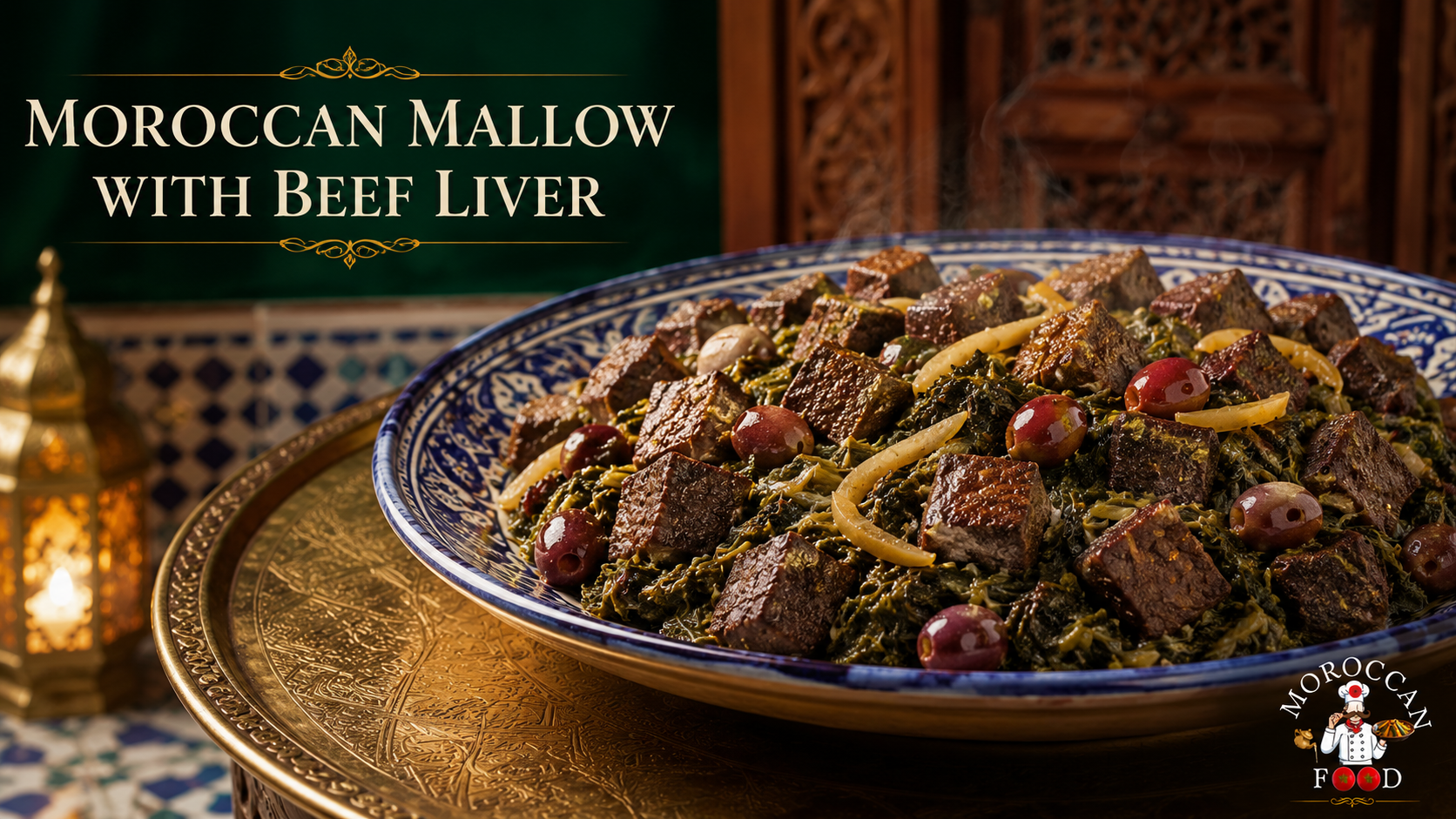
Moroccan Mallow with Beef Liver Cubes is a flavorful and satisfying skillet recipe combining tender khobiza, well-seasoned beef liver, caramelized onion, garlic, Moroccan spices, preserved lemon, and pitted red olives.
The beef liver is cooked separately before being placed over the seasoned mallow. This method allows the liver cubes to brown properly while preventing them from becoming dry or breaking apart during the longer cooking time required for the greens.
- Preparation time: 25 minutes
- Cooking time: 35–40 minutes
- Total time: About 1 hour
- Servings: 4
- Difficulty: Easy to moderate
Ingredients
For the Beef Liver Cubes
- 600 g (1 lb 5 oz) fresh beef liver
- ½ medium onion, finely chopped
- 2 tablespoons olive oil
- 1 teaspoon paprika
- 1 teaspoon ground cumin
- ½ teaspoon ground ginger
- ¼ teaspoon turmeric
- ½ teaspoon ground black pepper
- ¼ teaspoon salt, or according to taste
- 1 tablespoon finely chopped fresh coriander
- 1 tablespoon finely chopped fresh parsley
For the Moroccan Mallow
- 500 g (1 lb 9 oz) fresh mallow leaves and tender stems
- ½ medium onion, finely chopped
- 3 tablespoons olive oil
- 3 garlic cloves, finely minced
- 1 teaspoon ground cumin
- 1 teaspoon paprika
- ½ teaspoon ground ginger
- ¼ teaspoon turmeric
- ¼ teaspoon ground black pepper
- A pinch of cayenne pepper, optional
- 1 tablespoon finely chopped fresh coriander
- 1 tablespoon finely chopped fresh parsley
- Up to ¼ cup (60 ml) water, only if needed
- Salt to taste
For Finishing
- ½ small preserved lemon, approximately 30 g
- 80 g pitted Moroccan red olives

Preparation
1. Prepare the Mallow
Sort the mallow carefully and remove damaged leaves and thick, fibrous stems. Keep the fresh leaves and only the young, tender stems.
Wash the mallow several times in plenty of clean water until all soil and grit have been removed. Drain it thoroughly and chop it finely.
For mature or slightly firm mallow, steam the chopped greens for approximately 10–15 minutes. Tender young mallow can be cooked directly in the skillet.
2. Prepare the Beef Liver
Remove the thin outer membrane, visible veins, and tough connective tissue from the beef liver using a sharp knife.
Cut the liver into evenly sized cubes measuring approximately 2.5–3 cm. Pat the pieces thoroughly dry with paper towels so they brown properly in the skillet.
3. Season the Liver Cubes
Place the liver cubes in a bowl and add paprika, cumin, ginger, turmeric, black pepper, salt, coriander, and parsley.
Mix gently until every piece is evenly coated with the seasoning. Allow the liver to rest for approximately 10 minutes.
Avoid leaving it in the seasoning for too long because salt can draw moisture from the liver.
4. Cook the Onion
Heat two tablespoons of olive oil in a large skillet over medium heat.
Add the first half of the finely chopped onion and cook for approximately 3–4 minutes, stirring occasionally, until softened and lightly golden.
5. Cook the Beef Liver Cubes
Increase the heat to medium-high and arrange the seasoned liver cubes in a single layer. Avoid overcrowding the skillet; cook the liver in two batches if necessary.
Cook without stirring for approximately 2 minutes to develop a browned surface. Turn the cubes and continue cooking for approximately 4–6 minutes, turning occasionally so that all sides brown evenly.
For this fully cooked version, the liver cubes should be browned outside and cooked through, without a raw or bloody center. Avoid cooking them longer than necessary because liver can become dry and firm.
Transfer the cooked liver to a clean plate and cover it loosely to keep it warm.
6. Cook the Remaining Onion and Garlic
Reduce the heat to medium-low and add the remaining three tablespoons of olive oil to the same skillet.
Add the other half of the chopped onion and cook for 4–5 minutes, until soft and lightly caramelized.
Add the minced garlic and stir for approximately 30 seconds, taking care not to burn it.
7. Add the Mallow and Spices
Add the finely chopped mallow gradually, stirring as it softens and reduces in volume.
Season with cumin, paprika, ginger, turmeric, black pepper, and optional cayenne. Add the chopped coriander and parsley.
Cover and cook over medium-low heat for approximately 12–15 minutes. Add water one tablespoon at a time only if the mixture becomes too dry before the mallow is tender.
8. Caramelize the Mallow
Remove the lid and continue cooking for another 8–10 minutes, stirring occasionally.
The mallow should become very tender, dark green, concentrated, and lightly caramelized, with no excess liquid remaining in the skillet.
9. Add the Preserved Lemon and Olives
Remove the seeds and excess pulp from the preserved lemon if desired, then finely chop the softened rind.
Add the preserved lemon and pitted red olives to the mallow. Stir gently and cook for approximately 3–4 minutes.
Taste the mixture before adding more salt because both the preserved lemon and olives may already be salty.
10. Return the Liver to the Skillet
Arrange the cooked beef liver cubes over the mallow.
Cover the skillet and warm everything together over low heat for approximately 2 minutes. Avoid prolonged reheating, which can make the liver dry.
11. Serve
Spread the cooked and lightly caramelized mallow over a Moroccan serving platter. Arrange the beef liver cubes attractively on top and distribute the red olives and preserved lemon around the dish.
Serve warm with fresh Moroccan bread and traditional salads such as taktouka, zaalouk, seasoned carrot salad, or fresh tomato and onion salad.

Cooking Tips
- Choose fresh beef liver with a smooth surface and an even deep-red color.
- Remove the membrane, veins, and tough connective tissue before cutting.
- Dry the liver cubes carefully to encourage proper browning.
- Use a large skillet and avoid overcrowding it.
- Cook the liver separately from the mallow.
- Return the cooked liver only during the final two minutes.
- Rinse very salty preserved lemon and olives before using them.
- Cook the mallow uncovered at the end until its moisture evaporates and it becomes lightly caramelized.
- You can add a little cumin and olive oil when serving.
Servings :
If you exercise, you can eat this meal after your training session with traditional Moroccan salads as a nutritious and protein-rich meal.

You can serve this recipe in the Moroccan style as a light and quick lunch or dinner.

Here are some of the most popular traditional Moroccan salads that are served with a main course.
Moroccan Roasted Tomato, Onion & Pepper Salad Recipe
Traditional Moroccan Tomato Cucumber and Onion Salad Recipe
Moroccan salad with tomatoes, onions, and roasted green peppers
Moroccan salad with onions, tomatoes, and roasted red and yellow peppers
Moroccan Lettuce, Tomato, Onion & Cucumber Salad
In Morocco, fruits, some types of melon, and some drinks from the juice menu in Moroccan cuisine are served as dessert after the meal.In Morocco, fruits, some types of melon, and some drinks from the juice menu in Moroccan cuisine are served as dessert after the meal.
Show Health Benefits and Nutritional Value
Health Benefits and Nutritional Value
Moroccan Mallow with Beef Liver Cubes is a protein-rich and nutrient-dense meal combining tender beef liver, thoroughly cooked mallow, onions, olive oil, preserved lemon, and Moroccan red olives. It provides high-quality protein, iron, vitamin B12, vitamin A, fiber, and beneficial unsaturated fats.
Health Benefits
- Rich in high-quality protein: Beef liver provides complete protein that contributes to muscle maintenance, tissue repair, and post-exercise recovery.
- Excellent source of iron: Liver contains highly absorbable heme iron, which contributes to normal hemoglobin production and oxygen transport throughout the body. NIH iron information
- Exceptionally high in vitamin B12: Vitamin B12 supports healthy blood and nerve cells and is required for DNA production. Beef liver is one of its richest natural food sources. NIH vitamin B12 information
- Supports normal vision and immune function: Beef liver is extremely rich in preformed vitamin A, a nutrient involved in vision, immunity, growth, and normal organ function. NIH vitamin A information
- Provides fiber and plant nutrients: Mallow and onion contribute dietary fiber and naturally occurring plant compounds that complement the nutrient-rich liver.
- Contains heart-friendly fats: Olive oil supplies mostly unsaturated fat and helps carry the flavors of the herbs, spices, olives, and preserved lemon.
- Satisfying and filling: The combination of protein, vegetables, fiber, and fat may promote fullness, making this dish suitable as a substantial lunch or dinner.
Estimated Nutritional Value per Serving
Based on four servings and includes the main dish only. Actual values vary according to the liver, oil, olives, preserved lemon, salt, and serving size used.
| Nutrient | Estimated amount |
|---|---|
| Calories | 480–520 kcal |
| Protein | 44–48 g |
| Total Fat | 24–28 g |
| Saturated Fat | 5–7 g |
| Carbohydrates | 20–27 g |
| Dietary Fiber | 6–8 g |
| Iron | 9–12 mg |
| Vitamin B12 | More than 50 mcg |
| Vitamin A | More than 10,000 mcg RAE |
| Cholesterol | 550–650 mg |
| Sodium | 800–1,100 mg |
Important Nutrition Note
Beef liver is exceptionally rich in preformed vitamin A and cholesterol. This recipe is best enjoyed occasionally and in a moderate portion rather than as an everyday meal. Pregnant people, anyone trying to become pregnant, and people following medically prescribed vitamin A, cholesterol, iron, or sodium restrictions should consult a qualified healthcare professional. Rinsing the olives and preserved lemon and limiting added salt can help reduce the sodium content.
Nutrition estimates are calculated from standard ingredient values available through USDA FoodData Central and are provided for general informational purposes.

Frequently Asked Questions
1. What is Moroccan Mallow with Beef Liver?
Moroccan Mallow with Beef Liver is a savory dish made with finely chopped mallow leaves and tender stems, beef liver cubes, onion, olive oil, Moroccan spices, preserved lemon, and pitted red olives. The liver and mallow are cooked separately before being combined for serving.
2. Is mallow the same as marshmallow?
No. Mallow, also known as Malva or Moroccan khoubiza, is an edible leafy green. It is unrelated to the sweet marshmallow confection.
3. Which parts of the mallow plant can be used?
Use fresh leaves and young, tender stems. Remove thick, woody, damaged, or discolored stems before washing and chopping the plant.
4. How should fresh mallow be cleaned?
Sort the leaves carefully, rinse them several times under cold running water, and drain thoroughly. Mallow can hold soil between its leaves, so repeat the washing process until the water remains clean.
5. Should mallow be chopped before cooking?
Yes. Drain the cleaned mallow well and chop its leaves and tender stems finely. This helps it cook evenly and creates the soft, cohesive texture associated with Moroccan khoubiza dishes.
6. How do I make the mallow well-cooked and lightly caramelized?
Cook the chopped mallow with onion, garlic, olive oil, and spices until completely tender. Continue cooking it uncovered over medium-low heat, stirring regularly, until excess moisture evaporates and the mixture becomes dark green, concentrated, and lightly caramelized.
7. Why are the liver and mallow cooked separately?
Cooking them separately gives better control over their textures. It allows the mallow to become thoroughly cooked and caramelized without making the liver dry or tough.
8. How large should the beef liver cubes be?
Cut the liver into evenly sized cubes measuring approximately 2.5–3 cm. Similar-sized pieces cook more consistently and create a more attractive presentation.
9. How do I know when the beef liver is fully cooked?
The liver should be deeply browned outside and completely cooked inside, without raw or bloody areas. For food safety, organ meat should reach an internal temperature of 160°F (71°C) when measured at the center with a food thermometer.
10. How can I prevent beef liver from becoming tough?
Cook the liver over medium-high heat in a single layer and avoid overcrowding the pan. Remove it as soon as it is safely cooked through, then place it over the prepared mallow shortly before serving.
11. Can I use chicken or lamb liver instead?
Yes. Chicken or lamb liver can replace beef liver, but the flavor, texture, cooking time, and nutritional value will differ. Always cook the chosen liver to a safe internal temperature.
12. How should preserved lemon be prepared?
Remove the seeds and excess pulp, then rinse the preserved lemon if it is particularly salty. Finely slice or chop the rind and use a moderate quantity so its flavor does not overpower the mallow and liver.
13. Which olives are best for this recipe?
Pitted Moroccan red olives complement the spices and preserved lemon particularly well. Green or purple olives may also be used according to availability and personal preference.
14. How can I reduce the sodium content?
Rinse the olives and preserved lemon, use less added salt, and taste the mallow before seasoning further. Both preserved lemon and cured olives can already contain considerable sodium.
15. Is Moroccan Mallow with Beef Liver nutritious?
Yes. It is rich in high-quality protein, iron, vitamin B12, and vitamin A. Mallow and onion also contribute fiber and plant nutrients, while olive oil supplies primarily unsaturated fat.
16. Is this recipe suitable after exercise?
It can be served as part of a balanced post-workout meal because the liver provides substantial protein. However, liver is exceptionally rich in vitamin A and is best consumed occasionally rather than daily.
17. Can pregnant people eat this dish?
Beef liver contains very high amounts of preformed vitamin A. Pregnant people, anyone trying to become pregnant, and anyone following a medically restricted diet should consult a qualified healthcare professional before eating liver.
18. Is this recipe gluten-free?
The basic recipe is naturally gluten-free. Check the labels of packaged spices, olives, and preserved lemon if you must avoid gluten because of an allergy or celiac disease.
19. Can I prepare the mallow in advance?
Yes. The mallow mixture can be prepared in advance and refrigerated in a covered container. For the best texture, cook the liver shortly before serving and place it over the reheated mallow.
20. How should leftovers be stored and reheated?
Allow leftovers to cool briefly, then refrigerate them in an airtight container within two hours. Consume them within three to four days and reheat thoroughly to 165°F (74°C) before serving.
21. Can this dish be frozen?
The cooked mallow base freezes reasonably well, although its texture may soften slightly. Cooked liver can also be frozen, but it may become drier after thawing and reheating. Freezing the two components separately produces better results.
22. What can I serve with Moroccan Mallow and Beef Liver?
Serve it warm with Moroccan bread and traditional salads such as taktouka, zaalouk, carrot salad with cumin, or fresh tomato and onion salad. These accompaniments create a complete Moroccan-style presentation.


Leave a Reply