
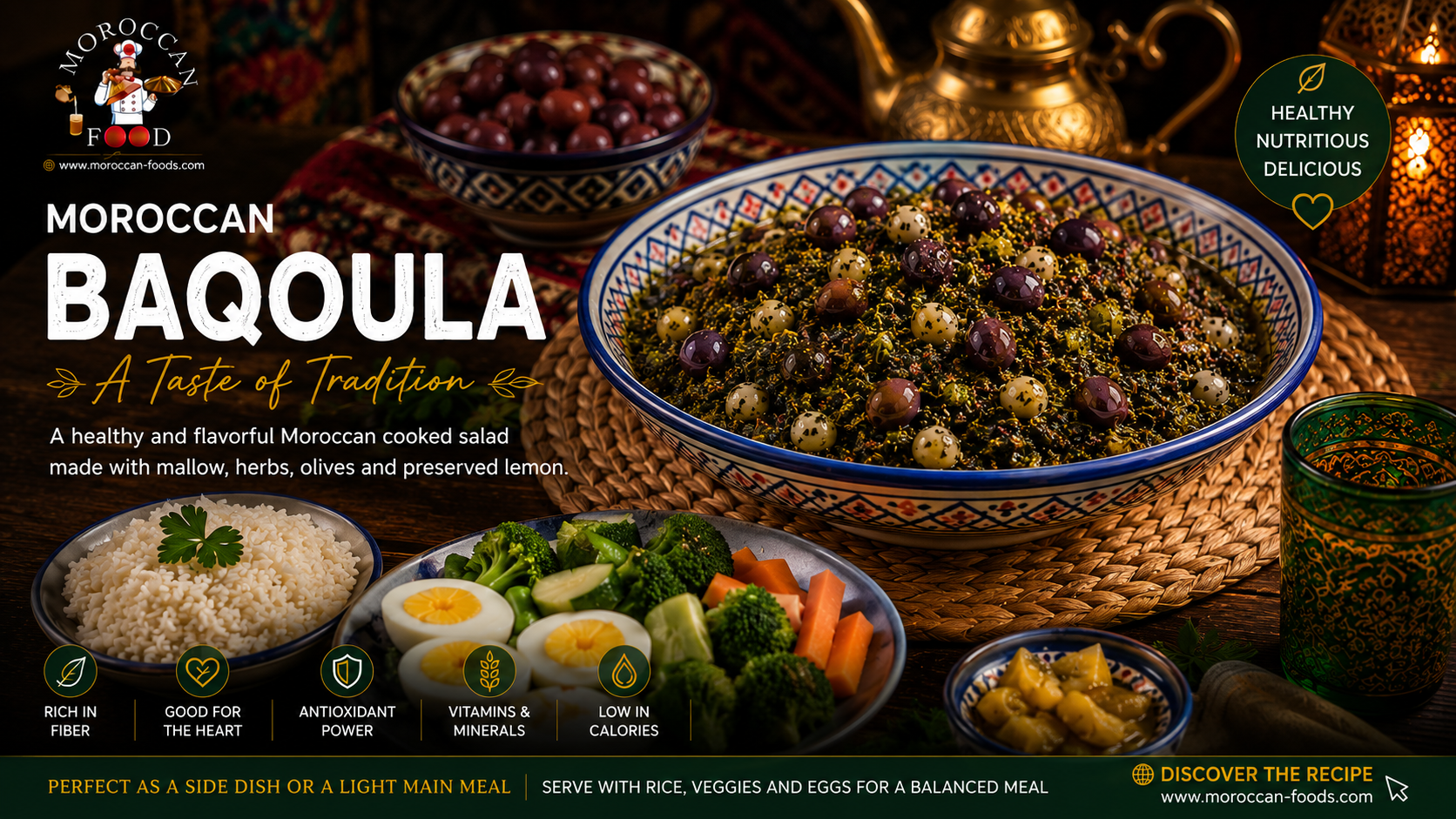
Moroccan Khobiza, also known as Mallow, is a traditional Moroccan dish that transforms tender mallow leaves into a flavorful and comforting salad. Gently cooked with garlic, olive oil, cumin, paprika, and preserved lemon, this simple recipe highlights the rich flavors of Moroccan home cooking. Often served as part of a selection of Moroccan salads, Khobiza is a nutritious, aromatic, and delicious side dish that pairs beautifully with crusty Moroccan bread.
Recipe Information:
| Information | Details |
|---|---|
| Prep Time | 10 minutes |
| Cook Time | 30 minutes |
| Total Time | 40 minutes |
| Servings | 4 people |
| Cuisine | Moroccan |
| Difficulty | Easy |
Ingredients:
- A handful of mallow, well washed and finely chopped
- One finely chopped onion
- Half a preserved lemon, cut into small pieces
- Half a regular lemon, cut into small pieces
- 4 cloves of garlic, finely chopped
- 1 tablespoon chopped cilantro
- 1 tablespoon chopped coriander
- 1 teaspoon salt
- 1 teaspoon cumin
- 1 teaspoon paprika
- 1 teaspoon harissa
- 1/4 cup olive oil
- 1/2 cup water

Instructions:
Take a pot and put in the chopped onion, then add the chopped mallow, then add half a chopped pickled lemon and half a regular lemon, then add two tablespoons of chopped coriander and parsley, then add a quarter cup of olive oil, then add half a cup of water, then add a teaspoon of salt, a teaspoon of cumin, a teaspoon of paprika, and a teaspoon of harissa. Stir the ingredients well, then cover the pot and leave it on low heat. When its volume has reduced, add 40g of red olives. Leave it on the heat for a little while without covering the pot until the water evaporates. Then serve it in a dish, professionally arranging lemon slices and red olives on top.

Servings Moroccan Khobiza (Mallow) Salad:
You can serve this recipe as a salad in small bowls alongside a main dish such as a Chicken tagine with zucchini and onions for lunch or dinner.

If you are exercising, you can eat this recipe with boiled vegetables and boiled eggs after your training session, along with one of the Moroccan drinks.
note:
As for the mallow plant, it is in winter, and this recipe warms the body.

=>If you want to know how to boil eggs in a healthy and correct way to benefit from all the protein they contain, click on this link.The healthy way to prepare boiled egg
Show Health Benefits and Nutritional Value
🌿 Health Benefits
- Rich in dietary fiber: Supports healthy digestion and helps promote fullness.
- Good source of antioxidants: Mallow and fresh herbs provide beneficial plant compounds with antioxidant properties.
- Heart-friendly fats: Extra virgin olive oil provides predominantly monounsaturated fats, while the vegetables contribute beneficial plant compounds.
- Provides vitamin C: Lemon, parsley, and coriander contribute vitamin C, which supports normal immune function.
- Good source of vitamin K: Leafy green vegetables are naturally rich in vitamin K.
- Provides essential minerals: Particularly potassium and magnesium, depending on the ingredients and quantities used.
- Olives provide healthy fats and plant compounds: They also add flavor without requiring heavy sauces.
- A nutritious vegetable side dish: It pairs particularly well with boiled rice, vegetables, and eggs to create a more balanced meal.
🥗 Approximate Nutritional Value
Per serving, assuming the recipe makes 4 servings:
| Nutrient | Approx. Amount |
|---|---|
| Calories | 180–230 kcal |
| Protein | 3–5 g |
| Carbohydrates | 10–15 g |
| Dietary Fiber | 4–6 g |
| Total Fat | 14–18 g |
| Saturated Fat | 2–3 g |
| Vitamin C | Good source |
| Vitamin K | High |
| Potassium | Good source |
| Sodium | Moderate to high* |
* Sodium can vary considerably depending on the amount of salt, olives, and preserved lemon used.
Note: These values are estimates rather than laboratory-tested values. Actual nutrition will vary according to the quantities of mallow, olive oil, olives, preserved lemon, and salt.
For a post-workout meal, serving this dish with boiled rice, steamed vegetables, and boiled eggs creates a more balanced plate: the greens provide fiber and micronutrients, rice provides carbohydrates for energy, and eggs provide high-quality protein.

FAQ – Moroccan Baqoula
What is Moroccan Baqoula?
Moroccan Baqoula is a traditional cooked salad made primarily with mallow (khobiza), onions, herbs, olive oil, preserved lemon, spices, and olives.
What does Baqoula taste like?
It has a rich, savory and slightly tangy flavor, with the preserved lemon and herbs adding freshness and the olives providing a delicious salty note.
Is Moroccan Baqoula healthy?
Yes. Baqoula is naturally rich in leafy greens, dietary fiber, herbs, and plant-based nutrients. Using olive oil also provides predominantly monounsaturated fats.
Is Baqoula suitable for a vegetarian diet?
Yes. The Baqoula itself is vegetarian and can be served as a side dish or part of a plant-based meal.
Can I use fresh or preserved lemon?
Traditional Moroccan Baqoula commonly uses preserved lemon, which gives the dish its distinctive flavor. Fresh lemon can also be added according to taste.
Can I prepare Baqoula without olives?
Yes. Olives are optional, although they add a characteristic Moroccan flavor and salty richness to the dish.
What can I serve with Moroccan Baqoula?
It pairs beautifully with boiled rice, steamed vegetables, boiled eggs, grilled chicken, fish, or other Moroccan main dishes.
Is Baqoula suitable as a post-workout meal?
Baqoula can be an excellent vegetable component of a post-workout meal. For a more complete meal, serve it with a protein source such as boiled eggs or chicken and a carbohydrate source such as boiled rice.
How should Moroccan Baqoula be stored?
Allow it to cool, place it in an airtight container, and refrigerate it. It is best consumed within a few days.
Can Baqoula be served hot or cold?
It can be enjoyed warm, at room temperature, or chilled. Serving it slightly warm or at room temperature allows its herbs, olive oil, and preserved lemon flavors to stand out.
Can I adjust the amount of olive oil?
Yes. The amount can be adjusted according to your preference, although olive oil contributes significantly to the traditional flavor and texture of Baqoula.
What makes Moroccan Baqoula different from other salads?
Unlike many raw salads, Moroccan Baqoula is cooked. The leafy greens are slowly seasoned with Moroccan herbs, spices, olive oil, and lemon, creating a deeply flavorful traditional dish.


Leave a Reply