
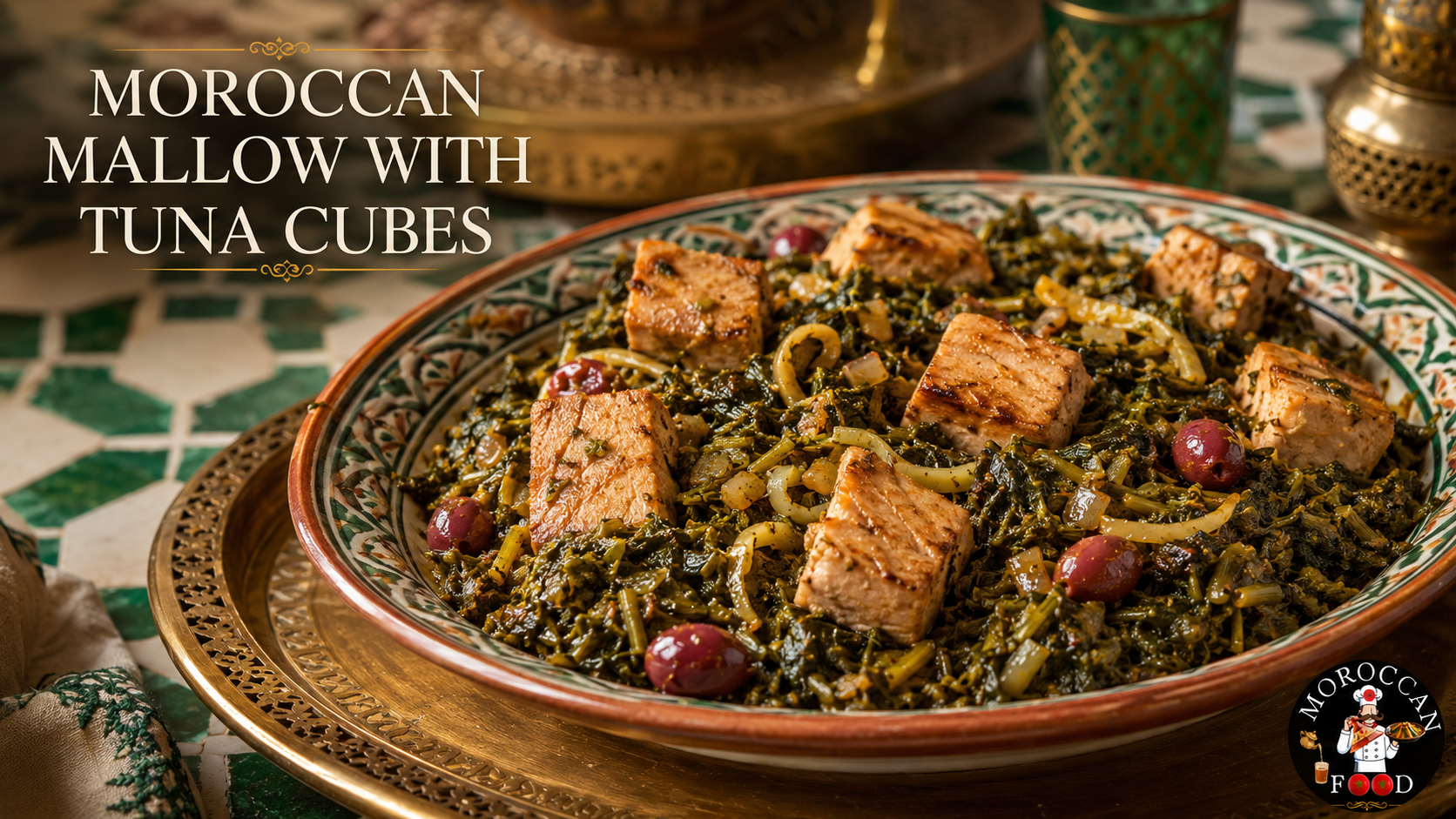
Moroccan Mallow with Tuna Cubes is a flavourful seafood variation of the traditional khobiza recipe. Fresh tuna is cut into generous cubes, seasoned with Moroccan spices and quickly seared with onion before being served over tender mallow cooked with garlic, fresh herbs, preserved lemon and pitted red olives. This nourishing Moroccan meal is ideal for a wholesome lunch or light dinner.
Servings: 4
Preparation time: 25 minutes
Cooking time: 30 minutes
Total time: 55 minutes
Difficulty: Easy
Ingredients
For the Tuna Cubes
- 600 g fresh or completely thawed tuna loin
- ½ medium onion, finely chopped
- 2 tablespoons olive oil
- 1 teaspoon sweet paprika
- ½ teaspoon ground cumin
- ½ teaspoon ground ginger
- ¼ teaspoon turmeric
- ½ teaspoon freshly ground black pepper
- ½ teaspoon salt, or to taste
For the Moroccan Mallow
- 500 g fresh edible mallow leaves and tender stems
- ½ medium onion, finely chopped
- 3 tablespoons olive oil
- 3 garlic cloves, crushed
- 2 tablespoons finely chopped fresh coriander
- 2 tablespoons finely chopped fresh parsley
- 1 teaspoon ground cumin
- 1 teaspoon sweet paprika
- ½ teaspoon ground ginger
- ¼ teaspoon turmeric
- ¼ teaspoon black pepper
- ¼ teaspoon cayenne pepper, optional
- ½ small preserved lemon, approximately 30 g
- 80 g pitted Moroccan red olives
- Salt, only if needed
- 2–4 tablespoons water, if needed

Preparation
1. Clean and Chop the Mallow
Sort the mallow carefully, keeping the healthy leaves and thin, tender stems. Remove tough stalks, damaged leaves and any unidentified plants.
Wash the mallow several times in plenty of cold water. Change the water after each rinse until it remains completely clear and free from soil. Drain thoroughly, then chop the leaves and tender stems into small pieces.
2. Steam the Mallow
Transfer the chopped mallow to a steamer basket placed over simmering water. Cover and steam for 15–20 minutes, or until completely wilted, darker in colour and tender.
Press the cooked mallow gently against the side of the steamer using a wooden spoon to remove excess moisture. Set it aside while preparing the tuna.
3. Prepare the Tuna Cubes
Pat the tuna dry with paper towels and cut it into uniform cubes measuring approximately 2.5–3 cm.
Place the cubes in a bowl and season with paprika, cumin, ginger, turmeric, black pepper and salt. Mix gently until evenly coated and leave for five minutes.
4. Cook the Tuna
Heat 2 tablespoons of olive oil in a large frying pan over medium-high heat. Add half of the finely chopped onion and sauté for 2–3 minutes until slightly softened.
Add the seasoned tuna cubes in a single layer. Sear for approximately 4–6 minutes, turning carefully so that the pieces brown evenly without breaking. Avoid overcrowding the pan and cook in two batches if necessary.
The tuna should reach 145°F or 63°C at its thickest point for food safety. Transfer the cooked cubes to a plate and cover loosely to keep them warm.
5. Cook the Mallow
Using the same frying pan, add the remaining 3 tablespoons of olive oil and the second half of the chopped onion. Cook over medium heat for 4–5 minutes until soft.
Add the garlic, coriander, parsley, cumin, paprika, ginger, turmeric, black pepper and optional cayenne. Stir for approximately 30 seconds until fragrant without burning the garlic.
Add the steamed mallow and mix thoroughly with the seasoned onion and herbs. Cook for 8–10 minutes, stirring and lightly pressing the mixture, until the flavours are well combined and any remaining moisture has evaporated.
Add one or two tablespoons of water only if the mallow begins to stick to the pan.
6. Add the Preserved Lemon and Olives
Remove the seeds from the preserved lemon. Rinse it briefly if it is particularly salty, then finely chop the peel and pulp.
Add the preserved lemon and pitted red olives to the mallow. Continue cooking for another 4–5 minutes.
Taste before adding additional salt because preserved lemon and cured olives may already provide enough seasoning.
7. Serve
Spread the cooked Moroccan mallow on a warm decorative serving plate. Arrange the seared tuna cubes attractively over the top and spoon over any juices remaining on the tuna plate.
Garnish with a few pitted red olives and thin pieces of preserved lemon. Serve warm with Moroccan bread and traditional salads such as zaalouk, taktouka or tomato-and-onion salad.

Chef’s Tips
- Fresh tuna loin is recommended because it holds its shape when cut into cubes; canned tuna is unsuitable for this preparation.
- If using frozen tuna, thaw it completely in the refrigerator and dry it thoroughly before seasoning.
- Cut the tuna into relatively large, uniform cubes to prevent it from drying out.
- Turn the tuna gently with kitchen tongs rather than stirring it continuously.
- Add the tuna to the serving plate only after the mallow is ready so it remains tender.
- Rinse the olives and preserved lemon to reduce the recipe’s sodium content.
- Use only correctly identified edible mallow obtained from a clean and trusted source.
Servings Mallow with Tuna Cubes, Preserved Lemon and Red Olives:
If you exercise, you can eat this meal after your training session with traditional Moroccan salads as a nutritious and protein-rich meal.

You can serve this recipe in the Moroccan style as a light and quick lunch or dinner.

Here are some of the most popular traditional Moroccan salads that are served with a main course.
Moroccan Roasted Tomato, Onion & Pepper Salad Recipe
Traditional Moroccan Tomato Cucumber and Onion Salad Recipe
Moroccan salad with tomatoes, onions, and roasted green peppers
Moroccan salad with onions, tomatoes, and roasted red and yellow peppers
Moroccan Lettuce, Tomato, Onion & Cucumber Salad
In Morocco, fruits, some types of melon, and some drinks from the juice menu in Moroccan cuisine are served as dessert after the meal.In Morocco, fruits, some types of melon, and some drinks from the juice menu in Moroccan cuisine are served as dessert after the meal.
Show Health Benefits Nutritional Value
Health Benefits and Nutritional Value of Moroccan Mallow with Tuna
Moroccan mallow with tuna cubes is a nutritious, protein-rich meal combining fully cooked tuna, tender mallow leaves and stems, olive oil, aromatic spices, preserved lemon, and red olives. It provides high-quality protein, beneficial fats, fiber, and several essential vitamins and minerals, making it suitable for a balanced lunch, dinner, or post-workout meal.
Estimated Nutritional Value
The following values are estimated per serving, based on four servings and assuming that all the olive oil is consumed:
| Nutrient | Approximate amount per serving |
|---|---|
| Calories | 400–450 kcal |
| Protein | 39–43 g |
| Total carbohydrates | 13–18 g |
| Dietary fiber | 4–7 g |
| Total fat | 21–25 g |
| Saturated fat | 3–4 g |
| Cholesterol | 55–70 mg |
| Sodium | 700–1,000 mg |
| Vitamin B12 | Good to excellent source |
| Selenium | Excellent source |
| Omega-3 fatty acids | Amount varies by tuna species |
These estimates are based on standard ingredient data from USDA FoodData Central. Actual values may vary according to the tuna species, the salinity of the olives and preserved lemon, and the amount of oil remaining in the finished dish. Bread, salads, and drinks served alongside the recipe are not included.
Health Benefits
1. High in Quality Protein
Tuna provides complete protein containing all essential amino acids. With approximately 40 grams of protein per serving, this recipe may support muscle maintenance, post-workout recovery, tissue repair, and prolonged satiety.
2. Provides Beneficial Omega-3 Fatty Acids
Tuna contains EPA and DHA omega-3 fatty acids. These fats form part of cell membranes and are involved in the normal functioning of the cardiovascular, nervous, immune, and endocrine systems. Their exact amount varies considerably between tuna species. Learn more from the NIH Omega-3 Fatty Acids Fact Sheet.
3. Supports the Nervous System and Red Blood Cell Formation
Tuna is a valuable source of vitamin B12, which is required for healthy red blood cell formation, DNA synthesis, and normal nervous-system function. NIH Vitamin B12 information explains these essential roles.
4. Rich in Selenium
This dish supplies selenium mainly through tuna. Selenium contributes to antioxidant defenses, thyroid-hormone metabolism, DNA production, and normal immune function. More information is available in the NIH Selenium Fact Sheet.
5. Contains Fiber and Plant Nutrients
Mallow leaves and tender stems provide dietary fiber and a range of plant nutrients. Fiber supports regular digestion, helps increase fullness, and contributes to a balanced eating pattern.
6. Provides Mostly Unsaturated Fat
Olive oil supplies mainly monounsaturated fat. When used in moderate quantities as a replacement for foods rich in saturated fat, it can form part of a heart-conscious Mediterranean-style diet.
7. Suitable for an Active Lifestyle
The combination of high-quality protein, vegetables, and healthy fats makes this recipe a satisfying post-workout option. Athletes requiring additional carbohydrates can serve it with a moderate portion of whole-grain Moroccan bread, potatoes, or another carbohydrate source.
Important Nutritional Considerations
- Sodium: Preserved lemon, red olives, and added salt can make the dish relatively high in sodium. Rinse the olives and preserved lemon, then taste the dish before adding extra salt.
- Mercury in tuna: Mercury levels depend on the tuna species. The FDA classifies canned light tuna—mainly skipjack—as a lower-mercury “Best Choice,” while albacore and yellowfin are “Good Choices.” Bigeye tuna is placed in the “Choice to Avoid” category, which is especially relevant for pregnant or breastfeeding women and children. Consult the current FDA Advice About Eating Fish.
- Vitamin K: As a leafy vegetable, mallow may contain vitamin K. People taking warfarin or similar anticoagulants should maintain a consistent intake of vitamin-K-rich foods and follow their healthcare professional’s instructions.
- Portion size: Although olive oil offers beneficial fats, it is calorie-dense. Measure it carefully if you are managing your total calorie intake.
- Food safety: Use correctly identified edible mallow from a clean source, wash it thoroughly, and cook the tuna cubes until fully opaque at the center.
This nutritional information is an estimate for general informational purposes and is not a substitute for personalized medical or dietary advice.

Frequently Asked Questions
1. What is Moroccan Mallow with Tuna?
Moroccan Mallow with Tuna is a savory skillet dish made with finely chopped mallow leaves and tender stems, fully cooked tuna cubes, onion, garlic, olive oil, Moroccan spices, preserved lemon, and pitted red olives.
2. What is mallow called in Morocco?
Mallow is commonly known in Morocco as khobiza or bakoula, depending on the region and the type of edible wild greens used. It should not be confused with the sweet food called marshmallow.
3. Which parts of the mallow plant can be used?
Use fresh mallow leaves and only the young, tender stems. Remove thick, tough, damaged, or discolored stems before washing and chopping the greens.
4. How should fresh mallow be cleaned?
Sort the mallow carefully, remove damaged leaves and tough stems, and rinse it several times in plenty of clean water to eliminate soil and grit. Drain it thoroughly before chopping.
5. Should mallow be chopped before cooking?
Yes. Finely chopping the leaves and tender stems helps them cook evenly and creates the soft, cohesive texture associated with Moroccan cooked greens.
6. Does mallow need to be boiled before sautéing?
Tender mallow can be cooked directly in a covered skillet with onion, olive oil, garlic, and spices. If the leaves are mature or slightly tough, they can be briefly steamed or blanched, drained well, and then sautéed with the seasonings.
7. How do I know when the mallow is properly cooked?
The mallow is ready when it is very tender, dark green, and no longer watery. Continue cooking it uncovered toward the end, stirring occasionally, until excess moisture evaporates and the mixture becomes lightly caramelized.
8. Which type of tuna is best for this recipe?
Fresh or properly thawed tuna loin works best because it can be cut into firm, evenly sized cubes. Yellowfin tuna is a practical choice, but availability and fat content may differ by region.
9. Can I use frozen tuna?
Yes. Thaw the tuna safely in the refrigerator, drain away excess liquid, and dry it with paper towels before cutting and seasoning. Removing surface moisture helps the cubes brown properly.
10. How large should the tuna cubes be?
Cut the tuna into approximately 2.5–3 cm cubes. This size allows the outside to brown while giving the center enough time to cook completely without the pieces breaking apart.
11. Should the tuna be fully cooked?
Yes. For this recipe, the tuna cubes should be completely opaque inside, with no raw or translucent center. FoodSafety.gov recommends cooking fish to 145°F or 63°C, or until the flesh is no longer translucent and separates easily with a fork. See the official seafood temperature guidance.
12. How can I cook the tuna thoroughly without making it dry?
Use evenly sized cubes and cook them in a single layer without overcrowding the skillet. Turn the cubes so that every side cooks, remove them as soon as they are fully opaque, and return them to the mallow only briefly before serving.
13. Why is the tuna cooked separately from the mallow?
Cooking the tuna separately allows it to brown properly and prevents it from breaking apart while the mallow softens and releases moisture. The tuna is added back at the end so that both components retain their best texture.
14. Can canned tuna replace fresh tuna?
Yes, but the result will have a different texture. Drain canned tuna thoroughly and fold it gently into the cooked mallow near the end. It will not produce the same firm cubes as fresh tuna loin.
15. What spices are suitable for the tuna?
Paprika, cumin, ground ginger, turmeric, black pepper, and a controlled amount of salt complement tuna well. Garlic, coriander, and parsley can also be used to deepen the Moroccan flavor.
16. What spices pair well with cooked mallow?
Mallow pairs particularly well with cumin, paprika, ginger, turmeric, black pepper, garlic, coriander, and parsley. Cayenne pepper can be added if a spicier result is preferred.
17. What does preserved lemon add to the recipe?
Preserved lemon adds saltiness, acidity, and a distinctive Moroccan citrus aroma. Approximately half a small preserved lemon is sufficient for this recipe. Remove the seeds and finely chop the softened rind before adding it.
18. Can I omit the preserved lemon?
Yes. The recipe can be prepared without it, although the final flavor will be less distinctly Moroccan. A small amount of fresh lemon juice can be added after cooking, but it will not reproduce the same fermented citrus flavor.
19. Which olives are best for this dish?
Pitted Moroccan red olives complement the spices and preserved lemon particularly well. Green or purple olives may be substituted, but their saltiness and flavor intensity should be considered.
20. How can I reduce the sodium content?
Rinse the olives and preserved lemon briefly, drain them well, and reduce or omit the added salt. Always taste the cooked mallow before adding more seasoning because preserved ingredients can already be quite salty.
21. Is Moroccan Mallow with Tuna spicy?
The basic recipe is aromatic rather than hot. Its spices add warmth and depth without intense heat. Cayenne or chili pepper is optional and can be adjusted according to personal preference.
22. Can frozen mallow be used?
Yes. Thaw it, squeeze out excess liquid, and chop it if necessary before cooking. Because frozen greens are already softened, they may require less cooking time than fresh mallow.
23. What can I use instead of mallow?
Swiss chard, spinach, or purslane can be used, but each vegetable produces a different flavor and texture. Cooking time should be adjusted according to the moisture and tenderness of the selected greens.
24. Is this recipe gluten-free?
The principal ingredients are naturally gluten-free. However, check packaged spices, preserved lemon, and olives for additives or cross-contamination if the meal is being prepared for someone with celiac disease or a strict gluten-free diet.
25. Is this dish suitable after exercise?
It can be served as part of a post-workout meal because tuna supplies substantial protein. For additional carbohydrates, serve it with a moderate portion of whole-grain Moroccan bread, potatoes, rice, or couscous according to individual energy needs.
26. What can be served with Moroccan Mallow and Tuna?
Serve it warm with Moroccan bread and small traditional salads such as tomato and onion salad, taktouka, roasted pepper salad, or carrot salad. Fresh lemon wedges may also be offered on the side.
27. Can the recipe be prepared in advance?
The mallow mixture can be prepared in advance and refrigerated. For the best tuna texture, cook the tuna shortly before serving and combine it with the reheated mallow at the end.
28. How should leftovers be stored?
Allow the dish to cool briefly, transfer it to a clean airtight container, and refrigerate it promptly. For the best quality, consume it within two days and reheat only the amount required.
29. How should the dish be reheated?
Reheat it gently in a covered skillet over low heat with one or two tablespoons of water. Stir carefully to avoid breaking the tuna cubes and heat the dish thoroughly before serving.
30. Can Moroccan Mallow with Tuna be frozen?
Freezing is possible, but it is not ideal. The mallow may release additional water after thawing, while fully cooked tuna can become dry. Refrigerating a small quantity for short-term use generally produces a better texture.
31. Does tuna contain mercury?
Mercury levels vary by tuna species. The FDA lists canned light tuna—primarily skipjack—as a lower-mercury “Best Choice,” while yellowfin and albacore are “Good Choices.” Bigeye tuna is placed in the higher-mercury “Choice to Avoid” category for pregnant or breastfeeding women and children. Consult the FDA fish advice when choosing tuna for these groups.
32. How many servings does this recipe make?
Using approximately 600 grams of tuna and 700 grams of fresh mallow produces about four satisfying servings, depending on the accompanying bread, salads, and side dishes.


Leave a Reply