
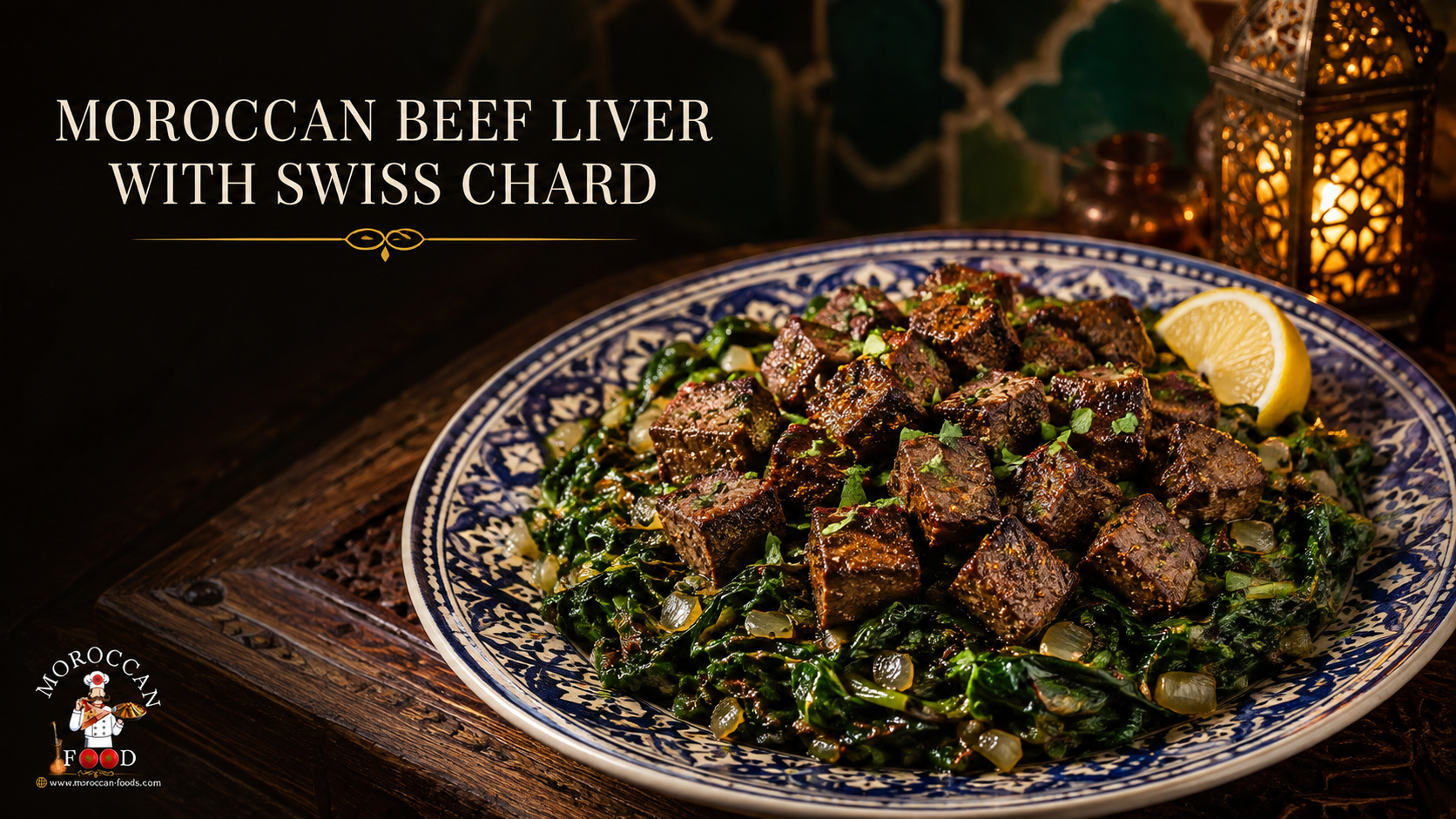
Moroccan Beef Liver Cubes with Sautéed Swiss Chard is a flavorful skillet meal combining tender, warmly spiced liver with garlicky leafy greens. The liver is cooked first with half of the finely chopped onion, then removed while the Swiss chard is sautéed in the same pan with the remaining onion, herbs, and Moroccan spices. The chard is served as the base and topped with the cooked liver cubes for an attractive and satisfying presentation.
Recipe Information
- Preparation time: 20 minutes
- Cooking time: 25 minutes
- Total time: 45 minutes
- Servings: 4
- Difficulty: Easy
Ingredients
For the Beef Liver
- 600 g beef or calf liver
- ½ onion, finely chopped
- 2 tablespoons olive oil
- 2 garlic cloves, minced
- 1 tablespoon fresh lemon juice
- 1 teaspoon sweet paprika
- 1 teaspoon ground cumin
- ½ teaspoon ground ginger
- ½ teaspoon ground coriander
- ¼ teaspoon turmeric
- ¼ teaspoon black pepper
- ½ teaspoon salt, or to taste
- 1 tablespoon finely chopped parsley
- 1 tablespoon finely chopped cilantro
For the Swiss Chard
- 700 g fresh Swiss chard
- Remaining ½ onion, finely chopped
- 2 tablespoons olive oil
- 2 garlic cloves, minced
- 1 teaspoon sweet paprika
- ½ teaspoon ground cumin
- ¼ teaspoon turmeric
- ¼ teaspoon black pepper
- ½ teaspoon salt, or to taste
- 1 tablespoon finely chopped parsley
- 1 tablespoon finely chopped cilantro
- 1 tablespoon fresh lemon juice, optional

Preparation
1. Prepare the Swiss Chard
Wash the Swiss chard thoroughly and drain it well. Separate the thicker stems from the leaves, then finely chop the stems and roughly chop the leaves. Keeping them separate allows the firmer stems to cook first.
2. Prepare the Liver
Remove any visible membrane, veins, or tough connective tissue from the liver. Pat it thoroughly dry with paper towels and cut it into evenly sized cubes measuring approximately 3 cm.
3. Season the Liver
Place the liver cubes in a bowl. Add the garlic, lemon juice, paprika, cumin, ginger, ground coriander, turmeric, black pepper, salt, parsley, and cilantro.
Mix gently until all the cubes are evenly coated. Leave them to absorb the seasoning for approximately 10 minutes. Avoid marinating the liver in lemon juice for too long because the acid can affect its texture.
4. Cook the Onion and Liver
Heat 2 tablespoons of olive oil in a large skillet over medium-high heat. Add half of the finely chopped onion and cook for 3–4 minutes, stirring occasionally, until softened.
Arrange the seasoned liver cubes in a single layer. Cook for approximately 5–7 minutes, turning them gently so they brown evenly. If the pan is small, cook the liver in two batches to prevent steaming.
For food safety, beef liver and other organ meats should reach an internal temperature of 160°F (71°C). USDA beef-safety guidance
Transfer the cooked liver to a clean plate and cover it loosely to keep it warm.
5. Cook the Swiss Chard
Return the same skillet to medium heat and add the remaining 2 tablespoons of olive oil. Add the other half of the chopped onion and the Swiss chard stems. Cook for 3–4 minutes until they begin to soften.
Add the garlic, paprika, cumin, turmeric, black pepper, and salt. Stir for approximately 30 seconds to release the aromas without burning the spices.
Add the Swiss chard leaves gradually, allowing each portion to wilt before adding more. Cook uncovered for 8–10 minutes, stirring occasionally, until the chard is tender and most of the released liquid has evaporated.
Stir in the parsley, cilantro, and optional lemon juice. Taste and adjust the seasoning if necessary.
6. Assemble and Serve
Spread the cooked Swiss chard evenly on a Moroccan serving plate. Arrange the warm liver cubes over the chard and spoon any remaining seasoned juices from the skillet on top.
If necessary, return the liver to the pan with the chard for only 30–60 seconds before serving. Avoid reheating it for too long, as overcooked liver can become firm and dry.

Professional Cooking Tips
- Pat the liver dry to help it brown instead of releasing excessive liquid.
- Cut the liver into equal-sized cubes for even cooking.
- Use a wide, well-heated skillet and avoid overcrowding it.
- Cook the Swiss chard uncovered so its excess moisture can evaporate.
- Add the chopped herbs and lemon juice near the end to preserve their freshness.
- Serve immediately while the liver is warm and tender.
Servings Sautéed Chard with Chicken Breast Cubes :
If you exercise, you can eat this meal after your training session with traditional Moroccan salads as a nutritious and protein-rich meal.

You can serve this recipe in the Moroccan style as a light and quick lunch or dinner.

Here are some of the most popular traditional Moroccan salads that are served with a main course.
Moroccan Roasted Tomato, Onion & Pepper Salad Recipe
Traditional Moroccan Tomato Cucumber and Onion Salad Recipe
Moroccan salad with tomatoes, onions, and roasted green peppers
Moroccan salad with onions, tomatoes, and roasted red and yellow peppers
Moroccan Lettuce, Tomato, Onion & Cucumber Salad
In Morocco, fruits, some types of melon, and some drinks from the juice menu in Moroccan cuisine are served as dessert after the meal.In Morocco, fruits, some types of melon, and some drinks from the juice menu in Moroccan cuisine are served as dessert after the meal.
Show Health Benefits and Nutritional Value
Moroccan Beef Liver Cubes with Sautéed Swiss Chard is a highly nutrient-dense meal combining protein-rich liver, leafy greens, olive oil, garlic, herbs, and Moroccan spices. It provides substantial amounts of iron, vitamin B12, vitamin A, copper, folate, potassium, and vitamin K. Because liver contains exceptionally concentrated levels of certain nutrients, this dish is best enjoyed occasionally rather than every day.
Estimated Nutritional Value per Serving
| Nutrient | Approximate Amount |
|---|---|
| Calories | 380 kcal |
| Protein | 35 g |
| Carbohydrates | 18–19 g |
| Dietary fiber | 4 g |
| Total fat | 19–20 g |
| Saturated fat | 3.5–4 g |
| Cholesterol | 410–415 mg |
| Sodium | Approximately 1,080 mg |
| Potassium | Approximately 1,250 mg |
| Iron | 11–12 mg |
| Vitamin B12 | Approximately 89 mcg |
| Folate | Approximately 460–480 mcg DFE |
| Vitamin A | Approximately 8,000 mcg RAE |
| Copper | Approximately 15 mg |
| Selenium | Approximately 60 mcg |
| Vitamin K | Approximately 1,450 mcg |
Values are estimates based on 600 g of raw beef liver, 700 g of Swiss chard, one onion, four tablespoons of olive oil, four garlic cloves, lemon, herbs, spices, and one teaspoon of salt, divided into four servings. Actual values vary according to the liver, cooking method, oil absorption, and ingredient brands. Some heat-sensitive vitamins may decrease during cooking. Calculations are based on USDA FoodData Central beef-liver data and Swiss-chard data.
Health Benefits
1. Supports muscle maintenance and recovery
Each serving provides approximately 35 g of complete protein containing the essential amino acids required for maintaining and repairing muscle tissue.
2. Rich in iron for normal oxygen transport
Beef liver provides highly absorbable heme iron, while Swiss chard contributes additional plant-based iron. Iron is required to produce hemoglobin, which carries oxygen through the blood. NIH iron information
3. Exceptionally rich in vitamin B12
Vitamin B12 supports healthy blood and nerve cells and is required for DNA production. This recipe supplies considerably more than the daily requirement. NIH vitamin B12 information
4. Provides folate and other B vitamins
Liver supplies folate, riboflavin, and other B vitamins involved in normal red blood cell formation and energy metabolism.
5. Supplies vitamin A for vision and immunity
Vitamin A contributes to normal vision, immune function, growth, and cell development. Most of the vitamin A in this recipe comes from preformed vitamin A, or retinol, in the liver. NIH vitamin A information
6. Excellent source of copper
Copper is involved in energy production, iron metabolism, connective-tissue formation, nervous-system function, and antioxidant defense. Beef liver is one of the most concentrated dietary sources of copper. NIH copper information
7. Supports normal muscle and nerve function
Swiss chard provides potassium and magnesium, minerals involved in normal muscle contraction, nerve signaling, and fluid balance.
8. Provides fiber and protective plant compounds
The Swiss chard, onion, garlic, parsley, and cilantro contribute fiber and naturally occurring plant compounds. Fiber supports normal digestion and helps make the meal more satisfying.
9. Rich in vitamin K
Swiss chard contains a large amount of vitamin K, which is required for normal blood clotting and contributes to bone health.
10. Contains predominantly unsaturated cooking fat
Olive oil provides mainly monounsaturated fat and helps the body absorb fat-soluble nutrients from the liver and Swiss chard.
Important Nutritional Considerations
Consume liver occasionally: One serving contains approximately 150 g of raw liver before cooking. This provides more than the adult daily upper intake levels for preformed vitamin A and copper. These upper limits relate primarily to regular daily intake, but the dish should still be treated as an occasional nutrient-dense meal rather than an everyday food. Smaller liver portions of approximately 50–75 g per adult can be used when preferred.
Not suitable during pregnancy: Pregnant women are advised to avoid liver and liver products because their high preformed vitamin A content may harm the developing baby. NHS pregnancy guidance
Copper-related conditions: People with Wilson’s disease or another condition requiring limited copper intake should avoid this high-copper dish unless their healthcare professional advises otherwise.
Vitamin K and warfarin: Swiss chard is exceptionally rich in vitamin K. People taking warfarin should keep their vitamin K intake consistent and follow their healthcare professional’s advice. NIH vitamin K guidance
Iron-related conditions: Anyone advised to restrict iron because of hemochromatosis or another iron-overload condition should consult a qualified healthcare professional before consuming liver regularly.
Sodium: Using one teaspoon of salt makes the dish relatively high in sodium. Reducing the total salt to half a teaspoon lowers the sodium by approximately 290 mg per serving without changing the main ingredients.
Cholesterol: Liver is naturally high in cholesterol. People following a medically prescribed cholesterol-restricted diet should adjust the portion according to their healthcare professional’s recommendations.

Frequently Asked Questions
1. What is Moroccan Beef Liver with Swiss Chard?
Moroccan Beef Liver with Swiss Chard is a skillet dish made with seasoned liver cubes, sautéed Swiss chard, onion, garlic, olive oil, lemon, fresh herbs, and Moroccan spices. The liver and chard are cooked separately in the same pan, then the liver is served over the greens.
2. What type of liver is best for this recipe?
Beef or calf liver can be used. Calf liver generally has a milder flavor and more tender texture, while mature beef liver has a stronger flavor and may require more careful trimming.
3. What does beef liver with Swiss chard taste like?
The liver has a rich, savory flavor balanced by earthy Swiss chard, sweet softened onion, fresh herbs, garlic, lemon, cumin, and paprika. Lemon juice helps brighten the dish and balance the stronger liver flavor.
4. How should I clean and prepare beef liver?
Remove the thin outer membrane, visible veins, and tough connective tissue with a sharp knife. Pat the liver dry with paper towels before cutting it into cubes. Avoid splashing water around the sink, as raw meat juices can spread bacteria to nearby surfaces.
5. Should beef liver be soaked in milk before cooking?
Soaking is optional and is not required for this recipe. If you prefer a milder liver flavor, soak the trimmed liver in cold milk for 20–30 minutes, then drain and pat it completely dry. This addition means the recipe will no longer be dairy-free.
6. How large should the liver cubes be?
Cut the liver into evenly sized cubes measuring approximately 3 cm. Very small pieces can quickly become dry, while oversized pieces may cook unevenly.
7. What spices pair well with beef liver?
Paprika, cumin, ground coriander, ginger, turmeric, black pepper, garlic, parsley, and cilantro complement liver particularly well. Lemon juice adds freshness and reduces the perception of bitterness.
8. How long should the liver be marinated?
Approximately 10 minutes is sufficient for the spices to coat and flavor the cubes. Avoid leaving the liver in lemon juice for an extended period because the acid can alter its texture.
9. Why are the liver and Swiss chard cooked separately?
Separate cooking allows the liver to brown without being surrounded by the liquid released from the chard. It also prevents the liver from overcooking while the vegetables soften.
10. How do I prevent beef liver from becoming tough?
Pat it dry, use a properly heated skillet, avoid overcrowding the pan, and cook the cubes only until safely done. Prolonged cooking causes liver to lose moisture and develop a firm, dry texture.
11. How long do liver cubes take to cook?
Three-centimeter liver cubes generally require about 5–7 minutes in a hot skillet, depending on their size and the pan temperature. Time alone is not a reliable safety test: beef liver and other organ meats should reach 160°F (71°C) internally. USDA beef-safety guidance
12. How do I prevent the liver from sticking to the pan?
Dry the liver thoroughly and preheat the skillet before adding it. Arrange the cubes in a single layer and leave them undisturbed briefly before turning them with a spatula.
13. Can I use frozen beef liver?
Yes. Thaw frozen liver safely in the refrigerator, remove any released liquid, and pat it thoroughly dry before trimming, seasoning, and cooking.
14. Can I replace beef liver with lamb or chicken liver?
Lamb liver can be used with similar seasonings, although its flavor and cooking time may differ. Chicken liver is more delicate and should reach 165°F (74°C) because it is poultry; it will also produce a softer final texture.
15. Does Swiss chard need to be blanched first?
No. Fresh Swiss chard can be added directly to the skillet. Add the leaves gradually and cook uncovered until they wilt and most of their liquid evaporates.
16. Can I eat the Swiss chard stems?
Yes. The stems are edible and provide texture. Chop them finely and cook them with the onion for several minutes before adding the leaves because they take longer to soften.
17. How do I prevent the Swiss chard from becoming watery?
Drain the washed chard thoroughly and cook it uncovered over medium or medium-high heat. Continue cooking until most of the released liquid has evaporated before adding the liver to the serving plate.
18. Can I replace Swiss chard with another leafy green?
Yes. Spinach, kale, or collard greens can be used, but their cooking times differ. Spinach cooks more quickly, while kale and collard greens usually require additional time to become tender.
19. Is Moroccan Beef Liver with Swiss Chard nutritious?
Yes, but it is exceptionally nutrient-dense. It provides protein, iron, vitamin B12, folate, vitamin A, copper, selenium, potassium, and vitamin K. Because some of these nutrients are present in very high amounts, portion size and frequency matter.
20. Is this recipe suitable after exercise?
It can be enjoyed occasionally as a post-workout meal because each serving provides approximately 35 g of protein. For additional carbohydrates after intense training, serve it with potatoes, brown rice, whole-grain couscous, or Moroccan whole-grain bread.
21. Can I eat beef liver every day?
Regular daily consumption is not recommended, especially with the 150 g liver portion provided by this recipe. Liver contains exceptionally high concentrations of preformed vitamin A and copper, so it is better enjoyed occasionally or in a smaller portion. NIH vitamin A guidance and NIH copper guidance
22. Can pregnant women eat this liver recipe?
Pregnant women are advised to avoid liver and liver products because their high preformed vitamin A content may harm the developing baby. NHS foods-to-avoid guidance
23. Can people taking warfarin eat Swiss chard?
Swiss chard is exceptionally rich in vitamin K, which interacts with warfarin. People taking warfarin should maintain a consistent vitamin K intake and follow the advice of their healthcare professional rather than suddenly increasing or reducing leafy greens. NIH vitamin K guidance
24. Who should be careful when eating beef liver?
People with Wilson’s disease, hemochromatosis, another iron- or copper-storage condition, gout, or a medically prescribed restriction on cholesterol or organ meats should consult their healthcare professional before eating liver regularly.
25. How can I reduce the sodium in this recipe?
Reduce the total salt from one teaspoon to half a teaspoon. Lemon juice, garlic, cumin, paprika, parsley, cilantro, and black pepper can maintain a flavorful result with less added salt.
26. Is this recipe gluten-free and dairy-free?
The original recipe is naturally gluten-free and dairy-free. Check packaged spices for possible gluten contamination, and remember that soaking the liver in milk would add dairy.
27. What can I serve with beef liver and Swiss chard?
Serve it with zaalouk, taktouka, Moroccan carrot salad, beet salad, boiled potatoes, whole-grain couscous, rice, or Moroccan bread. Any accompaniments should be calculated separately from the recipe’s nutritional values.
28. How should leftovers be stored?
Transfer the cooled liver and chard to a shallow airtight container and refrigerate within two hours of cooking. Properly refrigerated leftovers should be consumed within 3–4 days. USDA leftovers guidance
29. What is the best way to reheat the dish?
Reheat it gently in a covered skillet over low heat with a small splash of water. Stir occasionally and heat leftovers to 165°F (74°C), avoiding unnecessarily prolonged cooking that could toughen the liver.
30. Can beef liver with Swiss chard be frozen?
Yes, although freezing may soften the texture of the Swiss chard. Cool the dish promptly, freeze individual portions in airtight containers, thaw them in the refrigerator, and reheat only the amount required.


Leave a Reply