
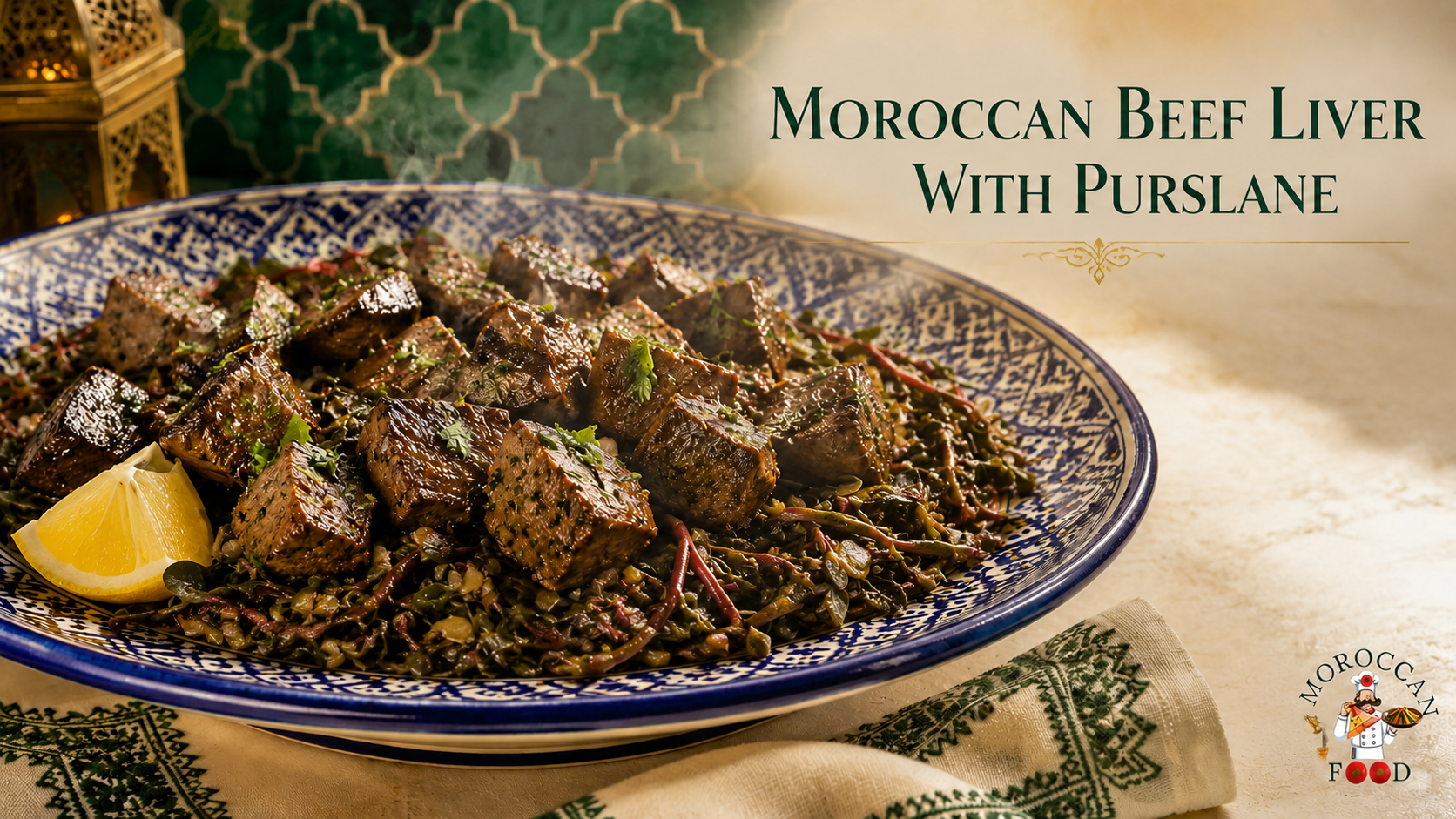
Moroccan Beef Liver Cubes with Sautéed Purslane is a flavorful skillet recipe combining tender, warmly spiced liver with fresh purslane, onion, garlic, herbs, and olive oil. Purslane adds a naturally fresh, slightly tangy flavor that balances the richness of the liver.
The liver cubes are cooked first with half of the finely chopped onion and their Moroccan seasoning. Once cooked, they are removed from the skillet, allowing the purslane to be sautéed in the same pan with the remaining onion and its own spices. The cooked purslane is arranged on a serving plate and topped with the warm liver cubes.
Recipe Information
- Preparation time: 20 minutes
- Cooking time: 20 minutes
- Total time: 40 minutes
- Servings: 4
- Difficulty: Easy
Ingredients
For the Beef Liver Cubes
- 600 g beef or calf liver
- ½ onion, finely chopped
- 2 tablespoons olive oil
- 2 garlic cloves, minced
- 1 tablespoon fresh lemon juice
- 1 teaspoon sweet paprika
- 1 teaspoon ground cumin
- ½ teaspoon ground ginger
- ½ teaspoon ground coriander
- ¼ teaspoon turmeric
- ¼ teaspoon black pepper
- ½ teaspoon salt, or to taste
- 1 tablespoon finely chopped parsley
- 1 tablespoon finely chopped cilantro
For the Purslane
- 500g fresh purslane
- Remaining ½ onion, finely chopped
- 2 tablespoons olive oil
- 2 garlic cloves, minced
- 1 teaspoon sweet paprika
- ½ teaspoon ground cumin
- ¼ teaspoon turmeric
- ¼ teaspoon black pepper
- ½ teaspoon salt, or to taste
- 1 tablespoon finely chopped parsley
- 1 tablespoon finely chopped cilantro
- 1 tablespoon fresh lemon juice, optional

Preparation
1. Clean the Purslane
Remove the roots, damaged leaves, and any particularly tough stems. Wash the purslane several times in a large bowl of cold water to remove all traces of soil and sand.
Drain it thoroughly, pat away excess moisture if necessary, and roughly chop the leaves and tender stems. Purslane does not need to be boiled or blanched before sautéing.
2. Prepare the Liver
Remove the thin membrane, visible veins, and tough connective tissue from the liver. Pat it thoroughly dry with paper towels, then cut it into evenly sized cubes measuring approximately 3 cm.
3. Season the Liver Cubes
Place the liver cubes in a bowl and add the minced garlic, lemon juice, paprika, cumin, ginger, ground coriander, turmeric, black pepper, salt, parsley, and cilantro.
Mix gently until every piece is evenly coated. Leave the liver to absorb the seasoning for approximately 10 minutes. Avoid marinating it in lemon juice for an extended period, as the acid can affect its texture.
4. Cook the Liver and Half of the Onion
Heat 2 tablespoons of olive oil in a large skillet over medium-high heat. Add half of the finely chopped onion and cook for 3–4 minutes until softened.
Add the seasoned liver cubes in a single layer. Cook for approximately 5–7 minutes, turning them gently so they brown evenly on all sides. Cook in two batches if the skillet is not large enough to hold the liver without overcrowding.
For food safety, beef liver and other organ meats should reach an internal temperature of 160°F (71°C). USDA beef-safety guidance
Transfer the cooked liver cubes to a clean plate and cover them loosely to keep them warm.
5. Cook the Purslane
Return the same skillet to medium heat and add the remaining 2 tablespoons of olive oil.
Add the other half of the finely chopped onion and cook for approximately 3 minutes until softened. Add the garlic, paprika, cumin, turmeric, black pepper, and salt. Stir for about 30 seconds to release the aromas.
Add the drained purslane gradually. Stir gently as the leaves begin to wilt and reduce in volume.
Cook uncovered for approximately 7–9 minutes, stirring occasionally, until the purslane is tender and most of the released liquid has evaporated.
Add the parsley and cilantro. Taste before adding the optional lemon juice, as purslane already has a naturally tangy flavor. Adjust the seasoning if necessary.
6. Assemble and Serve
Spread the cooked purslane evenly on a Moroccan serving plate. Arrange the warm liver cubes over the top and spoon any remaining seasoned juices from the skillet over the dish.
If the liver needs reheating, return it to the skillet with the purslane for only 30–60 seconds. Avoid cooking it for too long because overcooked liver can become dry and firm.

Professional Cooking Tips
- Drain the purslane thoroughly to prevent the finished dish from becoming watery.
- Cook the purslane uncovered so its excess liquid can evaporate.
- Use the tender purslane stems, but remove the roots and any thick or woody sections.
- Cut the liver into equal-sized cubes so they cook evenly.
- Pat the liver dry and avoid overcrowding the skillet to obtain better browning.
- Add lemon juice to the purslane only after tasting it.
- Keep the cooked liver aside until the purslane is ready to prevent overcooking.
- Serve the dish immediately while the liver is warm and tender.
Servings Beef Liver Cubes with Sautéed Purslane:
If you exercise, you can eat this meal after your training session with traditional Moroccan salads as a nutritious and protein-rich meal.

You can serve this recipe in the Moroccan style as a light and quick lunch or dinner.

Here are some of the most popular traditional Moroccan salads that are served with a main course.
Moroccan Roasted Tomato, Onion & Pepper Salad Recipe
Traditional Moroccan Tomato Cucumber and Onion Salad Recipe
Moroccan salad with tomatoes, onions, and roasted green peppers
Moroccan salad with onions, tomatoes, and roasted red and yellow peppers
Moroccan Lettuce, Tomato, Onion & Cucumber Salad
In Morocco, fruits, some types of melon, and some drinks from the juice menu in Moroccan cuisine are served as dessert after the meal.In Morocco, fruits, some types of melon, and some drinks from the juice menu in Moroccan cuisine are served as dessert after the meal.
Show Health Benefits and Nutritional Value
Health Benefits of Beef Liver with Purslane
This recipe combines nutrient-dense beef liver with fresh purslane, aromatic herbs, spices, and olive oil.
- Supports muscle maintenance and recovery: Each serving provides approximately 35 grams of high-quality protein, helping maintain muscle mass and promote satiety.
- Supports healthy blood formation: Beef liver provides highly absorbable heme iron and vitamin B12, both of which contribute to healthy red blood-cell formation and oxygen transport. This nutritious meal should not, however, be considered a treatment for anemia. NIH: Iron and NIH: Vitamin B12
- Supports normal vision and immunity: Liver is exceptionally rich in vitamin A, which plays an important role in vision, immune function, growth, and cellular development. NIH: Vitamin A
- Provides essential minerals: Purslane contributes potassium, magnesium, and iron, while liver supplies copper, zinc, and selenium.
- Contains beneficial fats: Purslane provides some plant-based alpha-linolenic acid, or ALA, while olive oil contributes mainly unsaturated fats.
- Provides natural antioxidants: Purslane, parsley, cilantro, garlic, and the spices contribute vitamin C and naturally occurring antioxidant compounds.
Estimated Nutritional Value
The following values are estimated for one-quarter of the recipe, prepared with 600 g of beef liver, 700 g of purslane, and four tablespoons of olive oil.
| Nutrient | Approximate amount per serving |
|---|---|
| Calories | 380 kcal |
| Protein | 35 g |
| Total fat | 20 g |
| Saturated fat | 3–4 g |
| Carbohydrates | 16–18 g |
| Dietary fiber | Approximately 2 g |
| Iron | 10–12 mg |
| Potassium | 1,300–1,500 mg |
| Vitamin B12 | 75–90 mcg |
| Vitamin A | 7,000–7,500 mcg RAE |
| Cholesterol | 410–500 mg |
| Sodium | 750–850 mg |
These estimates assume that all the olive oil and salt are consumed. Actual values may vary depending on the type of liver, exact ingredient quantities, cooking time, and the amount of oil or liquid left in the pan. Nutrient references: USDA FoodData Central—Beef Liver and USDA FoodData Central—Purslane.
Important note: Beef liver is extremely rich in preformed vitamin A and copper. A serving of this size can exceed the adult daily upper intake level of 3,000 mcg RAE for preformed vitamin A. This dish is therefore best enjoyed occasionally rather than every day. Pregnant women, people who may become pregnant, and anyone with a medical condition requiring dietary restrictions should consult a qualified healthcare professional before consuming a large portion of liver. Dividing the recipe into six portions would provide a more moderate serving.

Frequently Asked Questions
1. What is Beef Liver with Purslane?
Beef Liver with Purslane is a protein-rich skillet dish made with seasoned liver cubes, fresh purslane, finely chopped onion, garlic, olive oil, Moroccan spices, and fresh herbs. The liver and purslane are cooked separately before being combined for serving.
2. What does Beef Liver with Purslane taste like?
The liver has a rich, savory flavor enhanced by cumin, paprika, ginger, coriander, and garlic. Purslane adds a mildly tangy, earthy taste and a tender, slightly succulent texture.
3. What is purslane?
Purslane is an edible succulent plant with small, fleshy green leaves and slender reddish-green stems. It can be eaten raw or cooked and is known for providing potassium, magnesium, vitamin C, and plant-based alpha-linolenic acid, or ALA.
4. Is purslane the same as Swiss chard?
No. Purslane has small, thick leaves and succulent stems, while Swiss chard has much larger leaves and firm, prominent stalks. Their flavors and textures are different.
5. Can I replace purslane with another vegetable?
Yes. Baby spinach, Swiss chard, or beet greens can be used when purslane is unavailable. However, the flavor and texture will differ from the original recipe.
6. Is beef liver or calf liver better for this recipe?
Both work well. Calf liver is generally more tender and has a milder flavor, while mature beef liver has a stronger, richer taste. Choose fresh liver with a smooth surface and a deep reddish-brown color.
7. Should I soak the liver in milk before cooking?
Soaking is optional. If you prefer a milder liver flavor, soak the cubes in cold milk for 20–30 minutes, drain them thoroughly, and pat them dry before seasoning. Discard the used milk.
8. How do I prevent beef liver from becoming tough?
Cut the liver into evenly sized cubes, heat the skillet before adding them, and avoid overcrowding the pan. Cook only until the liver reaches a safe internal temperature and remove it before preparing the purslane.
9. What temperature should beef liver reach?
Beef liver and other organ meats should reach an internal temperature of 160°F or 71°C. Check the thickest cube with a clean food thermometer instead of relying only on its color. USDA beef safety guidance
10. Why are the liver and purslane cooked separately?
Cooking them separately allows the liver to brown properly without becoming overcooked. It also gives the purslane enough time to wilt and release excess moisture without making the liver tough.
11. How long does this recipe take to prepare?
Preparation usually takes approximately 15 minutes. The liver requires around 5–7 minutes of cooking, while the purslane generally takes 7–9 minutes, depending on its moisture content and tenderness.
12. How do I prevent cooked purslane from becoming watery?
Cook the purslane uncovered over medium or medium-high heat and stir occasionally. Allow its natural liquid to evaporate before returning the liver to the plate or serving it on top.
13. Can I prepare this recipe in one skillet?
Yes. Cook the liver first, transfer it to a clean plate, and use the same skillet to sauté the remaining onion, garlic, spices, and purslane. This preserves the flavor left in the pan and reduces cleanup.
14. Is Beef Liver with Purslane high in protein?
Yes. When the complete recipe is divided into four portions, each serving provides approximately 35 grams of protein. The exact value will vary with the amount and type of liver used.
15. Is this recipe suitable after exercise?
It can be served as part of a post-workout meal because it provides protein, iron, and vitamin B12. For a more complete recovery meal, serve it with a suitable carbohydrate source such as Moroccan bread, potatoes, couscous, or rice.
16. Is Beef Liver with Purslane low in carbohydrates?
The main dish is relatively low in carbohydrates, providing approximately 16–18 grams per serving before adding bread, rice, potatoes, or other side dishes.
17. Can pregnant women eat beef liver?
Beef liver contains an exceptionally high amount of preformed vitamin A. Because excessive preformed vitamin A can be harmful during pregnancy, women who are pregnant or may become pregnant should consult a qualified healthcare professional before eating a large serving of liver. NIH vitamin A guidance
18. Can this liver recipe be eaten every day?
It is better enjoyed occasionally rather than daily because liver is extremely concentrated in vitamin A, copper, and cholesterol. The adult upper intake level for preformed vitamin A is 3,000 mcg RAE per day, and a large liver serving can exceed this amount. NIH vitamin A upper limits
19. How should leftovers be stored?
Allow leftovers to cool briefly, then refrigerate them in a clean, airtight container within two hours of cooking. Properly refrigerated leftovers should generally be consumed within three to four days.
20. How do I reheat Beef Liver with Purslane?
Reheat it gently in a covered skillet with one or two tablespoons of water to prevent the liver from drying out. Leftovers should be reheated thoroughly to 165°F or 74°C.
21. Can Beef Liver with Purslane be frozen?
Yes, although freezing may soften the purslane’s texture. Place the cooled meal in an airtight freezer-safe container and freeze it for up to two or three months for the best quality.
22. What can I serve with Beef Liver and Purslane?
Serve it with Moroccan bread and traditional salads such as tomato and onion salad, roasted green-pepper salad, carrot salad, or beetroot salad. Lemon wedges and fresh herbs also complement its rich flavor.


Leave a Reply