
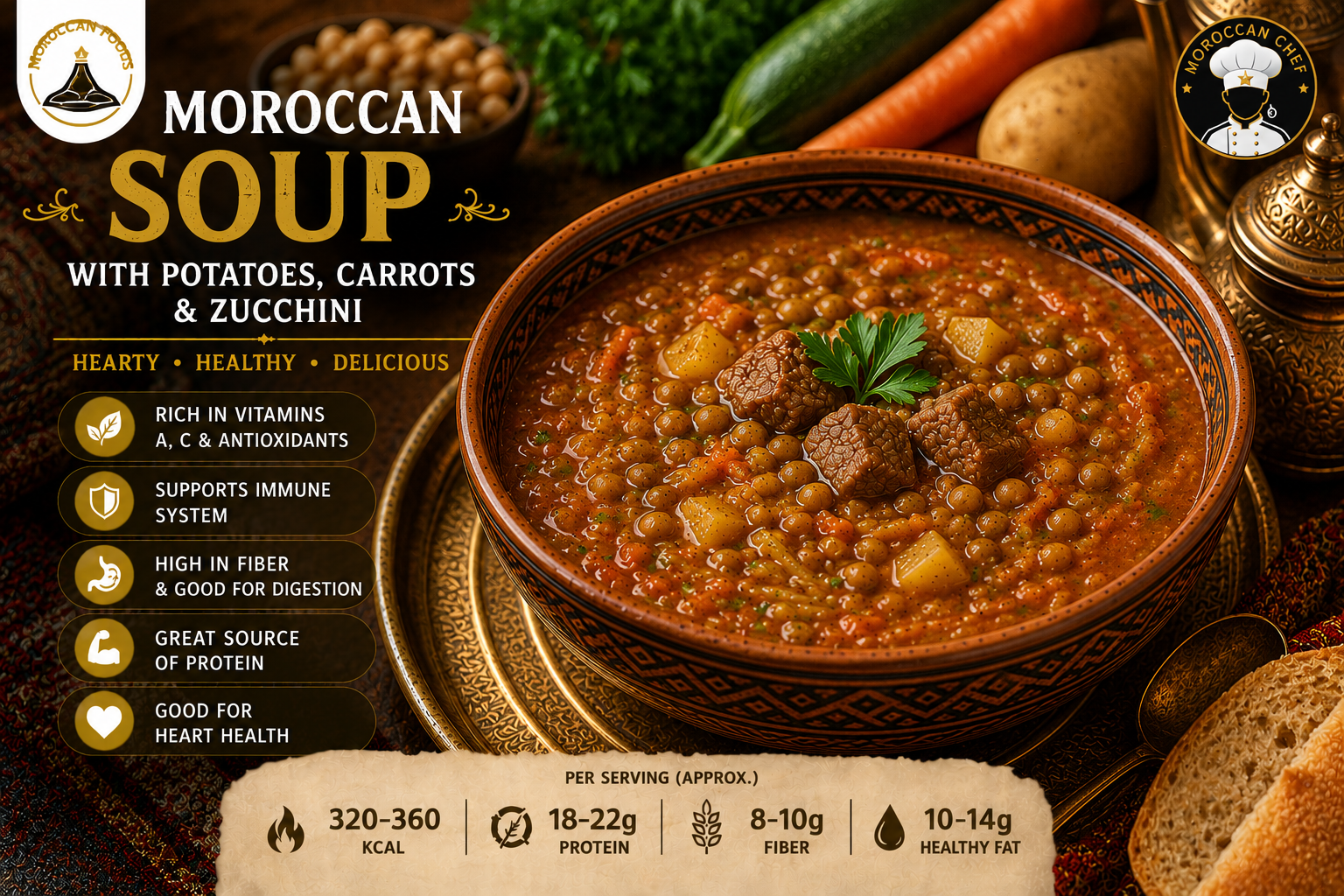
Moroccan Harira is one of Morocco’s most iconic and cherished dishes, celebrated for its rich flavors, nourishing ingredients, and deep cultural significance. Made with tender beef, tomatoes, potatoes, carrots, zucchini, lentils, chickpeas, fresh herbs, and fragrant Moroccan spices, this hearty soup offers a perfect balance of taste and nutrition.
Traditionally enjoyed during Ramadan to break the fast, Harira is also a beloved comfort food served throughout the year for family meals and special gatherings. Its slow-simmered broth develops a deep, satisfying flavor that pairs beautifully with dates, Moroccan chebakia, fresh bread, or lemon wedges.
This authentic Moroccan Harira recipe will guide you step by step to recreate the classic homemade version, delivering a warm, aromatic, and comforting soup that has been passed down through generations in Moroccan kitchens.
Recipe Information:
| Information | Details |
|---|---|
| Prep Time | 10 minutes |
| Cook Time | 1h 5 minutes |
| Total Time | 1h 15 minutes |
| Servings | 5 people |
| Cuisine | Moroccan |
| Difficulty | Easy |
Ingredients:
- 2 two small grated potatoes
- 1 grated zucchini
- 1 grated carrot
- 150g of lentils, soaked overnight
- 100g of chickpeas, soaked overnight
- 1 large onion, finely chopped
- 200g of small pieces of meat
- 1 tomato, thinly sliced
- A bunch of celery, chopped
- 1 teaspoon of ground ginger
- 1 teaspoon of turmeric
- 1 tablespoon of butter
- 1 tablespoon of oil
- 1 heaped teaspoon of salt
- 1 teaspoon of pepper
- 2 liters of water
- 3 tablespoons of tomato paste
- 3 tablespoons of chopped coriander and parsley
- 50g of fine vermicelli

Instructions:
step1:
Take a pressure cooker and add 100g of lentils soaked overnight and 100g of chickpeas soaked overnight. Then add one finely chopped onion, 200g of diced meat, one finely chopped tomato, a handful of chopped celery, one teaspoon of ground ginger, one teaspoon of turmeric, one tablespoon of butter, two tablespoons of olive oil, one heaped teaspoon of salt, one teaspoon of pepper, and two liters of water.
Let it cook for 40 minutes from the moment the pressure cooker’s whistle starts turning

step2:
After 40 minutes, open the pressure cooker and add three tablespoons of tomato paste, along with the finely grated potatoes, carrots, and zucchini. Close the pressure cooker and cook for another 15 minutes. Then, open the pressure cooker and add three tablespoons of chopped cilantro and parsley, plus 30 grams of rice vermicelli. Cook for another 20 minutes.

Servings Soup :
This traditional Moroccan soup is served with honeyed chebakia pastries, dates, black and green figs, and dried figs as a lunch meal, or in the evening as a dinner meal. It is also served as a main dish for breakfast during Ramadan.

This soup has high nutritional value. If you exercise, you can eat it after your training session with dates, black and white figs, and dried figs.

Show Health benefits and nutritional value
Health Benefits of Moroccan Potato, Carrot & Zucchini Soup
This nourishing Moroccan soup combines fresh vegetables, legumes, lean meat, and aromatic spices into a balanced meal packed with vitamins, minerals, fiber, and high-quality protein.
Rich in Vitamins and Antioxidants
- Carrots are an excellent source of vitamin A (beta-carotene), which supports healthy vision, skin, and immune function.
- Zucchini provides vitamin C, potassium, and antioxidants that help protect the body’s cells.
- Tomatoes contain lycopene, a powerful antioxidant associated with heart health.
Supports Digestive Health
- Lentils, chickpeas, vegetables, and celery provide dietary fiber, which:
- Promotes healthy digestion.
- Helps prevent constipation.
- Supports beneficial gut bacteria.
- Increases satiety after meals.
Excellent Source of Plant and Animal Protein
- Lentils and chickpeas provide plant-based protein.
- Lean meat supplies complete protein rich in essential amino acids, supporting muscle maintenance and tissue repair.
Promotes Heart Health
- Olive oil contains heart-friendly monounsaturated fats.
- Turmeric and ginger contain natural compounds with anti-inflammatory properties.
- Fiber from legumes may help support healthy cholesterol levels.
Helps Maintain Stable Energy
- Potatoes, legumes, and vegetables provide complex carbohydrates that release energy gradually, helping keep you full longer than refined carbohydrates.
Rich in Essential Minerals
This soup naturally supplies:
- Potassium
- Iron
- Magnesium
- Phosphorus
- Zinc
These nutrients contribute to healthy muscles, nerve function, blood circulation, and energy production.
Supports Immune Function
The combination of vitamin A, vitamin C, zinc, and antioxidant-rich vegetables helps support the body’s natural immune defenses.
Nutrition Facts (Approximate)
The following values are estimated per serving (assuming the recipe serves 6).
| Nutrient | Amount |
|---|---|
| Calories | 320–360 kcal |
| Protein | 18–22 g |
| Carbohydrates | 28–34 g |
| Dietary Fiber | 8–10 g |
| Total Fat | 10–14 g |
| Saturated Fat | 3–4 g |
| Cholesterol | 30–40 mg |
| Sodium* | 450–650 mg |
| Potassium | 850–1,000 mg |
| Vitamin A | 90–120% DV |
| Vitamin C | 25–35% DV |
| Iron | 20–30% DV |
| Calcium | 6–10% DV |
| Folate | 25–35% DV |
*Depending on the amount of salt used.
Why You’ll Love This Soup
- ✔ High in fiber
- ✔ Rich in protein
- ✔ Packed with vegetables
- ✔ Excellent source of vitamin A
- ✔ Good source of iron
- ✔ Naturally satisfying
- ✔ Ideal for family meals
- ✔ Traditional Moroccan comfort food

Frequently Asked Questions (FAQ)
1. Can I make this Moroccan soup without meat?
Yes. You can omit the meat and increase the amount of lentils or chickpeas to create a delicious vegetarian version while still enjoying a hearty and nutritious soup.
2. Can I use canned chickpeas instead of dried chickpeas?
Yes. If using canned chickpeas, drain and rinse them well before adding them to the soup. Since they are already cooked, add them during the last 20–30 minutes of cooking.
3. Why are the potatoes, carrots, and zucchini grated?
Grating the vegetables allows them to cook quickly, blend smoothly into the broth, and naturally thicken the soup without the need for flour or cream.
4. Can I prepare this soup in advance?
Absolutely. In fact, the flavors become even richer after resting for several hours or overnight in the refrigerator.
5. How long can I store the soup?
Store the soup in an airtight container in the refrigerator for up to 4 days. Reheat gently before serving.
6. Can this soup be frozen?
Yes. Allow the soup to cool completely, then freeze it in airtight containers for up to 3 months. Thaw overnight in the refrigerator before reheating.
7. What can I serve with this Moroccan soup?
This soup pairs wonderfully with Moroccan bread (Khobz), fresh lemon wedges, dates, olives, or traditional Moroccan pastries such as Chebakia during Ramadan.
8. Is this soup healthy?
Yes. It is rich in vegetables, legumes, lean protein, fiber, vitamins, and essential minerals, making it a balanced and nourishing meal.
9. Can I make the soup spicy?
Certainly. Add cayenne pepper, chili flakes, or Moroccan hot paprika according to your preferred spice level.
10. Which spices give this soup its authentic Moroccan flavor?
Ground ginger, turmeric, black pepper, fresh parsley, celery, and a touch of butter and olive oil create the classic Moroccan taste. Some families also add a small amount of cinnamon or saffron for extra depth.
11. Can I cook this soup in a pressure cooker?
Yes. A pressure cooker significantly reduces the cooking time while preserving the rich flavors. Cook until the meat, lentils, and chickpeas are tender.
12. Is this soup suitable for Ramadan?
Yes. This hearty Moroccan soup is an excellent choice for Iftar because it provides protein, fiber, complex carbohydrates, and essential nutrients that help restore energy after fasting.


Leave a Reply