
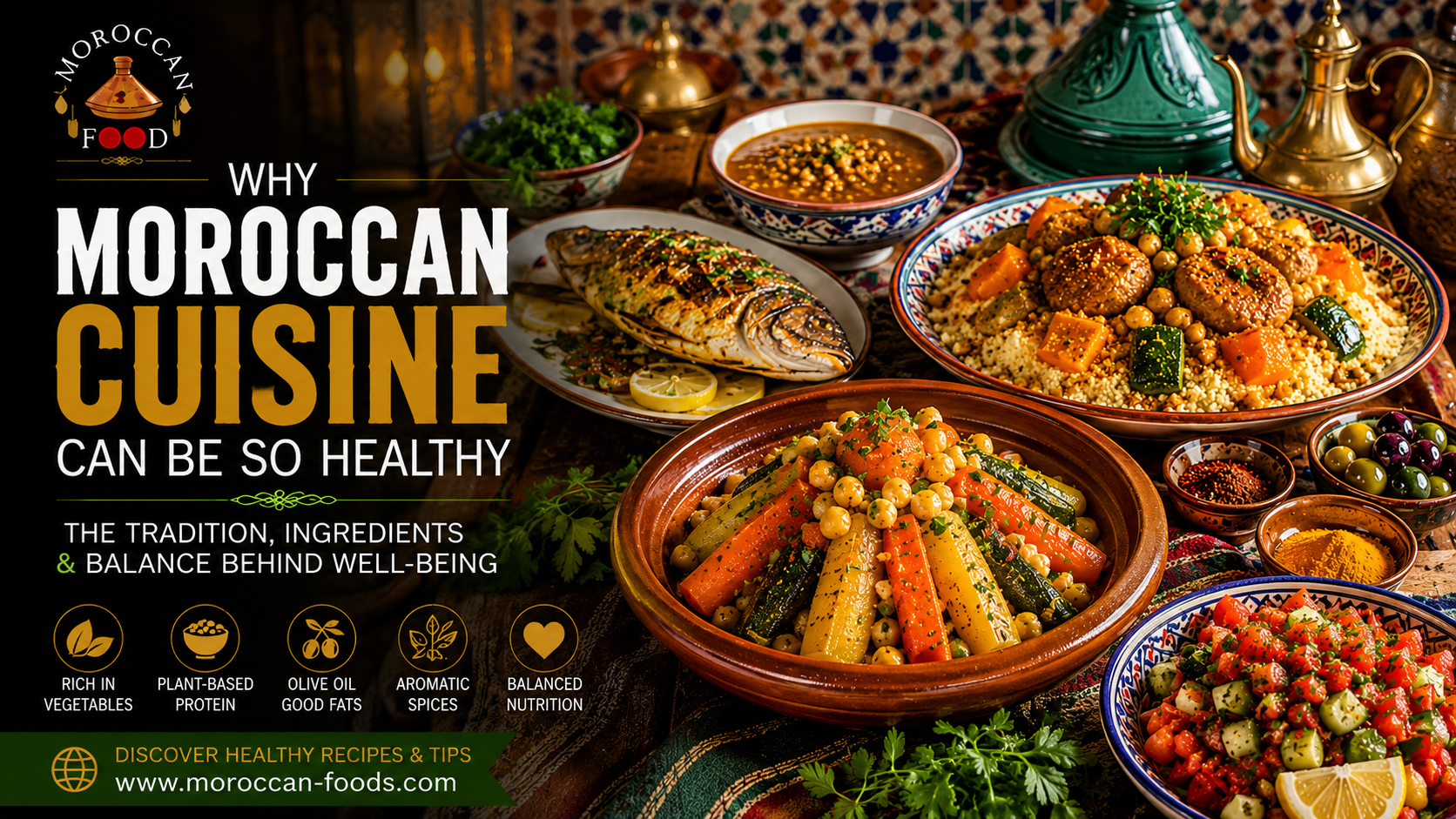
Moroccan cuisine is famous for its rich aromas, colorful ingredients, and remarkable variety. From vegetable tagines and couscous to lentil soups, salads, fish dishes, and fresh herbs, traditional Moroccan cooking often combines simple ingredients in ways that can create nutritionally balanced and satisfying meals.
But is every Moroccan dish automatically healthy?
Not necessarily. Dishes containing large amounts of added fat, sugar, salt, or refined ingredients can become less balanced. The real strength of Moroccan cuisine lies in the traditional cooking principles and ingredients that make many of its dishes naturally compatible with a healthy diet.
Understanding these principles helps explain why Moroccan food can be both delicious and nutritious.
1. A Strong Use of Vegetables
One of the most important characteristics of Moroccan cooking is its use of vegetables.
Carrots, zucchini, tomatoes, onions, potatoes, pumpkin, eggplant, peppers, peas, turnips, and many seasonal vegetables appear in different Moroccan preparations.
Vegetables provide important nutrients, including:
- Dietary fiber
- Vitamins
- Minerals
- Water
- Plant compounds with antioxidant activity
In a traditional vegetable tagine, for example, several vegetables can be cooked together with herbs, spices, olive oil, and a modest amount of protein.
This creates a meal with considerable variety without requiring highly processed ingredients.
2. Legumes Are a Major Source of Plant Protein
Moroccan cuisine has a long tradition of using legumes such as lentils, chickpeas, beans, and split peas.
These foods provide plant protein and dietary fiber and can contribute to satiety.
Classic preparations such as harira and lentil-based dishes demonstrate how legumes can form an important part of a traditional Moroccan meal.
Combining legumes with vegetables, herbs, spices, and grains creates meals with a wide range of nutrients.
3. Olive Oil Plays an Important Role
Extra virgin olive oil is an important ingredient in Moroccan cooking.
Unlike heavily processed cooking fats, extra virgin olive oil contains predominantly monounsaturated fat and naturally occurring plant compounds.
However, an important principle should be remembered:
A nutritious fat is still a source of energy.
The healthfulness of a dish does not depend on using unlimited olive oil. The quantity matters.
Traditional Moroccan cooking often uses olive oil to carry aromas and flavors from herbs and spices while contributing richness and texture.
4. Moroccan Spices Add Flavor Without Requiring Heavy Sauces
Moroccan cuisine is particularly interesting because it can create intense flavor without relying exclusively on cream, cheese, or heavily processed sauces.
Cumin, ginger, turmeric, paprika, black pepper, cinnamon, saffron, coriander, and other spices are used to build layers of aroma.
Spices themselves are generally used in relatively small quantities, but they can make simple ingredients much more flavorful.
This has an important culinary advantage:
Flavor does not have to come entirely from fat, sugar, or heavy sauces.
5. Fresh Herbs Are More Than Decoration
Parsley and cilantro are fundamental to many Moroccan preparations.
They contribute freshness and aroma while complementing vegetables, legumes, fish, meat, soups, marinades, and salads.
Herbs are particularly useful because they allow cooks to increase the sensory complexity of a dish without substantially increasing its energy density.
A simple vegetable preparation can become much more appealing through the combination of fresh herbs, garlic, spices, and olive oil.
6. Traditional Cooking Often Preserves the Identity of Ingredients
Many Moroccan cooking techniques rely on relatively simple transformations rather than extensive industrial processing.
Tagine cooking, steaming, simmering, roasting, and slow cooking can allow ingredients to develop flavor gradually.
For example, slow cooking vegetables with onions, spices, and a modest amount of olive oil can produce a deeply flavored dish without requiring complicated sauces.
The technique matters because how food is prepared influences its nutritional and sensory characteristics.
7. Couscous Can Be Part of a Balanced Meal
Couscous is sometimes misunderstood because people associate it primarily with carbohydrates.
But traditional Moroccan couscous is rarely just a plate of grains.
A complete couscous preparation may contain:
Couscous + vegetables + chickpeas + meat or another protein + broth + herbs and spices
The nutritional quality of the meal therefore depends on the entire composition of the dish rather than on the couscous alone.
The quantity of couscous, vegetables, protein, and added fat can be adjusted according to individual nutritional needs.
8. Fish Has an Important Place in Moroccan Cuisine
With Morocco’s extensive Atlantic and Mediterranean coastlines, fish and seafood have an important place in Moroccan food culture.
Fish provides high-quality protein, and many varieties also provide beneficial fatty acids.
Moroccan culinary techniques such as grilling, baking, steaming, or cooking fish with chermoula can create flavorful dishes without requiring heavy sauces.
This combination of fish + herbs + spices + vegetables + olive oil is a good example of how Moroccan flavors can be developed through ingredients rather than excessive processing.
9. Moroccan Soups Can Be Nutrient-Dense
Traditional Moroccan soups can combine several food groups in one preparation.
Harira, for example, can contain tomatoes, legumes, herbs, spices, and sometimes meat and grains.
The exact nutritional composition varies considerably according to the recipe.
A soup based mainly on vegetables and legumes can provide fiber and plant-based nutrients, while the addition of meat or grains changes its nutritional profile.
This versatility is one of the strengths of traditional Moroccan cooking.
10. Moroccan Salads Bring Variety to the Table
Moroccan meals frequently include cooked or fresh vegetable salads.
Examples can include preparations based on carrots, tomatoes, peppers, eggplant, beetroot, zucchini, or other seasonal vegetables.
These dishes add color, texture, fiber, and variety to the meal.
Importantly, Moroccan salads are not necessarily limited to raw vegetables. Many traditional salads use gently cooked vegetables seasoned with herbs, spices, garlic, olive oil, and acidity.
This creates a completely different approach to eating vegetables.
11. The Importance of Acidity
Lemon juice, preserved lemon, vinegar, and other acidic ingredients can play an important role in Moroccan cooking.
Acidity can make food taste brighter and more balanced.
This is particularly useful because a small amount of acidic flavor can reduce the perception that a dish needs additional fat or heavy seasoning.
Preserved lemon is an excellent example: it contributes citrus aroma, acidity, saltiness, and complexity simultaneously.
12. Moroccan Cuisine Uses a Wide Range of Plant Foods
Another important nutritional advantage is variety.
Traditional Moroccan cooking includes:
- Vegetables
- Legumes
- Whole and refined grains
- Fruits
- Nuts
- Seeds
- Herbs
- Spices
- Olives
- Olive oil
A varied diet is generally more capable of providing a broad range of nutrients than a diet based on a small number of foods.
This diversity is deeply connected to Morocco’s agricultural regions and seasonal food traditions.
13. Traditional Cooking Is Often About Balance
Perhaps the most important lesson is that Moroccan cuisine is built around balance.
A successful Moroccan dish often combines contrasting elements:
Sweet + savory
Acidic + rich
Soft + crisp
Fresh + cooked
Mild + aromatic
This balance is not only a matter of taste. It can also help create satisfying meals without depending entirely on one ingredient.
For example, vegetables provide volume and fiber, legumes contribute protein and fiber, olive oil provides fat, and spices and herbs provide intense flavor.
14. But Not Every Moroccan Dish Is Automatically Healthy
This distinction is essential.
Moroccan cuisine contains desserts, pastries, sweetened drinks, fried foods, large amounts of bread, and dishes that can contain significant quantities of oil, sugar, or salt.
Therefore, saying that every Moroccan recipe is healthy would be inaccurate.
A better conclusion is:
Traditional Moroccan cuisine contains many naturally nutritious ingredients and cooking practices, but the nutritional quality of any dish depends on its ingredients, quantities, preparation method, and portion size.
This is particularly important when adapting traditional recipes to modern lifestyles.
How to Make Moroccan Recipes Even More Balanced
The beauty of Moroccan cuisine is that many recipes can be adjusted without destroying their identity.
A cook can:
- Increase the proportion of vegetables.
- Include more legumes where appropriate.
- Choose leaner cuts of meat.
- Use olive oil thoughtfully rather than excessively.
- Limit added sugar in sweet preparations.
- Moderate salt while maintaining flavor through herbs and spices.
- Choose appropriate portion sizes.
- Prefer steaming, baking, grilling, or simmering when suitable.
- Include fresh fruit as part of the overall diet.
The objective is not to remove everything that makes Moroccan food enjoyable.
It is to preserve the flavor while improving the balance.
The Real Secret of Moroccan Cuisine
The nutritional potential of Moroccan cuisine does not come from one “superfood” or one special spice.
It comes from a broader culinary philosophy:
Variety + vegetables + legumes + herbs + spices + quality fats + traditional cooking techniques
This combination allows relatively simple ingredients to become deeply satisfying meals.
And perhaps this is one of the most valuable lessons Moroccan cuisine can offer modern cooks:
Healthy cooking does not have to mean boring cooking.
Moroccan food demonstrates that vegetables can be exciting, legumes can be comforting, fish can be intensely flavorful, and simple ingredients can produce sophisticated dishes.
Final Thoughts
Moroccan cuisine should not be described as universally healthy, but many of its traditional dishes can form part of a balanced and nutritious eating pattern.
Its extensive use of vegetables, legumes, herbs, spices, olive oil, fish, and minimally processed ingredients provides a strong foundation. At the same time, portions, cooking methods, added fats, sugar, and salt remain important.
The real strength of Moroccan cooking is therefore not that every dish is automatically healthy.
It is that traditional Moroccan culinary techniques provide the cook with many ways to create nutritious food without sacrificing flavor, aroma, culture, or pleasure.
FAQ
Is Moroccan cuisine healthy?
Moroccan cuisine can be part of a healthy and balanced diet. Many traditional dishes include vegetables, legumes, whole foods, herbs, spices, olive oil, and fish. However, the nutritional value depends on the ingredients, portions, cooking methods, and amounts of added oil, salt, or sugar.
Why is Moroccan cuisine considered nutritious?
Traditional Moroccan cooking uses a wide variety of vegetables, legumes, grains, herbs, spices, fruits, olives, and olive oil. This diversity can provide fiber, protein, healthy fats, vitamins, minerals, and other beneficial plant compounds.
Are Moroccan spices good for you?
Moroccan spices such as cumin, ginger, turmeric, paprika, cinnamon, and black pepper add intense flavor while generally being used in small quantities. They can help create flavorful meals without relying entirely on heavy sauces, excess fat, or sugar.
Is olive oil healthy in Moroccan cooking?
Olive oil is a source of predominantly monounsaturated fat and is an important part of the traditional Moroccan diet. However, it is still energy-dense, so the amount used matters.
Are Moroccan tagines healthy?
Many vegetable, fish, and moderately portioned meat tagines can fit well into a balanced diet. Their nutritional profile depends on the ingredients and the amount of oil, salt, and meat used.
Is Moroccan couscous healthy?
Couscous can be part of a balanced meal, particularly when served with plenty of vegetables, legumes, and an appropriate portion of protein. The overall composition of the meal matters more than the couscous alone.
Are Moroccan legumes good sources of protein?
Yes. Lentils, chickpeas, beans, and split peas provide plant protein and dietary fiber. They are important ingredients in several traditional Moroccan soups and dishes.
Why are vegetables important in Moroccan cuisine?
Vegetables such as carrots, zucchini, tomatoes, peppers, pumpkin, eggplant, and turnips provide fiber, vitamins, minerals, and other plant nutrients while adding color, texture, and variety to meals.
Is Moroccan harira healthy?
Harira can be a nutrient-dense meal because traditional versions may combine tomatoes, legumes, herbs, spices, grains, and sometimes meat. However, recipes vary, so its nutritional composition depends on the ingredients and quantities used.
Can Moroccan food be healthy without being bland?
Absolutely. Moroccan cuisine demonstrates how herbs, spices, garlic, preserved lemon, olive oil, and other aromatic ingredients can create complex flavors without requiring large amounts of heavy sauces, sugar, or fat.
Are Moroccan salads healthy?
Many traditional Moroccan salads are vegetable-based and can provide fiber and micronutrients. Their nutritional profile depends partly on the amount of oil, salt, and other added ingredients.
Is Moroccan food always healthy?
No. Moroccan cuisine also includes pastries, desserts, fried foods, sweetened beverages, and dishes that can contain significant amounts of oil, sugar, or salt. Traditional cuisine should not be considered automatically healthy simply because it is Moroccan.
How can I make Moroccan recipes healthier?
You can increase vegetables and legumes, choose leaner protein sources, use olive oil thoughtfully, moderate salt and added sugar, and choose cooking methods such as steaming, baking, grilling, or simmering when appropriate.
What makes Moroccan cuisine different from many modern diets?
One of its strengths is its combination of variety and flavor. Traditional Moroccan meals can bring together vegetables, legumes, grains, herbs, spices, and quality fats, creating satisfying dishes from relatively simple ingredients.
What is the main health principle behind traditional Moroccan cuisine?
The key is balance and variety. Moroccan cooking can provide nutritious meals when vegetables, legumes, whole foods, quality fats, and appropriate portions are combined while highly sugary, salty, or heavily fried foods are consumed more moderately.


Leave a Reply