
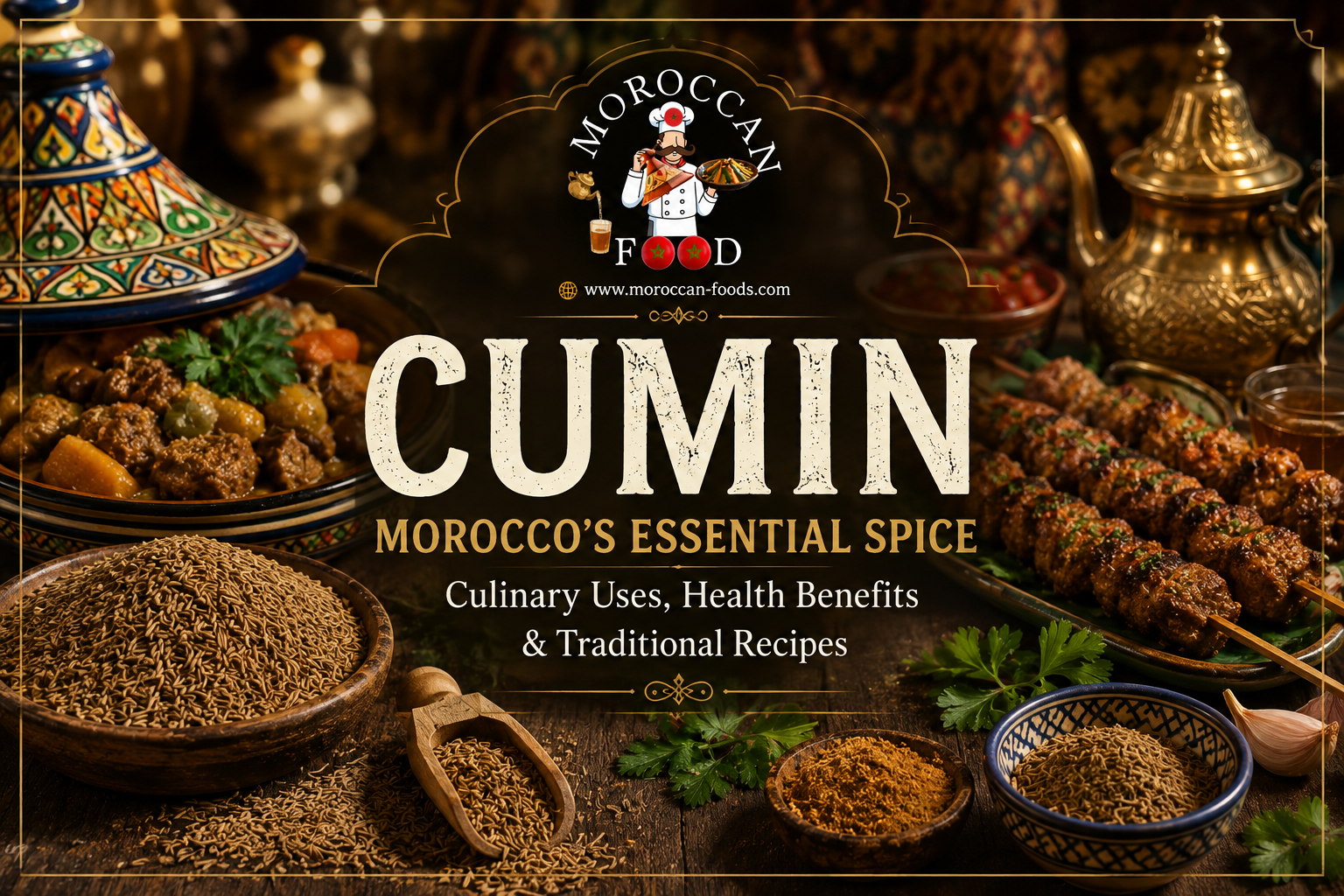
Cumin is one of the world’s oldest and most treasured spices, and it holds a special place in Moroccan cuisine. Known for its warm aroma, earthy flavor, and remarkable versatility, cumin is used daily in homes and restaurants across Morocco. From traditional tagines and hearty soups to grilled meats and fresh salads, this aromatic spice is an essential ingredient that defines the authentic taste of Moroccan cooking.
Beyond its rich flavor, cumin has been valued for centuries in traditional medicine due to its impressive nutritional profile and potential health benefits. Today, it remains one of the most important spices in the Moroccan pantry, appreciated for both its culinary and wellness properties.
What Is Cumin?
Cumin (Cuminum cyminum) is an annual flowering plant belonging to the parsley family (Apiaceae). Its dried seeds are harvested and used either whole or ground as a spice. Native to the Mediterranean region and Southwest Asia, cumin is now cultivated worldwide and is especially popular in North African, Middle Eastern, Indian, and Latin American cuisines.
The seeds are small, elongated, and yellowish-brown, with a distinctive aroma created by natural essential oils, particularly cuminaldehyde, the compound responsible for cumin’s signature fragrance and flavor.
Nutritional Value of Cumin
Although used in small quantities, cumin is packed with essential nutrients and beneficial plant compounds, including:
- Iron
- Manganese
- Magnesium
- Calcium
- Phosphorus
- Potassium
- Zinc
- Vitamin E
- Dietary fiber
- Powerful antioxidants
- Natural essential oils, especially cuminaldehyde
These nutrients make cumin both a flavorful spice and a valuable addition to a balanced diet.
Cumin in Moroccan Cuisine
Cumin is one of the pillars of Moroccan cooking. Its warm, earthy flavor complements meats, vegetables, legumes, seafood, and traditional spice blends.
1. Meat Seasoning
Cumin is widely used to season:
- Beef
- Lamb
- Chicken
- Moroccan kefta (ground meat)
It enhances the natural flavor of meat while helping reduce strong odors during cooking.
2. Seafood Dishes
Moroccan seafood recipes frequently include cumin, particularly:
- Sardines
- Whiting
- Shrimp
- Fish tagines
It is commonly combined with:
- Garlic
- Paprika
- Coriander
- Lemon juice
- Olive oil
This combination creates the rich, authentic flavors that characterize Moroccan seafood.
3. Moroccan Salads
Cumin is an essential ingredient in many classic salads, including:
- Moroccan tomato salad
- Carrot salad
- Roasted pepper salad
- Cucumber salad
It adds warmth and depth while balancing the freshness of vegetables.
4. Traditional Moroccan Tagines
Most Moroccan tagines include cumin, such as:
- Beef tagine
- Chicken tagine
- Fish tagine
- Kefta tagine
- Vegetable tagine
Its earthy aroma blends beautifully with other Moroccan spices.
5. Soups
Cumin is a key seasoning in:
- Harira
- Lentil soup
- Vegetable soup
Besides enriching flavor, it has traditionally been used to support digestion.
6. Legume Dishes
Moroccan cooks often add cumin to:
- Lentils
- White beans
- Chickpeas
- Fava beans
It helps create a more balanced flavor and is traditionally believed to reduce bloating associated with legumes.
7. Cooked Vegetables
Cumin pairs exceptionally well with:
- Potatoes
- Cauliflower
- Broccoli
- Carrots
- Zucchini
8. Egg Dishes
A light sprinkle of cumin enhances:
- Boiled eggs
- Omelets
- Moroccan shakshuka
9. Bread and Savory Pastries
Some traditional Moroccan breads and savory pastries include cumin for extra aroma and depth of flavor.
10. Moroccan Barbecue and Grilled Meats
Cumin plays a central role in Morocco’s barbecue traditions and is considered one of the essential spices served alongside grilled meats.
It is commonly used in several ways:
- Sprinkled directly over grilled meat immediately after cooking, usually with a pinch of salt, to enhance the meat’s natural flavor.
- Moroccan Brochettes (Kebabs): Cumin is mixed into the marinade before grilling and is often sprinkled over the skewers after they come off the charcoal.
- Boulfaf: One of Morocco’s most iconic grilled dishes, made with liver wrapped in caul fat and grilled over charcoal. After cooking, it is traditionally seasoned with cumin and salt, creating its distinctive smoky, savory flavor that is especially popular during Eid al-Adha and family celebrations.
- Grilled liver: Cumin is frequently sprinkled over freshly grilled liver, adding warmth, richness, and a balanced finish.
The classic combination of cumin and salt is deeply rooted in Moroccan culinary tradition and is often served with freshly baked Moroccan bread and seasonal salads.
Why Moroccans Love Cumin
Cumin remains one of Morocco’s favorite spices because it:
- Adds rich, earthy flavor without overpowering other ingredients.
- Complements nearly every Moroccan spice blend.
- Pairs beautifully with meat, seafood, vegetables, and legumes.
- Requires only a small amount to transform an entire dish.
- Represents an essential part of Morocco’s culinary heritage.
Popular Moroccan Spice Combinations with Cumin
Cumin is frequently combined with:
- Paprika
- Turmeric
- Ginger
- Black pepper
- Ground coriander
- Cinnamon (in selected recipes)
- Ras El Hanout
Together, these spices create the unmistakable flavor profile of authentic Moroccan cuisine.
Health Benefits of Cumin
Modern research has shown that cumin contains bioactive compounds and antioxidants that may contribute to overall health when consumed as part of a balanced diet.
Supports Healthy Digestion
Cumin has traditionally been used to:
- Stimulate digestive enzymes
- Improve digestion
- Reduce bloating
- Help relieve gas and digestive discomfort
Rich in Antioxidants
Cumin contains natural antioxidants that help protect cells from oxidative stress caused by free radicals.
Excellent Source of Iron
Cumin is naturally rich in iron, an essential mineral required for healthy red blood cells and oxygen transport throughout the body.
May Support Heart Health
As part of a healthy diet, cumin may help:
- Support cardiovascular health
- Maintain healthy cholesterol levels
- Promote healthy blood vessels
May Help Maintain Healthy Blood Sugar Levels
Some scientific studies suggest that cumin may support healthy blood sugar regulation. However, it should never replace medical treatment or professional healthcare advice.
Natural Antimicrobial Properties
The essential oils found in cumin have demonstrated antimicrobial activity against certain bacteria and fungi in laboratory studies.
May Support Healthy Weight Management
Although cumin is not a weight-loss solution, it may complement a balanced diet and healthy lifestyle as part of an overall nutrition plan.
Supports the Immune System
Its antioxidants, minerals, and beneficial plant compounds contribute to the normal function of the immune system.
How to Store Cumin
For maximum freshness:
- Store in an airtight container.
- Keep in a cool, dry place.
- Protect from moisture and direct sunlight.
- Buy whole cumin seeds whenever possible and grind them just before use for the strongest flavor and aroma.
Whole Cumin Seeds vs. Ground Cumin
Whole Cumin Seeds
- Longer shelf life
- Stronger aroma
- Best when lightly toasted before grinding
Ground Cumin
- Convenient for everyday cooking
- Easy to mix into marinades and spice blends
- Should be stored properly to preserve flavor
Professional Tips for Cooking with Cumin
- Use cumin in moderation to avoid overpowering your dish.
- Add it early in the cooking process to release its essential oils.
- Pair it with garlic, paprika, coriander, and olive oil for authentic Moroccan flavor.
- Sprinkle a small amount over salads, eggs, hummus, or grilled meats just before serving for extra aroma.
Conclusion
Cumin is far more than a simple spice—it is one of the defining ingredients of Moroccan cuisine and an essential component of the country’s rich culinary identity. Whether seasoning tagines, soups, seafood, legumes, fresh salads, or the famous Moroccan grilled meats such as brochettes and Boulfaf, cumin delivers a warm, earthy flavor that has been cherished for generations.
Rich in antioxidants, minerals, and beneficial plant compounds, cumin also offers valuable nutritional benefits when enjoyed as part of a balanced diet. Its versatility, distinctive aroma, and deep connection to Moroccan culinary traditions make it an indispensable spice for anyone seeking to experience the authentic flavors of Morocco.


Leave a Reply