
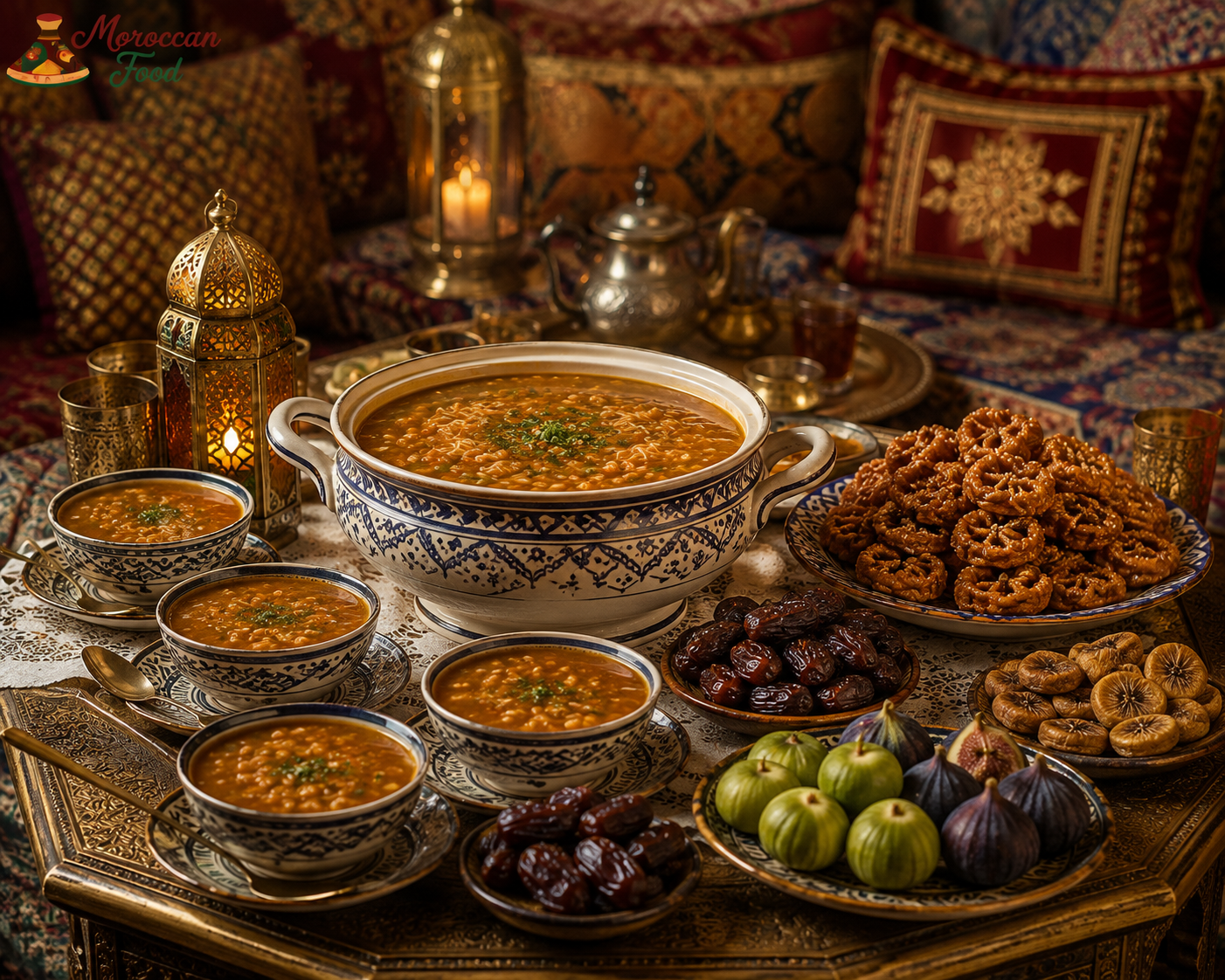
Moroccan Harira is one of Morocco’s most iconic and cherished dishes, celebrated for its rich flavors, nourishing ingredients, and deep cultural significance. Made with tender beef, tomatoes, lentils, chickpeas, fresh herbs, and fragrant Moroccan spices, this hearty soup offers a perfect balance of taste and nutrition.
Traditionally enjoyed during Ramadan to break the fast, Harira is also a beloved comfort food served throughout the year for family meals and special gatherings. Its slow-simmered broth develops a deep, satisfying flavor that pairs beautifully with dates, Moroccan chebakia, fresh bread, or lemon wedges.
This authentic Moroccan Harira recipe will guide you step by step to recreate the classic homemade version, delivering a warm, aromatic, and comforting soup that has been passed down through generations in Moroccan kitchens.
Recipe Information:
| Information | Details |
|---|---|
| Prep Time | 10 minutes |
| Cook Time | 1h 5 minutes |
| Total Time | 1h 15 minutes |
| Servings | 5 people |
| Cuisine | Moroccan |
| Difficulty | Easy |
Ingredients:
- 150g of lentils, soaked overnight
- 100g of chickpeas, soaked overnight
- 1 large onion, finely chopped
- 200g of small pieces of meat
- 1 tomato, thinly sliced
- A bunch of celery, chopped
- 1 teaspoon of ground ginger
- 1 teaspoon of turmeric
- 1 tablespoon of butter
- 1 tablespoon of oil
- 1 heaped teaspoon of salt
- 1 teaspoon of pepper
- 2 liters of water
- 500ml of cold water with 150g of all-purpose flour, thoroughly mixed
- 3 tablespoons of tomato paste
- 3 tablespoons of chopped coriander and parsley
- 50g of fine vermicelli

Instructions:
step1:
Take a pressure cooker and add 100g of lentils soaked overnight and 100g of chickpeas soaked overnight. Then add one finely chopped onion, 200g of diced meat, one finely chopped tomato, a handful of chopped celery, one teaspoon of ground ginger, one teaspoon of turmeric, one tablespoon of butter, two tablespoons of olive oil, one heaped teaspoon of salt, one teaspoon of pepper, and two liters of water.
Let it cook for 40 minutes from the moment the pressure cooker’s whistle starts turning.

step2:
After 40 minutes, open the pressure cooker and add three tablespoons of tomato paste and half a liter of water in which 150g of white flour has been dissolved. Close the pressure cooker and cook for another 15 minutes. After this time, open the pressure cooker and add three tablespoons of chopped coriander and parsley, along with 30g of vermicelli noodles. Cook for another 20 minutes.

Servings Soup :
This traditional Moroccan soup is served with honeyed chebakia pastries, dates, black and green figs, and dried figs as a lunch meal, or in the evening as a dinner meal. It is also served as a main dish for breakfast during Ramadan.

This soup has high nutritional value. If you exercise, you can eat it after your training session with dates, black and white figs, and dried figs.

Show Health benefits and nutritional value
Health Benefits of Moroccan Harira Soup
1. Excellent Source of Protein
Beef, lentils, and chickpeas provide high-quality protein that helps build and repair muscles, supports recovery after physical activity, and promotes lasting satiety.
2. Rich in Dietary Fiber
Lentils, chickpeas, celery, and herbs are naturally high in fiber, which supports healthy digestion, promotes regular bowel movements, and helps maintain stable blood sugar levels.
3. Supports Heart Health
Olive oil contains heart-friendly monounsaturated fats, while legumes may help support healthy cholesterol levels as part of a balanced diet.
4. Packed with Vitamins and Minerals
Fresh tomatoes, celery, coriander, and parsley provide vitamin C, vitamin K, folate, potassium, and antioxidants that contribute to overall health and normal immune function.
5. Provides Long-Lasting Energy
The combination of legumes, vermicelli, and flour supplies complex carbohydrates that release energy gradually, making Harira an excellent meal after long periods of fasting or physical activity.
6. Naturally Rich in Iron
Beef, lentils, and chickpeas provide iron, an essential mineral that helps transport oxygen throughout the body and supports normal energy production.
7. Supports Muscle Recovery
With its balance of protein, carbohydrates, and essential minerals, Harira is a satisfying meal that can help replenish energy stores and support recovery after exercise.
8. Contains Beneficial Antioxidants
Tomatoes contain lycopene, while herbs and spices such as turmeric and ginger contribute natural antioxidant compounds that help protect cells from oxidative stress.
9. Warming and Comforting
Served hot, Harira is a comforting meal that promotes hydration and is especially enjoyable during colder months or after breaking a fast.
10. A Well-Balanced Traditional Meal
Moroccan Harira combines protein, complex carbohydrates, healthy fats, fiber, vitamins, and minerals in one nourishing dish, making it a wholesome option for lunch or dinner.
Note: The nutritional value of Harira may vary depending on the amount of oil, butter, meat, and flour used, as well as the serving size. For a lighter version, reduce the butter and oil or use lean beef.

Frequently Asked Questions (FAQ) – Moroccan Harira Recipe
1. What is Moroccan Harira?
Moroccan Harira is a traditional soup made with beef, lentils, chickpeas, tomatoes, fresh herbs, and aromatic spices. It is especially popular during Ramadan but is enjoyed throughout the year.
2. Can I make Harira without meat?
Yes. You can omit the beef for a vegetarian version. The lentils and chickpeas still provide plenty of protein and a rich texture.
3. Why should the lentils and chickpeas be soaked overnight?
Soaking softens the legumes, reduces cooking time, and helps them cook evenly while improving digestibility.
4. Can I use canned chickpeas instead of dried chickpeas?
Yes. If using canned chickpeas, add them after the initial pressure-cooking stage since they are already cooked.
5. Why is flour mixed with cold water before adding it to the soup?
Mixing the flour with cold water creates a smooth slurry that thickens the Harira without forming lumps.
6. Can I freeze Moroccan Harira?
Yes. Harira freezes very well for up to 3 months. Let it cool completely before storing it in airtight containers.
7. How should I reheat Harira?
Reheat gently over medium-low heat while stirring occasionally. Add a little water if the soup has thickened too much.
8. Can I make Harira in a regular pot instead of a pressure cooker?
Yes. Simply simmer the soup for a longer period, usually about 90–120 minutes, until the meat, lentils, and chickpeas are tender.
9. What is traditionally served with Moroccan Harira?
Harira is commonly served with Moroccan Chebakia, dates, fresh bread (Khobz), lemon wedges, dried figs, and Moroccan mint tea.
10. Is Moroccan Harira healthy?
Yes. It is a balanced meal rich in protein, fiber, vitamins, minerals, and complex carbohydrates, making it both filling and nutritious.
11. Can I make Harira gluten-free?
Yes. Replace the all-purpose flour with a gluten-free thickener such as cornstarch or a gluten-free flour blend, and use gluten-free vermicelli or omit it.
12. How long does Harira last in the refrigerator?
Stored in an airtight container, Harira stays fresh for 3 to 4 days in the refrigerator.
13. Why does Harira become thicker the next day?
The lentils, chickpeas, vermicelli, and flour continue absorbing liquid as the soup rests. Simply stir in a little hot water while reheating to restore the desired consistency.
14. Can I prepare Harira in advance?
Absolutely. Many people find that Harira tastes even better the next day because the flavors have more time to develop.
15. What type of meat is best for Moroccan Harira?
Beef is the most common choice, but lamb is also traditional and adds a richer flavor to the soup.


Leave a Reply