
Introduction
Steaming is one of the oldest and healthiest cooking methods known to humanity. Despite the evolution of modern cooking techniques, it remains widely used in traditional and contemporary kitchens across the globe. This method cooks food by exposing it to hot steam without direct contact with water, allowing ingredients to cook gently while preserving their natural flavor, texture, and nutritional value.
Steaming is considered one of the healthiest ways to prepare food because it requires little to no added fat or oil. It also helps retain many of the vitamins and minerals found in vegetables, meat, poultry, and fish. For this reason, nutrition experts often recommend steamed foods as part of a balanced and healthy diet.
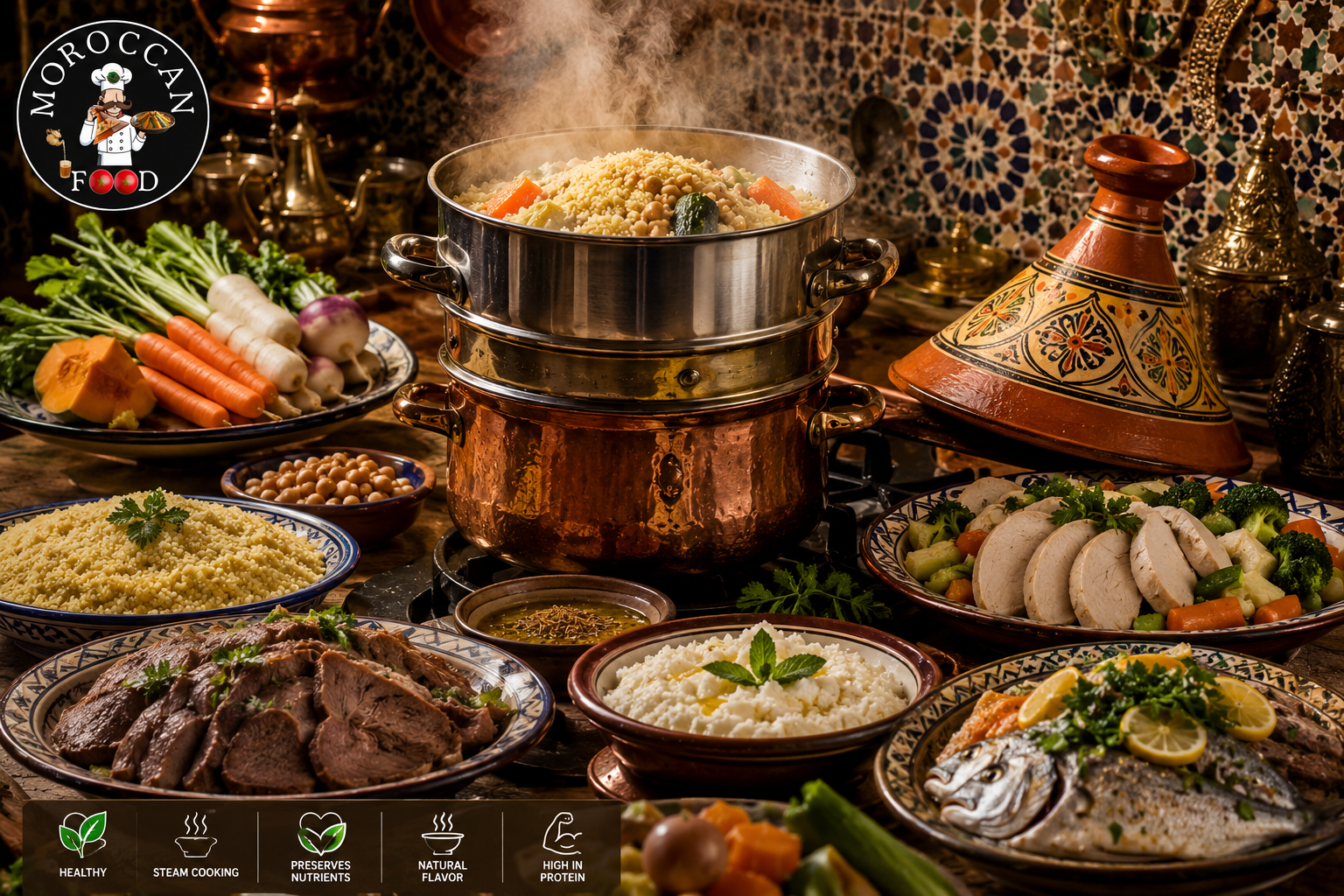
In Morocco, steaming holds a special place in traditional cuisine. Many iconic dishes are prepared using the Moroccan couscoussier, a traditional steaming vessel that gives food a unique texture and exceptional flavor.
Steaming in Moroccan Cuisine
Steaming is an essential part of Morocco’s culinary heritage. Moroccans traditionally use a couscoussier, which consists of a lower pot filled with water or broth and an upper perforated chamber where food is placed for steaming.
This cooking technique allows ingredients to cook gradually while preserving much of their nutritional value. It also produces tender textures and authentic flavors that are highly appreciated in Moroccan cuisine.
Popular Moroccan Steamed Dishes
1. Moroccan Couscous
Moroccan couscous is one of the country’s most famous dishes and is closely associated with steaming. The couscous grains are steamed several times inside a couscoussier over simmering water or broth until they become light, fluffy, and tender.
The couscous is then served with seasonal vegetables and meat or chicken. It is a traditional family meal that is especially popular on Fridays and during special occasions.

2. Sekkouk
Sekkouk is a simple and nutritious traditional Moroccan dish. Couscous grains are first steamed until fully cooked, then left to cool before being mixed with traditional Moroccan fermented milk known as Lben.
This refreshing and satisfying dish is especially popular during the summer months and remains a favorite in many Moroccan regions.

note: To learn how to prepare Sekouk with lben recipe.
3. Steamed Vegetable Salads
Many Moroccan salads are prepared using steamed vegetables such as carrots, potatoes, zucchini, pumpkin, broccoli, and green beans.
Steaming helps preserve the vegetables’ color, texture, and natural flavor, making them an excellent base for healthy and nutrient-rich salads.
In many Moroccan households, steamed vegetables are seasoned with a simple mixture of salt, cumin, and olive oil. Fresh parsley is often added to enhance the flavor and presentation.

note: show recipe: Steamed Sardine and Fresh Vegetable
4. Steamed Meat
Steaming is also used to prepare various types of meat, including:
- Beef
- Lamb
- Goat Meat
- Camel Meat
The meat is slowly cooked by steam until it becomes tender and juicy while retaining much of its natural flavor.
In some Moroccan regions, steamed meat is considered a traditional dish served during family gatherings and special occasions.
It is often accompanied by steamed vegetable salads seasoned with salt and cumin, as well as traditional Moroccan bread and tea according to local customs.

5. Steamed Fish:
Fish is one of the best foods to prepare using steam. This cooking method preserves its delicate texture and natural flavor without requiring large amounts of oil.
Fish can be seasoned with Moroccan herbs and spices before steaming to create a light, healthy meal rich in protein and omega-3 fatty acids.
For a traditional Moroccan touch, steamed fish is often seasoned with salt and cumin to enhance its flavor.

note: show recipe: Steamed Sardine and Fresh Vegetable
6. Steamed Chicken Breast and Turkey Breast
Chicken breast and turkey breast are among the best white meats for steaming. This method helps maintain their tenderness and natural juiciness while keeping the meal low in fat.
In Moroccan cuisine, chicken or turkey breast may be seasoned with salt, cumin, black pepper, and garlic before being steamed until fully cooked. They are commonly served alongside steamed vegetables or healthy Moroccan salads.
These dishes are particularly popular among people looking for high-protein, low-fat meals and are well suited for athletes and individuals following a balanced diet.
Steamed chicken and turkey breast are often sliced and served with steamed vegetable salads dressed with olive oil, salt, and cumin.

How to Steam Food: Step-by-Step Guide
Steaming is one of the simplest cooking methods and can be done using a Moroccan couscoussier or any steaming device.
Step 1: Prepare the Steamer
Fill the lower section of the steamer with water, ensuring that the water does not touch the food placed above.
Step 2: Prepare the Ingredients
Wash the vegetables, meat, poultry, or fish thoroughly and season them as desired.
Step 3: Heat the Water
Bring the water to a boil until a steady flow of steam is produced.
Step 4: Arrange the Food
Place the ingredients evenly in the steaming chamber, leaving enough space for steam to circulate freely.
Step 5: Steam the Food
Cover the steamer and allow the food to cook until tender. Vegetables generally require less cooking time than meat, poultry, or fish.
Step 6: Serve
Once fully cooked, carefully remove the food and serve immediately to enjoy its natural flavor and nutritional benefits.

Steaming vs. Boiling, Frying, and Grilling
Different cooking methods offer different advantages and characteristics.
Steaming
Steaming uses hot water vapor to cook food without direct contact with water. It is one of the best methods for preserving nutrients.
Boiling
Boiling cooks food by submerging it in hot water. While simple and effective, it may cause some vitamins and minerals to leach into the cooking water.
Frying
Frying cooks food in hot oil, creating a crispy texture and rich flavor. However, it significantly increases fat and calorie content.
Grilling
Grilling exposes food to direct or indirect heat, creating a distinctive smoky flavor. However, excessive grilling can sometimes dry out food.
Which Method Is Healthier?
Many nutrition professionals consider steaming one of the healthiest cooking methods because it helps preserve nutrients while minimizing the need for added fats and oils.

Steaming Equipment Around the World
Although the principle of steaming is the same everywhere, the equipment used varies from one region to another.
Moroccan Couscoussier
The traditional steamer used throughout Morocco and North Africa. It consists of a lower pot and a perforated upper chamber.
Steamer Basket
Common in Europe and North America, this metal basket is placed inside a pot above boiling water.
Electric Food Steamer
Widely used in modern kitchens, electric steamers offer convenience and precise temperature control.
Bamboo Steamer
Popular in China, Japan, Korea, and other Asian countries, bamboo steamers are commonly used for dumplings, vegetables, and fish.
Multi-Tier Steamer Pot
These stackable steamers allow multiple foods to be cooked simultaneously and are common in both Europe and Asia.

Health Benefits of Steaming
Steaming is widely regarded as one of the healthiest cooking methods for several reasons.
Preserves Nutrients
Steaming helps retain a larger portion of vitamins and minerals compared to some other cooking methods.
Requires Less Fat
Little or no oil is needed, helping reduce overall calorie intake.
Maintains Natural Flavor
Steaming highlights the natural taste of vegetables, meat, poultry, and fish.
Improves Texture and Appearance
Steamed vegetables retain their vibrant color and pleasant texture.

Ideal for a Healthy Lifestyle
Steaming supports a balanced diet by preserving nutrients and reducing unnecessary fats, making it an excellent choice for health-conscious individuals.
Perfect for Athletes and Muscle Building
Steaming is particularly beneficial for people who exercise regularly, especially athletes focused on muscle growth and physical performance. These individuals require high-quality protein sources to support muscle development and recovery after training.
By preserving the nutritional quality of protein-rich foods such as chicken breast, turkey breast, fish, and lean meats, steaming helps athletes meet their nutritional needs without excess fats. It also makes it easier to combine protein sources with nutrient-rich vegetables in balanced meals.
For this reason, many athletes and sports nutrition professionals include steamed foods in their meal plans, as they provide excellent nutritional value while maintaining natural flavor and quality.

Conclusion
Steaming perfectly combines great taste with outstanding health benefits. Moroccan cuisine has preserved this traditional cooking technique through iconic dishes such as Moroccan couscous, Sekkouk, steamed vegetable salads, steamed meats, and steamed fish.
Whether using a traditional Moroccan couscoussier or modern steaming equipment found around the world, steaming remains one of the best ways to prepare nutritious, flavorful, and healthy meals.
FAQ?
What is steaming?
Steaming is a cooking method that uses hot steam from boiling water to cook food without direct contact with the water. It helps preserve nutrients, natural flavors, and texture.
Is steaming healthier than frying?
Yes. Steaming requires little or no added fat and generally preserves more nutrients than frying, making it one of the healthiest cooking methods.
What foods can be cooked by steaming?
Many foods can be steamed, including vegetables, fish, seafood, chicken breast, turkey breast, beef, lamb, goat meat, camel meat, couscous, and grains.
What is a Moroccan couscoussier?
A couscoussier is a traditional Moroccan steamer consisting of a lower pot for water or broth and an upper perforated chamber where food is cooked by steam.
Does steaming preserve nutrients?
Yes. Steaming helps retain many vitamins and minerals that may be lost during boiling or other cooking methods.
How long does it take to steam vegetables?
Most vegetables take between 10 and 20 minutes, depending on their type and size.
Can meat be cooked by steaming?
Yes. Beef, lamb, goat meat, camel meat, chicken, and turkey can all be steamed until tender while preserving their natural juices and flavor.
Is steamed fish healthy?
Yes. Steamed fish is rich in protein and omega-3 fatty acids and can be prepared with little or no added fat.
Why is steaming popular among athletes?
Steamed foods provide high-quality protein and essential nutrients while keeping meals low in fat, making them ideal for muscle building, recovery, and overall athletic performance.
What steaming equipment is used around the world?
Common steaming equipment includes the Moroccan couscoussier, Chinese bamboo steamer, Japanese seiro, Indian idli steamer, stainless-steel steamers, and electric food steamers.
Can couscous be cooked by steaming?
Yes. Traditional Moroccan couscous is prepared by steaming the grains several times in a couscoussier until they become light and fluffy.
Is steaming suitable for weight management?
Yes. Because steaming requires little added fat and helps maintain the nutritional quality of food, it is often included in healthy weight-management diets.


Leave a Reply