
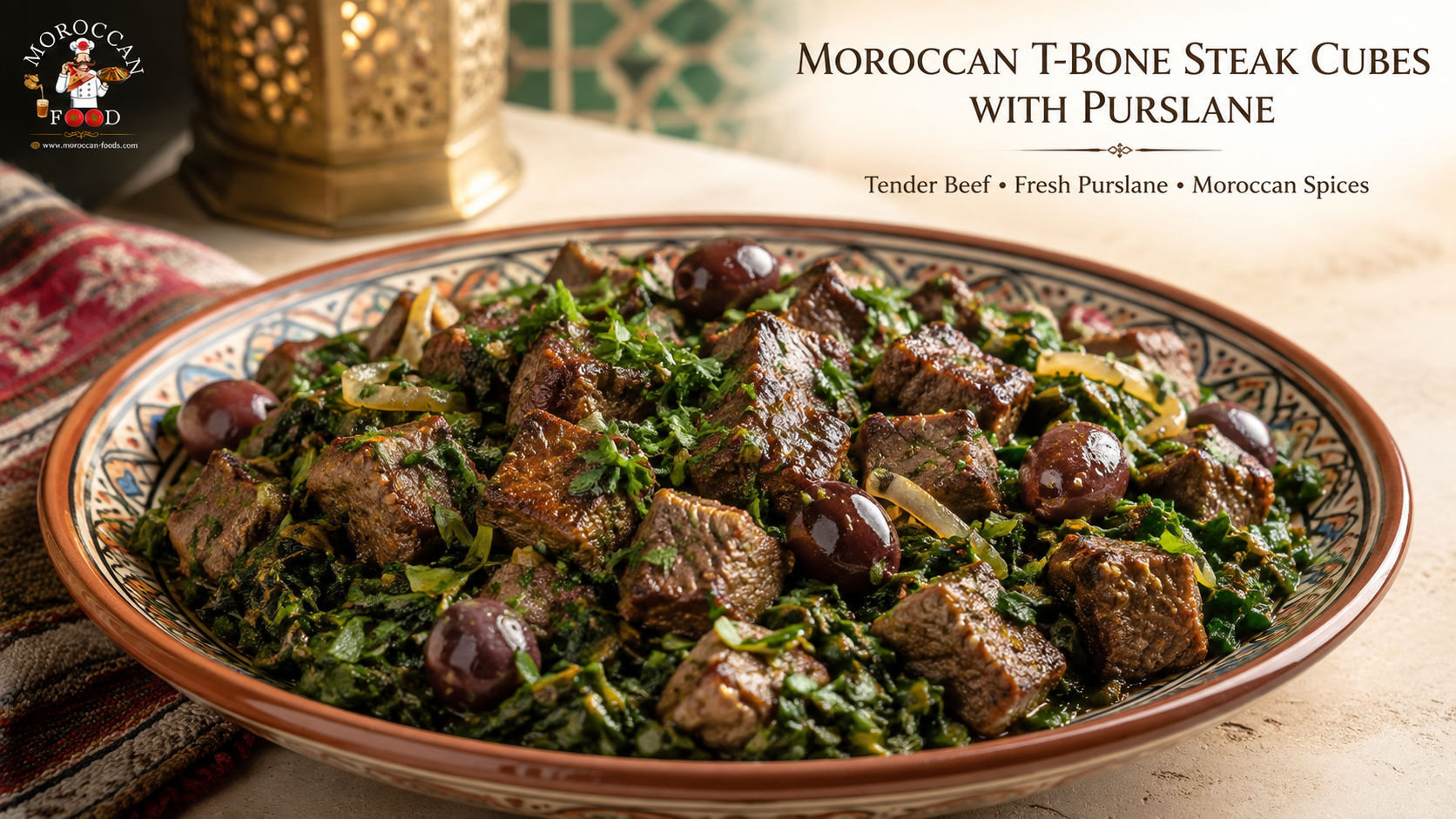
Moroccan T-Bone Steak Cubes with Purslane is a rich and flavorful skillet recipe combining tender, boneless beef cubes with fresh purslane, onion, garlic, preserved lemon, pitted red olives, and aromatic Moroccan spices.
The beef is seasoned and cooked separately with half of the onion until golden and tender. The purslane is then slowly cooked in the same skillet with the remaining onion, olive oil, garlic, and spices. Preserved lemon and Moroccan red olives add a distinctive salty-citrus flavor before the warm beef cubes are arranged prominently on top.
This professional yet approachable Moroccan beef and purslane recipe makes a satisfying family lunch or dinner and can be served with Moroccan bread and traditional salads.
Recipe Information
- Cuisine: Moroccan
- Course: Main Course
- Preparation Time: 25 minutes
- Marinating Time: 30 minutes
- Cooking Time: 35–40 minutes
- Total Time: Approximately 1 hour 30 minutes
- Servings: 4
- Difficulty: Intermediate
- Cooking Method: Skillet Cooking
- Best Served: Warm
- Main Keyword: Moroccan T-Bone Steak Cubes with Purslane
Ingredients
For the T-Bone Steak Cubes
- 800 g (1.75 lb) boneless beef removed from T-bone steaks
- ½ small onion, thinly sliced
- 2 garlic cloves, finely grated
- 1 tablespoon olive oil
- 1 tablespoon finely chopped fresh cilantro
- 2–3 tablespoons hot water, only if needed
Beef Spice Mixture
- 1 teaspoon ground ginger
- 1 teaspoon sweet paprika
- ¾ teaspoon ground cumin
- ½ teaspoon ground turmeric
- ½ teaspoon ground coriander
- ½ teaspoon freshly ground black pepper
- ¾ teaspoon salt
For the Purslane
- 750 g (1.65 lb) fresh purslane
- Remaining ½ small onion, thinly sliced
- 1 garlic clove, finely chopped
- 1 tablespoon olive oil
- 100 g (3.5 oz) pitted Moroccan red olives, rinsed and drained
- Rind of ½ preserved lemon, rinsed and finely chopped
- 1 tablespoon chopped fresh cilantro
- 1 tablespoon chopped fresh parsley
Purslane Spice Mixture
- ½ teaspoon sweet paprika
- ½ teaspoon ground cumin
- ¼ teaspoon ground ginger
- ¼ teaspoon ground turmeric
- ¼ teaspoon freshly ground black pepper
- ¼ teaspoon salt

Professional Preparation Method
Stage 1: Prepare the Beef
Preparation time: 10 minutes
Remove the meat from both sides of the T-bone steaks. Trim away the bone, tough connective tissue, and excessive hard fat.
Cut the meat across the grain into even cubes measuring approximately 3 cm. Pat the cubes thoroughly dry with paper towels so they brown properly in the skillet.
Place the beef cubes in a bowl and add the grated garlic, chopped cilantro, ginger, paprika, cumin, turmeric, coriander, black pepper, and salt.
Mix until every cube is evenly coated. Cover and marinate in the refrigerator for 30 minutes.
Stage 2: Prepare the Purslane
Preparation time: 15 minutes
Remove the roots, damaged leaves, and thick, tough stems from the purslane. Keep the leaves and tender stems.
Wash it thoroughly in several changes of cold water to remove all traces of soil and sand. Drain very well, dry it with a salad spinner or clean kitchen towel, and chop it into short pieces.
Divide the sliced onion into two equal portions. Rinse the preserved-lemon rind and red olives to remove excess salt, then drain them thoroughly.
Stage 3: Cook the T-Bone Steak Cubes
Cooking time: 10–12 minutes
Heat one tablespoon of olive oil in a large, heavy skillet over medium-high heat.
Add the first half of the sliced onion and cook for approximately 2 minutes, until it begins to soften.
Add the seasoned beef cubes and spread them into a single layer. Do not overcrowd the skillet; cook the meat in two batches if necessary.
Leave the cubes undisturbed for approximately 2 minutes to develop a golden crust. Turn and continue cooking for 8–10 minutes, stirring occasionally, until browned on all sides and cooked to your preferred doneness.
If the skillet becomes dry before the beef is sufficiently cooked, add 2–3 tablespoons of hot water, cover for 2–3 minutes, and then uncover to evaporate the remaining liquid.
Transfer the cooked beef and onion to a clean plate. Cover loosely and keep warm.
Stage 4: Build the Purslane Flavor Base
Cooking time: 4–5 minutes
Return the same skillet to medium heat. Add the remaining tablespoon of olive oil and the second half of the sliced onion.
Cook for 3–4 minutes until the onion becomes soft and lightly golden. Add the chopped garlic and cook for another 30 seconds, stirring continuously.
Do not wash the skillet between stages. The caramelized beef juices remaining in the pan will add extra depth and flavor to the purslane.
Stage 5: Add and Season the Purslane
Cooking time: 12–15 minutes
Add the chopped purslane gradually, allowing each addition to wilt slightly before adding more.
Sprinkle in the paprika, cumin, ginger, turmeric, black pepper, and salt. Mix gently until the purslane is evenly coated with the spices, garlic, onion, and olive oil.
Cook uncovered over medium heat for 12–15 minutes, stirring occasionally. Purslane naturally releases moisture, so continue cooking until it becomes tender and most of the liquid has evaporated.
The finished mixture should be moist and glossy but never watery or soupy.
Stage 6: Add the Preserved Lemon and Red Olives
Cooking time: 4–5 minutes
Add the finely chopped preserved-lemon rind and pitted red olives to the cooked purslane.
Mix gently and continue cooking uncovered for 4–5 minutes. This allows the olives to warm through and the preserved lemon to distribute its distinctive Moroccan citrus flavor throughout the dish.
Taste before adding any additional salt because both the olives and preserved lemon are naturally salty.
Stage 7: Return the Beef and Finish the Dish
Final cooking time: 3–5 minutes
Arrange the cooked T-bone steak cubes and onions evenly over the purslane.
Reduce the heat to low, cover the skillet, and warm everything together for 3–5 minutes. Avoid excessive stirring so the golden beef cubes remain visible and attractively arranged on top.
Finish with chopped cilantro and parsley. Remove the skillet from the heat and allow the dish to rest for 3 minutes before serving.

Professional Serving Suggestion
Present the cooked purslane as the base of the dish, with the golden T-bone steak cubes arranged prominently on top. Distribute the red olives evenly around the beef and finish with a few visible pieces of preserved lemon.
Serve warm with Moroccan bread and small portions of traditional salads such as zaalouk, taktouka, carrot chermoula salad, or beet salad.

If you exercise, you can eat this meal after your workout as a healthy and nutritious meal.

Here are some of the most popular traditional Moroccan salads that are served with tagine as a main course.
Moroccan Roasted Tomato, Onion & Pepper Salad Recipe
Traditional Moroccan Tomato Cucumber and Onion Salad Recipe
Moroccan salad with tomatoes, onions, and roasted green peppers
Moroccan salad with onions, tomatoes, and roasted red and yellow peppers
Moroccan Lettuce, Tomato, Onion & Cucumber Salad
In Morocco, fruits, some types of melon, and some drinks from the juice menu in Moroccan cuisine are served as dessert after the meal.In Morocco, fruits, some types of melon, and some drinks from the juice menu in Moroccan cuisine are served as dessert after the meal.
Professional Chef’s Tips
- If purchasing bone-in T-bone steaks, approximately 1 kg may be required to obtain around 750–800 g of boneless meat, depending on the size of the bone and the amount of trimmed fat.
- Cut the beef across the grain to produce more tender cubes.
- Pat the meat completely dry before seasoning to encourage browning.
- Use a wide skillet and avoid overcrowding it.
- Cook in batches if necessary so the meat sears instead of steaming.
- Dry the washed purslane thoroughly to prevent a watery finished dish.
- Cook the purslane uncovered so its natural moisture can evaporate.
- Add preserved lemon and olives near the end to protect their flavor and prevent the dish from becoming excessively salty.
- Taste the purslane before adding extra salt.
- Keep the beef cubes arranged on top during the final warming stage for a more professional presentation.
show Health Benefits Nutritional Value
Health Benefits
1. High in Quality Protein
Each serving provides approximately 49 g of protein, mainly from the boneless T-bone steak. Protein contributes to the maintenance and repair of muscle tissue and makes this dish suitable for physically active people.
2. Provides Iron for Oxygen Transport
Beef and purslane contribute approximately 9 mg of iron per serving. Iron is required for producing hemoglobin, which transports oxygen through the blood, and myoglobin, which supplies oxygen to muscle tissue.
3. Rich in Vitamin B12
T-bone beef is naturally rich in vitamin B12. This vitamin contributes to normal red blood cell production, DNA synthesis, and healthy nervous-system function.
4. Provides Zinc and Selenium
Beef supplies zinc and selenium. Zinc is involved in immune function, protein synthesis, and tissue repair, while selenium contributes to normal antioxidant defenses.
5. Supports Normal Muscle and Nerve Function
Fresh purslane provides potassium and magnesium, two minerals involved in normal muscle contraction, nerve transmission, and the body’s fluid balance.
6. Contains Vitamin C and Plant Antioxidants
Purslane, fresh herbs, preserved lemon, garlic, and spices contribute vitamin C and naturally occurring plant compounds. Vitamin C supports collagen formation and improves the absorption of non-heme iron from plant ingredients.
7. Provides Mostly Unsaturated Added Fat
Olive oil and olives supply predominantly monounsaturated fat. Using controlled amounts adds flavor and helps carry the aromas of the Moroccan spices.
8. Vegetable-Rich with No Added Sugar
The recipe contains a generous quantity of purslane and no added sugar. Purslane, onion, garlic, herbs, and spices also contribute dietary fiber and micronutrients.
9. Suitable as a Post-Workout Meal
The high protein content makes this recipe suitable after strength training. Because the dish is relatively moderate in carbohydrates, athletes can serve it with Moroccan bread or another carbohydrate-rich side when additional recovery energy is needed.
Estimated Nutritional Value
Serving size: One-fourth of the recipe
| Nutrient | Estimated Amount |
|---|---|
| Calories | 480 kcal |
| Protein | 49 g |
| Total Carbohydrates | 14 g |
| Dietary Fiber | 4 g |
| Natural Sugars | 3 g |
| Added Sugars | 0 g |
| Total Fat | 25 g |
| Saturated Fat | 6.5 g |
| Cholesterol | 120 mg |
| Sodium | Approximately 1,200 mg |
| Potassium | 1,650 mg |
| Magnesium | 180 mg |
| Calcium | 165 mg |
| Iron | 9 mg |
| Zinc | 9.5 mg |
| Vitamin C | Approximately 25 mg |
| Vitamin B12 | Approximately 4.5 mcg |
| Selenium | Approximately 55 mcg |
Nutritional Notes
- Values are estimated for one of four servings.
- The calculation uses 800 g of boneless T-bone meat after removing the bone and excessive hard fat.
- The exact calorie, fat, and cholesterol values will vary according to the grade and marbling of the steak.
- Moroccan bread, salads, drinks, and other accompaniments are not included.
- Sodium can vary considerably because red olives and preserved lemon are cured in salt.
- Rinse the olives and preserved-lemon rind thoroughly and taste the purslane before adding additional salt.
- For a lower-sodium version, reduce the added salt by half or omit the salt from the purslane seasoning.
- Vitamin C may be lower after cooking because it is sensitive to heat.
- This information is intended for general nutritional guidance and is not medical advice.

Frequently Asked Questions
1. What is Moroccan T-Bone Steak with Purslane?
Moroccan T-Bone Steak with Purslane is a skillet recipe made with boneless T-bone beef cubes, fresh purslane, onion, garlic, olive oil, preserved lemon, pitted red olives, herbs, and Moroccan spices.
2. Can T-bone steak be cooked without the bone?
Yes. Remove the strip steak and tenderloin meat from both sides of the T-shaped bone, trim away excessive hard fat and connective tissue, and cut the boneless meat into cubes.
3. How much bone-in T-bone steak is needed for this recipe?
Approximately 1 kg of bone-in T-bone steak may produce around 750–800 g of boneless meat. The exact yield depends on the size of the bone and the amount of fat that requires trimming.
4. Is T-bone steak suitable for cutting into cubes?
Yes. T-bone steak contains naturally tender sections of beef that work well for quick skillet cooking. Cutting the meat evenly and across the grain helps keep the cubes tender.
5. How large should the T-bone steak cubes be?
Cut the beef into cubes measuring approximately 3 cm. Equal-sized cubes cook evenly and are less likely to become dry.
6. How can I make the beef cubes more tender?
Cut the meat across the grain, remove tough connective tissue, and avoid overcooking it. Marinating the cubes with spices, garlic, and cilantro for 30 minutes also improves their flavor.
7. How long should the beef be marinated?
Marinate the seasoned T-bone steak cubes for approximately 30 minutes in the refrigerator. A longer marinade is unnecessary for this relatively tender cut.
8. Which spices are best for T-bone steak cubes?
This recipe uses ground ginger, sweet paprika, cumin, turmeric, coriander, black pepper, and salt. The mixture complements the rich flavor of the beef without overpowering it.
9. Why is ground coriander added to the beef?
Ground coriander provides a warm, slightly citrusy flavor that pairs well with cumin, ginger, garlic, and beef. It also connects the meat seasoning with the preserved-lemon flavor used in the purslane.
10. What type of skillet should I use?
Use a large, heavy cast-iron or thick-bottomed skillet. A wide skillet retains heat well and provides enough surface area for the beef to brown instead of steam.
11. Why should the beef cubes be dried before cooking?
Surface moisture prevents proper browning. Patting the meat dry allows the cubes to develop a flavorful golden crust when they touch the hot skillet.
12. Why should the skillet not be overcrowded?
Overcrowding lowers the pan’s temperature and causes the beef to release excess liquid. Cook the cubes in two batches if necessary so they sear properly.
13. How long do T-bone steak cubes take to cook?
The cubes generally require approximately 10–12 minutes, depending on their size, the skillet temperature, and the preferred level of doneness. Turn them regularly after the first crust has formed.
14. What is the safe internal temperature for T-bone steak?
Whole-cut beef should reach a minimum internal temperature of 63°C (145°F) and rest for at least three minutes. Use a food thermometer to check one of the thickest cubes.
15. Why is the beef cooked separately from the purslane?
Purslane releases moisture while cooking. Cooking the beef first allows it to brown properly, while cooking the purslane separately makes it easier to reduce its liquid and control its texture.
16. Why is the onion divided into two portions?
The first half cooks with the beef and adds sweetness to the meat. The remaining half forms the aromatic base for the purslane, garlic, and spices.
17. What is purslane?
Purslane is an edible leafy succulent with small fleshy leaves and tender reddish stems. It has a mild, earthy, and slightly tangy flavor.
18. Which parts of purslane are edible?
The leaves and tender stems can be eaten. Remove the roots, damaged leaves, and thick, tough stems before washing and chopping it.
19. How should purslane be cleaned?
Wash purslane in several changes of cold water to remove all soil and sand. Drain and dry it thoroughly before chopping to prevent a watery finished dish.
20. Should purslane be boiled before cooking?
No. Fresh purslane does not need to be boiled. Add the washed, drained, and chopped plant directly to the skillet with the onion, garlic, olive oil, and spices.
21. Can frozen purslane be used?
Yes, but it will have a softer texture. Thaw it completely, drain away excess moisture, and cook it uncovered until the released liquid evaporates.
22. Which spices are used for the purslane?
The purslane is seasoned with paprika, cumin, ginger, turmeric, black pepper, and a small amount of salt. Garlic, cilantro, parsley, preserved lemon, and olives provide additional flavor.
23. How long does purslane take to cook?
Fresh chopped purslane generally takes approximately 12–15 minutes over medium heat. Continue cooking uncovered until it is tender and most of its natural liquid has evaporated.
24. How can I prevent cooked purslane from becoming watery?
Dry the washed purslane thoroughly, use a wide skillet, avoid adding unnecessary water, and cook uncovered. Stir occasionally until the mixture is moist and glossy but not soupy.
25. Why are preserved lemon and olives added near the end?
Adding them after the purslane has cooked protects their distinctive flavor and prevents them from becoming excessively soft. It also allows you to taste the dish before deciding whether additional salt is needed.
26. Which part of the preserved lemon should be used?
Use the preserved-lemon rind. Remove the pulp and seeds, rinse the rind to remove excess salt, and cut it into small pieces before adding it to the purslane.
27. What type of olives work best?
Pitted Moroccan red olives work best for this recipe. Their mild briny flavor complements the beef, purslane, spices, and preserved lemon.
28. Can I use another type of olive?
Yes. Purple or Kalamata-style olives can be substituted when Moroccan red olives are unavailable. Choose pitted olives and adjust the salt according to their brininess.
29. How can I reduce the salt in this recipe?
Rinse the olives and preserved-lemon rind thoroughly, reduce the added salt, and taste the purslane before making the final adjustment. Garlic, herbs, cumin, ginger, and paprika provide flavor without additional sodium.
30. When should the beef be returned to the skillet?
Return the cooked beef after the purslane is tender and the preserved lemon and olives have warmed through. Arrange the cubes on top, cover, and heat over low heat for 3–5 minutes.
31. Can I stir the beef into the purslane?
Yes, but arranging the cubes on top produces a more attractive presentation and helps preserve their browned exterior. Mix only gently if you prefer the flavors to be fully combined.
32. Can I use another cut of beef?
Yes. Boneless strip steak, sirloin, tenderloin, or another tender quick-cooking cut can be used. Cooking time and nutritional values may change according to the cut and its fat content.
33. Can this recipe be prepared in advance?
Yes. Cook the beef and purslane separately, cool them, and refrigerate them in airtight containers. Combine and reheat them gently shortly before serving.
34. How should leftovers be stored?
Transfer cooled leftovers to a clean, airtight container and refrigerate promptly. Properly refrigerated leftovers should be consumed within 3–4 days.
35. How should the dish be reheated?
Reheat it gently in a covered skillet over medium-low heat. Add one or two tablespoons of water only if needed and heat leftovers thoroughly to 74°C (165°F).
36. Can Moroccan Beef with Purslane be frozen?
Yes, but the purslane will become softer after thawing. Freeze the cooled dish in an airtight container and use it within approximately two months for the best flavor and texture.
37. Is this recipe gluten-free?
The basic ingredients are naturally gluten-free. If cross-contamination is a concern, verify that packaged spices and preserved ingredients are certified gluten-free.
38. Is this recipe dairy-free?
Yes. It contains no milk, butter, cream, or cheese. Olive oil is used as the cooking fat.
39. Is this recipe suitable after exercise?
It can be served as a high-protein post-workout meal, providing an estimated 49 g of protein per serving. Serve it with Moroccan bread or another carbohydrate source when additional post-training energy is needed.
40. How many calories are in T-Bone Steak with Purslane?
One-fourth of the recipe provides approximately 480 calories, 49 g of protein, 14 g of carbohydrates, 25 g of fat, and 4 g of fiber. Bread, salads, and drinks are not included.
41. What can I serve with Moroccan T-Bone Steak and Purslane?
Serve it with Moroccan bread and small portions of zaalouk, taktouka, carrot chermoula salad, or beet salad. Keep the side dishes modest so the beef and purslane remain the main focus.


Leave a Reply