
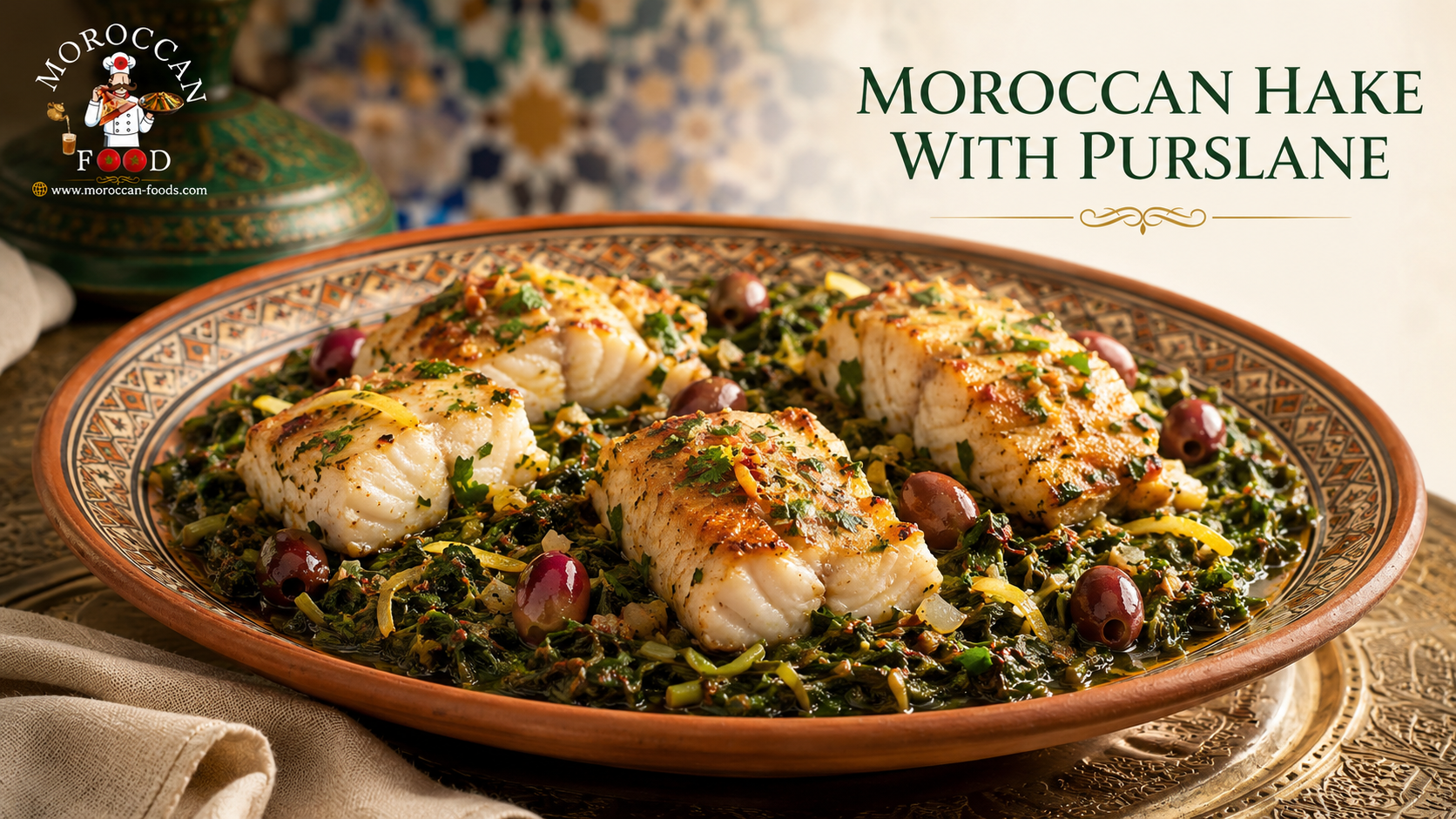
Moroccan Hake Cubes with Purslane is a flavorful and affordable seafood dish made with tender pieces of white hake, slowly cooked purslane, aromatic Moroccan spices, preserved lemon, and pitted red olives.
Hake—known as merlu and often sold as merlan in Moroccan markets—has mild white flesh that absorbs spices beautifully. The fish is cooked separately and returned to the pan only at the end, helping the delicate pieces remain moist and intact.
Recipe Information
- Cuisine: Moroccan
- Course: Main Course
- Fish Used: Hake — Merlu
- Preparation Time: 20 minutes
- Marinating Time: 15 minutes
- Cooking Time: 25–30 minutes
- Total Time: Approximately 50 minutes
- Servings: 4
- Difficulty: Easy
Ingredients
For the Hake Pieces
- 800 g (1.75 lb) fresh or thawed hake fillets
- ½ small onion, finely chopped
- 2 garlic cloves, minced
- 1 tablespoon olive oil
- 1 tablespoon fresh lemon juice
- 1 teaspoon paprika
- ½ teaspoon ground cumin
- ½ teaspoon ground ginger
- ½ teaspoon ground coriander
- ¼ teaspoon ground turmeric
- ¼ teaspoon black pepper
- ½ teaspoon salt, or to taste
For the Purslane
- 750 g (1.65 lb) fresh purslane
- ½ small onion, finely chopped
- 1 garlic clove, minced
- 1 tablespoon olive oil
- 1 tablespoon finely chopped fresh cilantro
- 1 tablespoon finely chopped fresh parsley
- ½ teaspoon paprika
- ½ teaspoon ground cumin
- ¼ teaspoon ground ginger
- ¼ teaspoon ground turmeric
- ¼ teaspoon black pepper
- Salt to taste
- 2–4 tablespoons water, only if necessary
For Finishing
- 100 g (3.5 oz) pitted Moroccan red olives
- Rind of ½ preserved lemon, rinsed and cut into thin strips
- Chopped cilantro or parsley for garnish

Preparation
1. Prepare the Hake
Check the hake fillets carefully and remove any remaining bones with clean kitchen tweezers. Remove the skin if necessary.
Pat the fillets thoroughly dry with paper towels, then cut them into large, evenly sized pieces measuring approximately 4 cm. Larger pieces are less likely to break during cooking.
If using frozen hake, thaw it completely in the refrigerator before drying and cutting it.
2. Season the Fish
Place the hake pieces in a wide bowl. Add the lemon juice, minced garlic, paprika, cumin, ginger, coriander, turmeric, black pepper, and salt.
Drizzle with olive oil and coat the pieces gently without crushing them. Refrigerate for approximately 10–15 minutes.
Avoid marinating the fish for longer than 20–30 minutes because the lemon juice can soften its delicate flesh.
3. Cook the Hake Pieces
Heat one tablespoon of olive oil in a wide non-stick frying pan over medium heat. Add the first half of the chopped onion and cook for 2–3 minutes, until slightly softened.
Arrange the hake pieces in a single layer, leaving a little space between them. Cook for approximately 2–3 minutes without moving them.
Turn each piece carefully with a wide spatula, then cook the second side for another 2–3 minutes, or until the flesh becomes opaque and flakes easily.
Transfer the cooked fish to a clean plate and keep it covered. Avoid stacking the pieces, as this can cause them to break.
4. Cook the Remaining Onion and Garlic
In the same pan, add the second tablespoon of olive oil and the remaining chopped onion.
Cook over medium heat for 3–4 minutes, stirring regularly, until the onion becomes soft and translucent.
Add the minced garlic and cook for approximately 30 seconds, just until fragrant.
5. Add the Purslane
Add the chopped purslane gradually, stirring gently after each addition until the leaves begin to wilt.
Add the paprika, cumin, ginger, turmeric, black pepper, salt, cilantro, and parsley. Mix until the vegetables are evenly coated with the spices.
6. Cook the Purslane
Cover the pan and cook over medium-low heat for 10–12 minutes. Purslane naturally releases liquid, so additional water may not be necessary.
If the mixture becomes too dry before the purslane is tender, add only 2–4 tablespoons of water.
7. Reduce the Excess Liquid
Remove the lid and continue cooking for another 5–8 minutes, stirring occasionally, until the purslane is thoroughly cooked and most of the released liquid has evaporated.
The finished mixture should remain moist but should not contain a watery sauce.
8. Add the Olives and Preserved Lemon
Add the pitted Moroccan red olives and preserved-lemon strips to the cooked purslane.
Mix gently and cook uncovered for approximately 3 minutes. Taste before adding more salt because both ingredients already contain salt.
9. Return the Hake to the Pan
Arrange the cooked hake pieces carefully over the purslane. Do not mix them into the vegetables.
Cover the pan and warm everything over low heat for approximately 2–3 minutes. This allows the flavors to combine without overcooking or breaking the fish.
10. Serve
Transfer the purslane to a large shallow Moroccan serving plate. Arrange the hake pieces neatly on top, then distribute the red olives and preserved-lemon strips around them.
Garnish lightly with chopped cilantro or parsley and serve immediately.

Professional Cooking Tips
- Choose thick hake fillets because thin pieces break more easily.
- Cut the fish into large pieces rather than small cubes.
- Dry the fish thoroughly to help it brown instead of steaming.
- Use a wide non-stick pan and leave space between the pieces.
- Turn each piece only once and use a wide spatula.
- Cook the fish separately and return it only during the final minutes.
- Do not stir after placing the hake over the purslane.
- Rinse the olives and preserved lemon to reduce excess salt.
- Cook fish until it reaches 63°C (145°F) internally or becomes opaque and flakes easily.
Serving the recipe:
You can serve this recipe professionally with traditional Moroccan salads.

If you exercise, you can eat this purslane and chicken recipe after your workout as a nutritious and healthy meal.

Here are some of the most popular traditional Moroccan salads that are served with tagine as a main course.
Moroccan Roasted Tomato, Onion & Pepper Salad Recipe
Traditional Moroccan Tomato Cucumber and Onion Salad Recipe
Moroccan salad with tomatoes, onions, and roasted green peppers
Moroccan salad with onions, tomatoes, and roasted red and yellow peppers
Moroccan Lettuce, Tomato, Onion & Cucumber Salad
In Morocco, fruits, some types of melon, and some drinks from the juice menu in Moroccan cuisine are served as dessert after the meal.In Morocco, fruits, some types of melon, and some drinks from the juice menu in Moroccan cuisine are served as dessert after the meal.
show Health Benefits and Nutrition Notes
Health Benefits
1. High in Lean Protein
Each serving provides approximately 38 g of protein, mainly from the hake. Protein contributes to the maintenance and growth of muscle mass and supports recovery after physical activity.
2. A Lean White-Fish Meal
Hake is a lean white fish that provides substantial protein without a large amount of saturated fat. Combined with purslane, it creates a filling main dish with approximately 320 calories per serving before adding bread, salads, or other accompaniments.
3. Provides Vitamin B12 and Selenium
Hake contributes vitamin B12, which supports normal red blood cell formation and nervous-system function. It also provides selenium, an essential mineral involved in normal immune and antioxidant functions.
4. Provides Omega-3 Fatty Acids
Hake contains EPA and DHA omega-3 fatty acids, although the amount varies according to the exact species, fishing area, and season. Fish can contribute beneficial fatty acids as part of a balanced dietary pattern.
5. Supports Normal Muscle and Nerve Function
Purslane contributes potassium and magnesium, which are involved in normal muscle contraction, nerve function, and fluid balance.
6. Provides Iron and Vitamin C
Purslane, herbs, spices, and hake contribute iron, while purslane and lemon provide vitamin C. Vitamin C supports normal collagen formation and helps improve the absorption of iron from plant ingredients.
7. Contains Mostly Unsaturated Added Fat
The added fat comes primarily from olive oil and Moroccan olives. These ingredients provide predominantly unsaturated fats and contribute flavor without requiring butter or cream.
8. Rich in Vegetables and Plant Compounds
The recipe contains a generous quantity of purslane along with onion, garlic, cilantro, parsley, and aromatic Moroccan spices. These ingredients provide fiber and naturally occurring plant compounds.
9. Contains No Added Sugar
The dish contains no added sugar. Its small amount of natural sugar comes mainly from the onion, garlic, lemon, and vegetables.
10. Suitable for a Post-Workout Meal
The combination of lean fish protein, potassium, and magnesium makes this dish suitable as part of a balanced post-workout meal. After a long or intensive training session, it can be paired with an appropriate carbohydrate source according to individual energy needs.
11. A Lower-Mercury Fish Choice
Hake appears on the FDA’s “Best Choices” list of fish that are generally lower in mercury. Eating a variety of appropriately portioned fish remains the recommended approach.
Estimated Nutritional Value
Per serving — ¼ of the complete recipe
| Nutrient | Estimated Amount |
|---|---|
| Energy | 320 kcal |
| Protein | 38 g |
| Carbohydrates | 12 g |
| Dietary Fiber | 4 g |
| Natural Sugars | 3 g |
| Added Sugars | 0 g |
| Total Fat | 13 g |
| Saturated Fat | 2 g |
| Cholesterol | Approximately 130 mg |
| Sodium | Approximately 850 mg |
| Potassium | Approximately 1,550 mg |
| Magnesium | Approximately 185 mg |
| Calcium | Approximately 195 mg |
| Iron | Approximately 5.5 mg |
| Vitamin C | Approximately 25 mg |
| Vitamin B12 | Approximately 2.5 mcg |
| Selenium | Approximately 70 mcg |
Important Nutrition Notes
- These values are estimates based on four equal servings and standard nutritional reference data.
- The calculation assumes approximately 800 g of raw boneless hake for the complete recipe.
- Moroccan salads, bread, rice, couscous, potatoes, and drinks are not included.
- Nutritional values vary according to the exact hake species, fillet composition, and amount of oil retained after cooking.
- Sodium can vary considerably according to the olives, preserved lemon, and amount of added salt.
- Rinsing the olives and preserved lemon before use can help reduce excess surface salt.
- Cooking may reduce some heat-sensitive nutrients, particularly vitamin C.
- For food safety, cook the hake until it reaches 63°C (145°F) internally or until the flesh becomes opaque and separates easily with a fork.
- This information is provided for general nutritional purposes and is not a substitute for personalized medical or dietary advice.

Frequently Asked Questions
1. What are Moroccan Hake Pieces with Purslane?
Moroccan Hake Pieces with Purslane is a flavorful fish dish made with boneless hake, fresh purslane, onion, garlic, olive oil, preserved lemon, red olives, fresh herbs, and aromatic Moroccan spices. The fish is cooked separately before being gently reheated over the seasoned purslane.
2. What type of fish is hake?
Hake is a mild white fish with tender, flaky flesh. It is commonly sold fresh or frozen and works well in Moroccan recipes because it absorbs spices without overpowering the other ingredients.
3. Is hake the same as merlu or merlan?
Hake is commonly called merlu in French and is often sold under that name in Morocco. The term merlan usually refers to whiting, which is a related but different white fish. Always check the label or ask the fishmonger to confirm the species.
4. Can I use frozen hake for this recipe?
Yes. Frozen boneless hake fillets work well. Thaw them overnight in the refrigerator, drain away excess liquid, and pat them thoroughly dry before seasoning and cooking.
5. What can I use instead of hake?
Cod, whiting, pollock, haddock, or another firm and affordable white fish can replace hake. Choose boneless fillets and cut them into large pieces so they remain intact while cooking.
6. How should I cut the hake?
Cut the boneless hake fillets into large pieces approximately 4 cm (1½ inches) wide. Avoid making the pieces too small because delicate white fish can break apart during cooking.
7. Why is the hake cooked separately from the purslane?
Cooking the hake separately helps it develop a lightly golden surface while keeping the inside tender. It also prevents the fish from breaking apart while the purslane cooks and releases its moisture.
8. How do I prevent hake pieces from falling apart?
Dry the fish well, cut it into large pieces, and avoid turning it repeatedly. Allow one side to cook before carefully turning each piece with a wide spatula. Return the fish to the purslane only during the final few minutes.
9. What is purslane?
Purslane is a leafy green plant with small fleshy leaves and a naturally fresh, slightly tangy flavor. It is used in Moroccan cooking and pairs particularly well with fish, preserved lemon, olives, garlic, and warm spices.
10. How should fresh purslane be cleaned?
Remove damaged or excessively thick stems, then rinse the purslane several times in cold water to remove soil and sand. Drain it thoroughly and chop it before cooking.
11. Can I replace purslane with another vegetable?
Yes. Spinach, Swiss chard, or a combination of leafy greens can be used when purslane is unavailable. However, the finished dish will have a different flavor and texture.
12. Which Moroccan spices are used in this recipe?
The hake is seasoned with paprika, cumin, ground ginger, coriander, turmeric, black pepper, and salt. Similar spices are used for the purslane, creating a balanced and aromatic Moroccan flavor.
13. What does preserved lemon add to the dish?
Preserved lemon adds a concentrated salty citrus flavor that complements both the hake and purslane. Use mainly the finely sliced rind and adjust the added salt because preserved lemon is naturally salty.
14. Can I prepare the recipe without preserved lemon?
Yes. You can omit it and add a small amount of fresh lemon zest and lemon juice. The flavor will be lighter and less traditionally Moroccan, but the dish will still be delicious.
15. Can I use a different type of olive?
Yes. Pitted green, purple, or Kalamata olives can replace Moroccan red olives. Choose an olive with a balanced flavor and rinse it first if it is excessively salty.
16. How do I know when the hake is cooked?
The hake should become opaque and separate easily with a fork while remaining moist inside. For food safety, most seafood should reach an internal temperature of 63°C (145°F). Avoid overcooking because hake can quickly become dry. FoodSafety.gov
17. Is Moroccan Hake with Purslane a healthy meal?
It can be part of a balanced diet. Hake provides lean protein, vitamin B12, selenium, and omega-3 fatty acids, while purslane contributes fiber, potassium, magnesium, vitamin C, and naturally occurring plant compounds. The exact nutritional value depends on the ingredients and portion size.
18. Is this recipe suitable after exercise?
Yes. One serving provides approximately 38 g of protein, making it suitable as part of a post-workout meal. For additional carbohydrates, serve it with whole-grain bread, potatoes, rice, or couscous according to your nutritional needs.
19. Is this hake and purslane recipe gluten-free and dairy-free?
The recipe is naturally gluten-free and dairy-free when prepared with the listed ingredients. Check packaged spices, olives, and preserved lemon if you must avoid gluten because preparation and labeling can vary.
20. Can I prepare this dish in advance?
You can clean and chop the purslane, slice the onion, prepare the herbs, and mix the spices in advance. For the best texture, cook the hake shortly before serving so that it remains tender and does not break apart.
21. How should leftovers be stored?
Allow the dish to cool promptly, then place it in a clean airtight container and refrigerate it. For the best quality, consume the leftovers within 1–2 days and keep the seafood properly chilled.
22. What is the best way to reheat the dish?
Reheat it gently in a covered skillet over low heat with one or two tablespoons of water. Avoid vigorous stirring and excessive heat because both can break the hake pieces and dry out the fish.
23. Can Moroccan Hake with Purslane be frozen?
Freezing is possible, but it is not ideal. Cooked purslane can release water after thawing, and the hake may lose some of its delicate texture. Freshly prepared or refrigerated leftovers provide the best result.
24. What can I serve with Moroccan Hake Pieces with Purslane?
Serve the dish warm with Moroccan bread, couscous, rice, roasted potatoes, or a light selection of Moroccan salads. A squeeze of fresh lemon can also be added immediately before serving.


Leave a Reply