
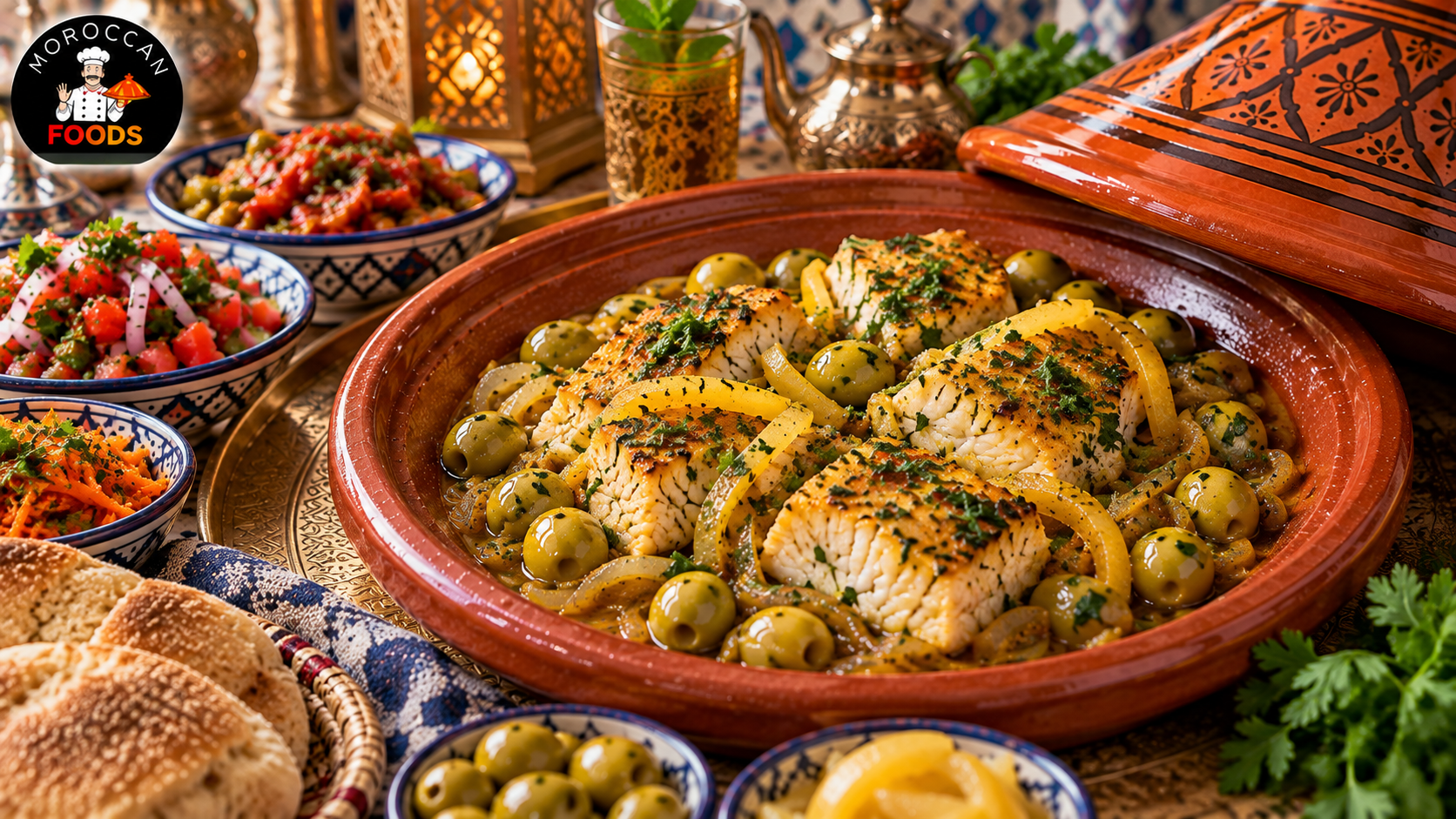
This Moroccan Hake Tagine with Onions and Green Olives is a flavorful Moroccan fish dish made with tender chunks of hake, slowly cooked onions, aromatic spices, fresh herbs, green olives, and preserved lemon.
The recipe begins by gently sautéing finely chopped onion in olive oil, then lightly browning the hake chunks before adding any spices. A second onion, cut into thin strips, is arranged over the fish, followed by a fragrant Moroccan spice mixture.
The tagine is then cooked slowly over low heat until the hake is fully cooked and tender, the onions become soft and flavorful, and the sauce reduces beautifully. Green olives and preserved lemon complete the dish with a classic Moroccan savory and citrusy finish.
Serve it hot with Moroccan bread (khobz) and traditional Moroccan salads for a complete meal.
Recipe Information
Prep Time: 15 minutes
Cooking Time: 30–35 minutes
Total Time: 45–50 minutes
Servings: 4
Difficulty: Easy–Medium
Cuisine: Moroccan
Cooking Method: Traditional Tagine / Low-Heat Cooking
Ingredients
For the Hake
- 800 g hake fillets, boneless and cut into large chunks
- 2 medium onions
- 1 onion, finely chopped
- 1 onion, cut into thin strips
- 2 tablespoons olive oil
Moroccan Seasoning
- 1 teaspoon ground ginger
- 1 teaspoon paprika
- ½ teaspoon turmeric
- ½ teaspoon black pepper
- ¼ teaspoon ground cumin
- Salt to taste
- Small pinch of saffron threads, soaked in 2 tablespoons warm water
- 2 garlic cloves, finely minced
- 1 tablespoon chopped fresh parsley
- 1 tablespoon chopped fresh cilantro
To Finish
- 100 g green olives, preferably pitted
- ½ preserved lemon, pulp removed and peel cut into thin strips
- 80–120 ml water, as needed

How to Make Moroccan Hake Tagine
Step 1: Prepare the Hake
Pat the hake fillets dry with paper towels.
Cut them into large, thick chunks rather than small cubes. This is important because hake is delicate and can break apart more easily than tuna during cooking.
Check carefully for any remaining bones.
Step 2: Heat the Tagine
Place the tagine over low to medium-low heat. If using a clay tagine over direct heat, use a heat diffuser when appropriate for your cookware.
Add 2 tablespoons olive oil and allow it to warm gently.
Step 3: Cook the Finely Chopped Onion
Add the finely chopped onion.
Cook for approximately 4–5 minutes, stirring gently, until softened and translucent.
At this stage, do not add the spices yet.
Step 4: Lightly Brown the Hake Chunks
Arrange the hake chunks over the softened onion in a single layer.
Allow them to cook for approximately 1½–2 minutes on the first side.
Carefully turn each piece and cook for another 1–2 minutes.
The objective is only to give the surface of the hake a very light golden color. Do not try to cook the fish completely at this stage.
Because hake is much more delicate than tuna, turn the pieces carefully with a wide spatula.
Step 5: Add the Sliced Onion
Once the hake is lightly browned, reduce the heat.
Arrange the second onion, cut into thin strips, over and around the hake pieces.
Try not to move the fish unnecessarily from this point onward.
Step 6: Add the Moroccan Spices
Sprinkle over the:
ginger, paprika, turmeric, black pepper, cumin, salt, minced garlic, parsley, cilantro, and saffron with its soaking water.
Distribute the seasoning across the onions and fish.
Pour approximately 80 ml of water around the edges of the tagine rather than directly over the hake.
Step 7: Cook Slowly
Cover the tagine and cook over low heat for approximately 12–15 minutes.
During this stage, the sliced onions release moisture and gradually soften, while the hake absorbs the flavors of the herbs and spices.
Avoid stirring the tagine with a spoon because this can break the hake.
If necessary, gently rotate the tagine or spoon a little sauce over the onions without disturbing the fish.
If the sauce becomes too dry, add a small amount of hot water.
Step 8: Add Green Olives and Preserved Lemon
Once the onions are becoming tender and the hake is nearly cooked, add:
- 100 g green olives
- Preserved lemon strips
Arrange them around and over the fish.
Cover and continue cooking over low heat for approximately 5–7 minutes, or until the hake is fully cooked and flakes easily.
Step 9: Reduce the Sauce
If there is too much liquid, remove the lid and allow the tagine to simmer gently for another 2–4 minutes.
The finished sauce should be concentrated rather than watery, with very tender onions surrounding intact pieces of hake.
Do not over-reduce it, as the hake can dry out quickly.

How to Serve
Serve the Moroccan Hake Tagine with Onions and Green Olives hot directly from the tagine.
It pairs especially well with Moroccan khobz, which can be used to scoop up the tender hake, caramelized onions, green olives, and aromatic sauce.
For a traditional Moroccan presentation, serve it alongside Moroccan tomato and onion salad, roasted green pepper salad, carrot salad, or other cooked Moroccan vegetable salads.

Show Nutritional Value
Estimated Nutritional Value
Per serving — based on 4 servings
| Nutrient | Approx. Amount |
|---|---|
| Calories | ≈ 300 kcal |
| Protein | ≈ 38 g |
| Total Fat | ≈ 12 g |
| Saturated Fat | ≈ 2 g |
| Carbohydrates | ≈ 10 g |
| Dietary Fiber | ≈ 2.5 g |
| Total Sugars | ≈ 4 g |
| Sodium | ≈ 700–900 mg |
| Potassium | ≈ 750 mg |

Health & Nutrition Highlights
This tagine is a protein-rich option that is relatively low in carbohydrates. Hake provides high-quality protein with a moderate amount of fat, while olive oil contributes unsaturated fats.
Onions and herbs add fiber and plant compounds, while green olives and preserved lemon give the dish its distinctive flavor. However, as these ingredients can increase sodium content, you may want to reduce the added salt if the olives and preserved lemons are already salty.
Important Note:
Nutritional values are estimates and may vary depending on the type of hake, the amount of olive oil, green olives, preserved lemon, and salt used, as well as the serving size.
These figures apply only to the tagine itself and do not include the Moroccan bread, salads, or beverages shown in the serving photo.
Frequently Asked Questions
What is Moroccan Hake Tagine with Onions and Green Olives?
Moroccan Hake Tagine with Onions and Green Olives is a flavorful fish dish made with tender hake chunks, onions, olive oil, Moroccan spices, fresh herbs, green olives, and preserved lemon. The ingredients are gently cooked in a tagine until the onions become tender and the sauce develops a concentrated, aromatic flavor.
What type of fish is hake?
Hake is a mild-flavored white fish with tender, flaky flesh. Its delicate flavor works particularly well with Moroccan spices, onions, olives, herbs, and preserved lemon.
Can I cook hake in a Moroccan tagine?
Yes. Hake works well in a Moroccan tagine, but because it is more delicate than firm fish such as tuna, it should be handled carefully and cooked gently to prevent the pieces from breaking apart.
Why do you brown the hake before adding the spices?
In this recipe, the hake is lightly browned with the finely chopped onion before the spices are added. This gives the surface of the fish additional flavor while helping establish the base of the tagine.
The browning should be brief because hake can become dry or begin to flake apart if cooked for too long.
Why are two onions used in this hake tagine?
The two onions serve different purposes. The first onion is finely chopped and sautéed in olive oil to create the base of the dish.
The second onion is sliced into thin strips and arranged over the lightly browned hake. It then cooks slowly with the spices and fish juices until soft and flavorful.
When should I add the Moroccan spices?
For this particular recipe, add the spices after lightly browning the hake and arranging the sliced onion over the fish.
The ginger, paprika, turmeric, black pepper, cumin, saffron, garlic, parsley, and cilantro then season the onions, fish, and cooking liquid as the tagine cooks.
How do I keep hake from falling apart in the tagine?
Cut the hake into large, thick pieces rather than small cubes and avoid stirring the tagine once the fish has been added.
Turn the hake carefully during the brief browning stage, then allow it to cook gently without unnecessary movement.
Can I use frozen hake?
Yes. Frozen hake can be used, but it should be completely thawed before cooking.
Drain away excess liquid and pat the fish dry with paper towels before cutting and browning it. Excess moisture can make browning more difficult and add unnecessary liquid to the tagine.
Can I use hake fillets with the skin on?
Yes, provided the skin has been properly cleaned and scaled. However, boneless and skinless hake fillets are convenient for this recipe and make the finished tagine easier to serve.
When should I add the green olives?
Add the green olives toward the end of cooking, once the onions have softened and the hake is nearly cooked.
This allows the olives to contribute their savory flavor without requiring prolonged cooking.
Can I use another type of olive?
Yes. Moroccan purple or red olives can also be used, although they will give the tagine a different flavor.
Green olives are recommended for this particular version because their briny flavor pairs especially well with the hake and preserved lemon.
Is preserved lemon necessary?
Preserved lemon is not strictly required, but it contributes an important Moroccan flavor. Its salty, concentrated citrus character complements white fish, green olives, herbs, and spices particularly well.
If your preserved lemon and olives are very salty, reduce the amount of additional salt in the recipe.
How much water should I add to the tagine?
Start with approximately 80 ml of water and add a little more only if necessary.
The onions naturally release moisture as they cook, so adding too much water can produce a thin sauce. The finished tagine should have a flavorful, concentrated sauce rather than a watery broth.
How long should hake cook in a tagine?
After briefly browning the hake, this recipe requires approximately 12–15 minutes of gentle covered cooking, followed by another 5–7 minutes after adding the olives and preserved lemon.
The exact time depends on the thickness of the fish pieces and the heat level.
How do I know when the hake is cooked?
The hake should be opaque throughout and should flake easily when gently tested with a fork. Avoid continuing to cook it unnecessarily once it reaches this stage, as white fish can become dry when overcooked.
Can I make this recipe without a traditional tagine?
Yes. You can prepare it in a wide, heavy-bottomed skillet, braiser, or Dutch oven with a lid.
Keep the heat low and follow the same layering method so that the onions cook gently without breaking apart the hake.
What should I serve with Moroccan hake tagine?
Serve it hot with Moroccan bread (khobz) to scoop up the tender onions and sauce.
It also pairs well with traditional Moroccan side dishes such as tomato and onion salad, taktouka, zaalouk, carrot salad, beet salad, or roasted pepper salad.
Is Moroccan hake tagine high in protein?
Hake is naturally a good source of protein. Based on the quantities used in this recipe and four servings, our estimated calculation provides approximately 38 g of protein per serving.
Actual nutritional values vary according to the fish, portion size, and other ingredients used.
How many calories are in Moroccan hake tagine?
Our estimate for this recipe is approximately 300 calories per serving, based on four servings.
This estimate covers the tagine itself and does not include Moroccan bread, salads, or drinks served alongside it.
Is Moroccan hake tagine low in carbohydrates?
The tagine itself is relatively low in carbohydrates because its main ingredients are fish, onions, olives, herbs, and spices. Our estimate is approximately 10 g of carbohydrates per serving.
Serving it with bread or other carbohydrate-rich side dishes will increase the carbohydrate content of the complete meal.
Is this hake tagine spicy?
It is aromatic rather than particularly hot. Ginger, paprika, turmeric, cumin, black pepper, saffron, garlic, and herbs create a warm Moroccan flavor without making the dish intensely spicy.
For additional heat, a small amount of cayenne pepper or fresh chili can be added according to taste.
How should I store leftover hake tagine?
Allow leftovers to cool promptly and refrigerate them in an airtight container. Cooked fish is generally best consumed within 3–4 days when properly refrigerated.
Reheat it gently until thoroughly heated, avoiding prolonged cooking that could dry out the hake.
Can I prepare this tagine ahead of time?
You can chop the onions, prepare the herbs, measure the spices, and prepare the olives and preserved lemon in advance.
For the best texture, however, it is preferable to brown and cook the hake shortly before serving, since repeated reheating can make delicate white fish drier and more fragile.


Leave a Reply