
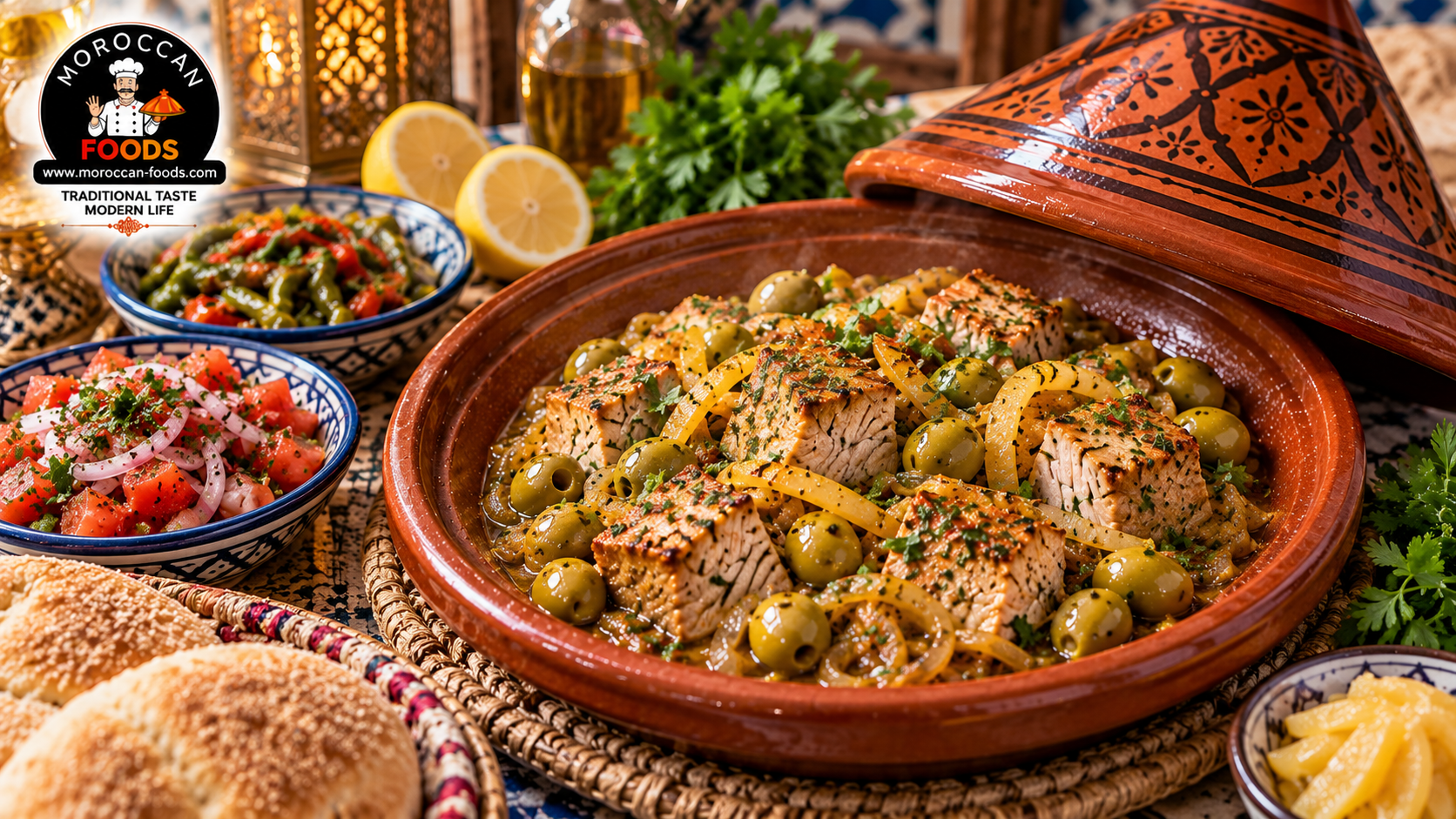
This Moroccan Tuna Tagine with Onions and Green Olives is a flavorful seafood dish made with thick tuna chunks, slowly cooked onions, aromatic Moroccan spices, fresh herbs, and green olives.
What makes this recipe especially delicious is the way the tuna is prepared. Instead of adding the fish directly to the sauce, the tuna chunks are first lightly browned with finely chopped onion and olive oil. A second onion, cut into thin strips, is then arranged over the browned tuna before the spices and other ingredients are added.
The tagine is cooked gently until the tuna is fully cooked, the onions become tender and almost caramelized, and the sauce reduces into a rich, concentrated coating. Green olives added toward the end provide the characteristic savory finish.
Serve this Moroccan tuna tagine hot with Moroccan bread for scooping up the onions and flavorful sauce.
Recipe Information
Prep Time: 15 minutes
Cooking Time: 35–45 minutes
Total Time: 50–60 minutes
Servings: 4
Difficulty: Easy–Medium
Cooking Method: Traditional Moroccan Tagine
Cuisine: Moroccan
Ingredients
For the Tuna
- 800 g fresh tuna, cut into large cubes or thick chunks
- 2 medium onions
- 1 onion, finely chopped
- 1 onion, cut into thin strips
- 2 tablespoons olive oil
Moroccan Seasoning
- 1 teaspoon ground ginger
- 1 teaspoon paprika
- ½ teaspoon turmeric
- ½ teaspoon freshly ground black pepper
- ¼ teaspoon ground cumin
- Salt to taste
- A small pinch of saffron threads, soaked in 2 tablespoons warm water
- 2 garlic cloves, finely minced
- 1 tablespoon finely chopped fresh parsley
- 1 tablespoon finely chopped fresh cilantro
To Finish
- 100 g green olives, preferably pitted
- ½ preserved lemon, pulp removed and peel cut into strips
- 100–150 ml water, as needed

How to Make Moroccan Tuna Tagine with Onions and Green Olives
Step 1: Prepare the Tuna and Onions
Pat the tuna dry with paper towels and cut it into large, evenly sized chunks. Keeping the pieces relatively large helps prevent them from breaking apart during cooking.
Finely chop the first onion. Cut the second onion lengthwise into thin strips and keep it separate.
Step 2: Heat the Tagine
Place a traditional tagine over low to medium-low heat, preferably using a heat diffuser if cooking over a direct flame.
Add the 2 tablespoons of olive oil and allow it to warm gently.
Step 3: Sauté the Finely Chopped Onion
Add the finely chopped onion to the olive oil.
Cook for approximately 4–5 minutes, stirring occasionally, until the onion softens and begins to turn translucent.
Do not add the spices yet.
Step 4: Brown the Tuna Chunks
Arrange the tuna chunks over the softened chopped onion.
Increase the heat slightly if necessary and cook for approximately 2–3 minutes on the first side.
Carefully turn the pieces and brown the other sides for another 2–3 minutes.
The goal at this stage is to give the outside of the tuna a light golden sear. Do not cook it completely yet, because it will continue cooking inside the tagine.
Step 5: Add the Onion Strips
Once the tuna has developed some color, reduce the heat.
Spread the second onion, cut into thin strips, evenly over the browned tuna chunks.
This layer will soften gradually during cooking and absorb the juices from the fish and spices.
Step 6: Add the Moroccan Spices
Now season the tagine with:
ginger, paprika, turmeric, black pepper, cumin, salt, minced garlic, parsley, cilantro, and the saffron with its soaking water.
Distribute the seasonings evenly over the onion and tuna.
Add approximately 100 ml of water around the sides of the tagine rather than pouring it directly over the fish.
Step 7: Slowly Cook the Tagine
Cover the tagine and cook over low heat for approximately 20–25 minutes.
The onions will gradually release moisture and combine with the olive oil, tuna juices, herbs, and spices to form the sauce.
Check occasionally. If the tagine becomes too dry before the onions are tender, add a small amount of hot water.
Avoid stirring aggressively because the tuna pieces can break apart. Instead, gently move or rotate the tagine if necessary.
Step 8: Add the Green Olives and Preserved Lemon
When the onions are very tender and the tuna is nearly cooked through, arrange the green olives around the fish.
Add the preserved lemon strips over the top.
Cover again and continue cooking over low heat for approximately 8–10 minutes.
Step 9: Reduce the Sauce
Remove the lid for the final 3–5 minutes if there is excess liquid.
Allow the sauce to reduce gently until it becomes concentrated and coats the onions and tuna.
The finished tagine should not be watery. The onions should be soft and well cooked, while the tuna should be completely cooked but still moist inside.

How to Serve
Serve the Moroccan Tuna Tagine with Onions and Green Olives directly from the tagine while hot.
It pairs especially well with Moroccan khobz, which can be used to scoop up the tender onions and concentrated sauce. You can also serve it alongside a simple Moroccan tomato and onion salad or roasted green pepper salad.

Important Cooking Tip
Because tuna is leaner and firmer than many fish commonly used in Moroccan tagines, prolonged high-heat cooking can make it dry. The initial browning should therefore be brief, followed by gentle low-temperature cooking. This gives the onions enough time to soften while helping the tuna remain tender.
Show Nutritional Value
Estimated Nutritional Value
Per serving — based on 4 servings
| Nutrient | Approx. Amount |
|---|---|
| Calories | ≈ 390 kcal |
| Protein | ≈ 50 g |
| Total Fat | ≈ 16 g |
| Saturated Fat | ≈ 3 g |
| Carbohydrates | ≈ 12 g |
| Dietary Fiber | ≈ 2.5 g |
| Total Sugars | ≈ 4 g |
| Sodium | ≈ 750–950 mg |
| Potassium | ≈ 850 mg |
Health & Nutrition Highlights
Thanks to the tuna, this tagine is rich in protein, making it a satisfying main course. Tuna also provides essential nutrients such as selenium and vitamin B12, as well as varying amounts of omega-3 fatty acids, depending on the specific type of tuna used.
Olive oil contributes unsaturated fats, while onions provide fiber and plant compounds. Green olives add unsaturated fats and flavor, though they are also a primary source of sodium in the dish—especially when combined with preserved lemon and added salt.
Note:
Nutrition values are estimates and may vary depending on the type of tuna, amount of olive oil, olives, preserved lemon, salt, and serving size.
These figures do not include Moroccan bread, salads, or beverages served alongside the tagine.

Frequently Asked Questions
What is Moroccan tuna tagine?
Moroccan tuna tagine is a fish dish prepared with fresh tuna chunks, onions, olive oil, Moroccan spices, herbs, green olives, and preserved lemon. In this recipe, the tuna is lightly browned before being gently cooked with the onions and seasonings in a traditional tagine.
Can you cook tuna in a Moroccan tagine?
Yes. Fresh tuna can be cooked in a Moroccan tagine. Because tuna can become dry when overcooked, it is best to brown it briefly first and then finish cooking it gently over low heat with the onions and sauce.
Why should I brown the tuna before adding the spices?
Lightly browning the tuna develops additional flavor and gives the outside of the fish an appealing texture. In this recipe, the tuna is browned with finely chopped onion before the sliced onion and spices are added.
What type of tuna is best for this tagine?
Use fresh, firm tuna steaks or loin that can be cut into large chunks. Choose pieces that are thick enough to hold their shape during browning and slow cooking.
Can I use canned tuna instead of fresh tuna?
Fresh tuna is strongly recommended for this recipe. Canned tuna is already cooked and has a different texture, so it will not withstand the browning and tagine-cooking process in the same way.
How do I keep tuna from becoming dry?
Avoid cutting the tuna into very small pieces and do not brown it for too long. After searing, cook the tagine gently over low heat and stop cooking once the tuna is fully cooked and the onions are tender.
Why does this recipe use two onions?
The onions have two different roles. The first onion is finely chopped and sautéed before the tuna is browned, helping create the base of the sauce. The second onion is cut into thin strips and placed over the browned tuna, where it slowly softens and absorbs the spices and cooking juices.
When should I add the spices?
Add the spices after the tuna has been lightly browned and the sliced onion has been arranged over it. This follows the preparation method used in this recipe and allows the tuna to develop color before the seasonings and liquid are introduced.
When should I add the green olives?
Add the green olives toward the final stage of cooking, when the onions are tender and the tuna is nearly cooked. This allows the olives to warm through and flavor the sauce without cooking them unnecessarily for the entire process.
Can I use black or red olives instead of green olives?
Yes, but the flavor will be different. Green olives provide the savory, slightly briny character intended for this recipe. If substituting another variety, choose Moroccan olives that complement fish dishes.
Is preserved lemon necessary?
Preserved lemon adds a distinctive salty, citrusy Moroccan flavor and pairs particularly well with fish and olives. You can prepare the tagine without it, but the final flavor will be different.
How long does Moroccan tuna tagine take to cook?
The complete recipe takes approximately 50–60 minutes, including about 15 minutes of preparation and 35–45 minutes of cooking, depending on the size of the tuna pieces, the tagine, and the heat level.
How do I know when the tuna tagine is ready?
The tuna should be cooked through, the sliced onions should be very tender, and the sauce should be reduced and concentrated rather than watery. Avoid continuing to cook the tuna long after it reaches doneness.
What should I serve with Moroccan tuna tagine?
The traditional choice is Moroccan bread (khobz) for scooping up the tuna, onions, olives, and sauce. You can also serve the tagine with Moroccan tomato and onion salad, roasted green pepper salad, carrot salad, or other traditional Moroccan side salads.
Is Moroccan tuna tagine high in protein?
Yes. Tuna is naturally rich in protein. Based on the quantities used in this recipe and four servings, our estimated nutritional calculation provides approximately 50 g of protein per serving. The actual value varies according to the tuna and portion size.
How many calories are in Moroccan tuna tagine?
Our estimated nutritional calculation is approximately 390 calories per serving, based on four servings. The actual value can vary with the type of tuna and the amounts of olive oil, olives, preserved lemon, and other ingredients used.
Can I make this tagine without a traditional clay tagine?
Yes. If you do not have a traditional tagine, you can prepare the recipe in a heavy, wide pan or Dutch oven with a lid. Keep the heat low and monitor the liquid so that the onions cook gently without the sauce drying out.
Can I prepare Moroccan tuna tagine ahead of time?
You can prepare the onions, herbs, spices, and other ingredients in advance. However, for the best tuna texture, it is preferable to brown and cook the fish relatively close to serving time rather than repeatedly reheating it.
How should I store leftover tuna tagine?
Allow leftovers to cool promptly, transfer them to an airtight container, and refrigerate them. For food safety, cooked fish should generally be refrigerated within 2 hours and used within 3–4 days. Reheat leftovers thoroughly, while avoiding excessive heating that could dry out the tuna.
Is this tuna tagine spicy?
Not necessarily. Ginger, turmeric, paprika, black pepper, cumin, saffron, herbs, and preserved lemon provide aromatic flavor rather than intense heat. If you want a spicy version, you can add a small amount of cayenne or fresh chili according to taste.


Leave a Reply