
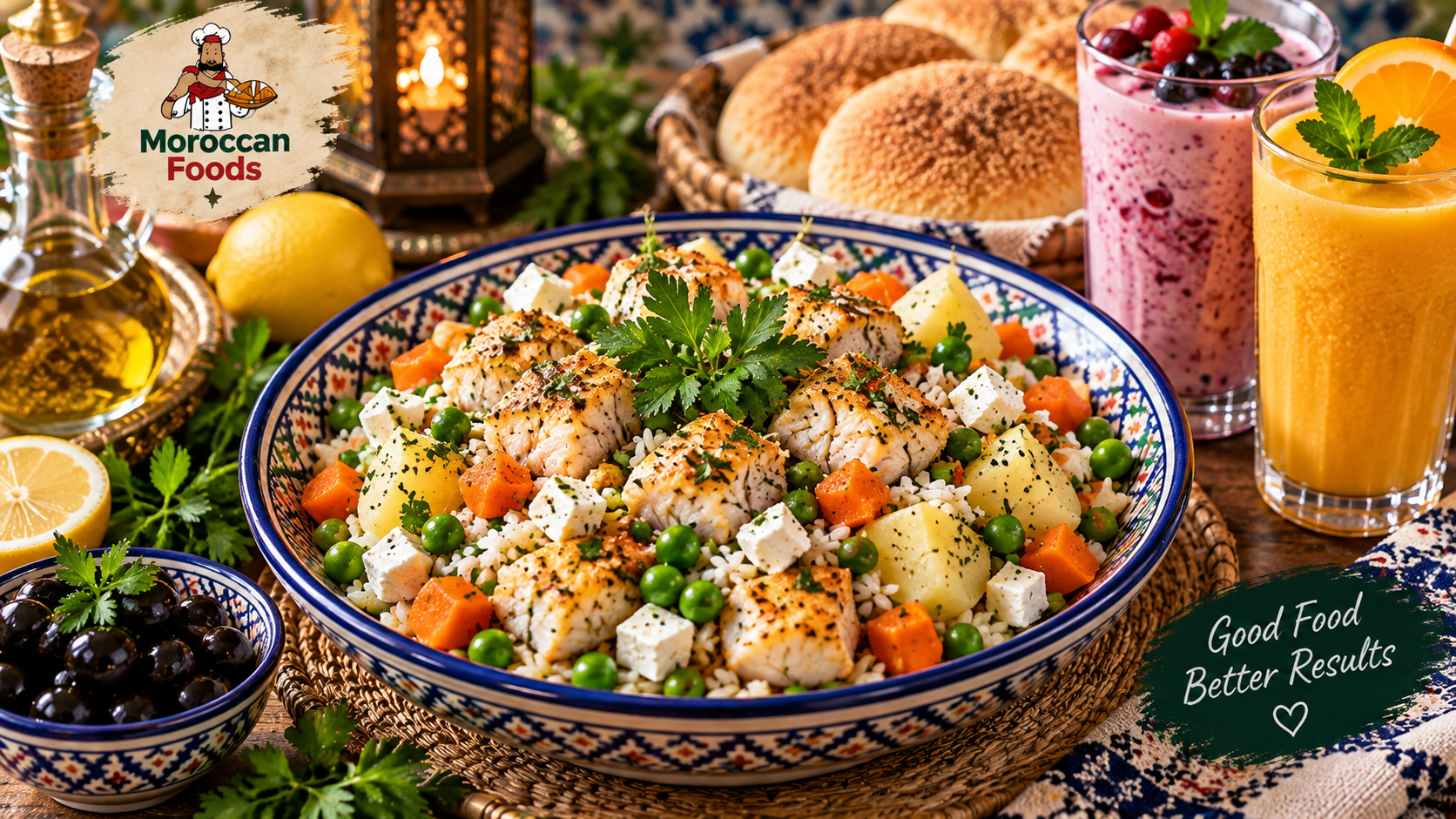
This Hake Salad with Potatoes, Peas, Carrots and Rice is a colorful and satisfying fish-and-vegetable meal made with tender hake cubes, steamed vegetables, long-grain rice, fresh herbs, Moroccan-inspired spices, and extra-virgin olive oil.
Unlike the vegetables, which are gently steamed until tender, the hake cubes are cooked separately in a skillet with olive oil and finely chopped onion. This method gives the mild white fish more flavor while allowing the onion to soften and lightly caramelize around it.
Once cooked, the hake is gently combined with the potatoes, carrots, peas, and rice, then seasoned with cumin, coriander, parsley, and olive oil. The result is a light yet filling hake and rice salad that works beautifully for lunch, dinner, or as part of a balanced post-workout meal.
Recipe Information
Prep Time: 15 minutes
Cooking Time: 25–30 minutes
Total Time: 40–45 minutes
Servings: 4
Difficulty: Easy
Course: Salad / Main Dish
Cuisine: Moroccan-Inspired
Cooking Methods: Steaming, Boiling & Skillet
Main Ingredient: Hake
Ingredients
For the Hake
- 500 g hake fillets, skinless and boneless, cut into medium cubes
- 1/2 medium onion, finely chopped
- 1 tablespoon extra-virgin olive oil
- 1/2 teaspoon ground cumin
- 1/2 teaspoon ground coriander
- 1/4 teaspoon black pepper
- 1/2 teaspoon paprika
- Salt to taste
For the Vegetables and Rice
- 2 medium potatoes, peeled and diced
- 3 carrots, peeled and diced
- 150 g peas
- 150 g long-grain rice
- Water for cooking the rice
- A small pinch of salt
For Finishing the Salad
- 1 tablespoon extra-virgin olive oil
- 1/2 teaspoon ground cumin
- 1/2 teaspoon ground coriander
- 1 tablespoon fresh parsley or cilantro, finely chopped
- Salt to taste
- White cheese cubes, optional

How to Make Hake Salad with Potatoes, Peas, Carrots and Rice
Step 1: Prepare the Vegetables
Peel the potatoes and carrots and cut them into evenly sized small cubes.
Place the potatoes, carrots, and peas in a steamer. If you have a divided steamer, keep each vegetable in a separate section.
Bring the water underneath to a boil, cover, and steam the vegetables for approximately 15–20 minutes, or until tender but still holding their shape.
Avoid overcooking them because they will later be mixed with the rice and hake.
Step 2: Cook the Rice
Rinse the 150 g long-grain rice thoroughly under cold water.
Place it in a saucepan with the appropriate amount of water and a small pinch of salt.
Cook according to the package instructions, generally for approximately 15–20 minutes, until tender.
Drain if necessary and allow the rice to cool slightly.
For the best salad texture, the rice should be cooked but the grains should remain relatively separate.
Step 3: Prepare the Hake
Pat the hake fillets dry with kitchen paper and check carefully for any remaining bones.
Cut the fish into medium cubes. Avoid making the pieces too small because hake is delicate and can break apart during cooking.
Season the hake with:
- 1/2 teaspoon cumin
- 1/2 teaspoon coriander
- 1/2 teaspoon paprika
- 1/4 teaspoon black pepper
- Salt to taste
Gently toss until the pieces are lightly coated.
Step 4: Sauté the Onion
Heat 1 tablespoon of extra-virgin olive oil in a large non-stick skillet over medium heat.
Add the finely chopped half onion.
Cook for approximately 3–4 minutes, stirring occasionally, until the onion becomes soft and lightly golden.
Do not let the onion burn.
Step 5: Cook the Hake Cubes
Add the seasoned hake cubes to the skillet with the softened onion.
Arrange the pieces in a single layer as much as possible.
Cook gently over medium heat, turning the pieces carefully so they cook evenly without breaking apart.
Continue cooking until the hake is opaque throughout and flakes easily. Cooking time will vary according to the thickness of the cubes, so use doneness rather than the clock alone.
Once cooked, remove the skillet from the heat.
Important: Hake is a delicate white fish, so avoid excessive stirring. Gently turning the cubes helps them retain their shape for a more attractive salad.
Step 6: Combine the Vegetables and Rice
Transfer the cooked potatoes, carrots, and peas to a large mixing bowl.
Add the cooked long-grain rice.
Gently mix until the vegetables are evenly distributed throughout the rice.
Step 7: Add the Hake and Onion
Add the cooked hake cubes together with the sautéed onion and any flavorful juices remaining in the skillet.
Fold them gently into the rice and vegetables.
Avoid vigorous mixing so that the hake remains in attractive bite-size pieces rather than breaking into flakes.
Step 8: Season the Salad
Add:
- 1 tablespoon extra-virgin olive oil
- 1/2 teaspoon ground cumin
- 1/2 teaspoon ground coriander
- 1 tablespoon chopped parsley or cilantro
- Salt to taste
Gently toss the ingredients until evenly seasoned.
Taste and adjust the seasoning if necessary.
Step 9: Add White Cheese – Optional
If desired, add a few white cheese cubes just before serving.
Fold them gently into the salad or arrange them over the top.
The cheese is optional; the recipe works perfectly well without it.
Step 10: Garnish and Serve
Transfer the Hake Salad with Potatoes, Peas, Carrots and Rice to a Moroccan serving plate or large decorative bowl.
Arrange several hake cubes prominently on top so the main ingredient is clearly visible.
Finish with a light drizzle of extra-virgin olive oil and a little freshly chopped parsley or cilantro.
Serve warm, at room temperature, or chilled according to preference.
For a Moroccan-style presentation, serve it alongside Moroccan bread, black olives, and mint tea.

Serving recipe:
You can serve this salad for lunch or dinner alongside Moroccan bread and black olives, garnished with a drizzle of olive oil and a sprinkle of chopped cilantro. Pair it with Moroccan tea or a Moroccan beverage—such as a milk-and-fruit blend or an orange juice-and-fruit mix.

If you exercise and are looking for a protein-rich source, this meal is perfect for you after your workout.

Show Nutritional Value and Health Benefits
Health Benefits of Hake Salad with Potatoes, Peas, Carrots and Rice
This colorful hake salad with potatoes, peas, carrots and rice combines lean white fish, vegetables, carbohydrates, herbs, and extra-virgin olive oil in one satisfying meal.
High-Quality Protein: Hake provides high-quality protein, which contributes to the maintenance and growth of muscle mass. This makes the salad particularly useful as part of a balanced meal for active people.
Lean White Fish: Hake is naturally relatively low in fat while providing protein and important nutrients. Cooking the hake gently with onion and a moderate amount of olive oil adds flavor without requiring heavy sauces.
Energy from Rice and Potatoes: Long-grain rice and potatoes provide carbohydrates, the body’s primary source of energy. This combination can make the salad more satisfying than a vegetable-only salad.
Fiber from Vegetables: Peas, carrots, and potatoes contribute dietary fiber. Fiber supports normal digestive function and can help make a meal more filling.
Vitamin A from Carrots: Carrots are particularly rich in beta-carotene, which the body can convert into vitamin A. Vitamin A contributes to normal vision and immune function.
Healthy Unsaturated Fats: Extra-virgin olive oil provides predominantly monounsaturated fat. Using it in moderate quantities is a good way to add flavor and fat to the meal.
Micronutrient Variety: Hake and the different vegetables contribute a range of nutrients, including selenium, B vitamins, potassium, and other vitamins and minerals, although exact amounts depend on the ingredients and portions used.
Estimated Nutrition Facts
Per serving — approximately 1/4 of the recipe
| Nutrient | Estimated Amount |
|---|---|
| Calories | ~440 kcal |
| Protein | ~31 g |
| Carbohydrates | ~54 g |
| Total Fat | ~11 g |
| Saturated Fat | ~2 g |
| Fiber | ~6 g |
| Sugars | ~6 g |
| Sodium | Varies with added salt |
Nutritional Highlights
Protein-rich • Source of fiber • Lean white fish • Complex carbohydrates • Vegetables • Olive-oil-based fats
Is It Suitable After Exercise?
Yes. This recipe can work well as a post-workout meal because it combines protein from hake with carbohydrates from rice, potatoes, and peas. Protein contributes to muscle maintenance and growth, while carbohydrates help replenish energy after physical activity.
Individual nutritional needs vary according to body size, training intensity, and overall diet, so portion sizes can be adjusted accordingly.
Nutrition note: Values are estimates and may vary depending on the exact size of the vegetables, type of hake, rice, amount of olive oil and serving size. Optional white cheese is not included in these estimates.

Frequently Asked Questions
What is hake salad with potatoes, peas, carrots and rice?
It is a satisfying fish and vegetable salad made with tender hake cubes, steamed potatoes, carrots and peas, cooked long-grain rice, onion, olive oil, fresh herbs, and Moroccan-inspired spices. The ingredients are gently combined to create a colorful main-dish salad.
Is hake good for salad?
Yes. Hake is a mild white fish with a delicate flavor that pairs well with potatoes, rice, vegetables, olive oil, herbs, and spices. For this recipe, cutting the hake into medium cubes helps keep visible pieces of fish throughout the salad.
How should I cook hake for this salad?
Cook the hake separately from the vegetables. Sauté half a finely chopped onion in olive oil until softened, then add the seasoned hake cubes and cook gently until the fish is opaque and cooked through. Avoid excessive stirring because hake can break apart easily.
Can I steam the hake with the vegetables?
You can, but skillet-cooking is recommended for this recipe. Cooking the hake with olive oil and chopped onion gives it more flavor and a lightly golden exterior while allowing the vegetables to be steamed separately.
How do I keep hake from falling apart while cooking?
Cut the fillets into reasonably large cubes, use a non-stick skillet, and avoid stirring continuously. Allow the pieces to cook briefly on one side before carefully turning them with a spatula.
Can I use frozen hake?
Yes. Frozen hake fillets work well. Thaw them completely in the refrigerator and pat them dry before cutting and seasoning. Removing excess moisture helps the hake cook better in the skillet.
What can I substitute for hake?
Other mild white fish with a suitable texture can be used, such as cod or pollock. Cooking times may vary depending on the thickness of the fish.
What type of rice is best for hake salad?
Long-grain rice is a good choice because the grains tend to remain separate after cooking. Basmati rice can also be used if you prefer its aroma and texture.
Can I make this hake salad without rice?
Yes. You can omit the rice and increase the vegetables or potatoes. However, rice helps make the original recipe more substantial and provides additional carbohydrates.
Can I add white cheese?
Yes. White cheese cubes are optional. Add them after the other ingredients have been combined and fold them in gently to prevent them from breaking apart.
Can I add lemon juice?
Yes. A little fresh lemon juice works particularly well with hake and can give the salad a brighter, fresher flavor. Add it shortly before serving according to taste.
What spices go well with hake?
Hake pairs well with cumin, coriander, paprika, black pepper, and salt. Fresh parsley or cilantro and olive oil complement these spices and give the finished salad a Moroccan-inspired character.
Is hake salad with rice and vegetables healthy?
It can form part of a balanced diet. Hake provides protein, while potatoes and rice provide carbohydrates. Peas and carrots contribute fiber and micronutrients, and olive oil supplies predominantly unsaturated fats.
Is this hake salad high in protein?
It is a protein-rich meal primarily because of the hake. Based on the quantities used in this recipe, we estimated approximately 31 g of protein per serving, although the actual amount depends on the ingredients and portion size.
Is hake salad good after a workout?
It can be a useful post-workout meal because it combines protein from hake with carbohydrates from rice, potatoes, and peas. Protein contributes to the maintenance and growth of muscle mass, while carbohydrates help replenish energy.
Can I prepare this salad in advance?
Yes. The rice and vegetables can be prepared ahead of time and refrigerated promptly. For the best texture, cook the hake carefully and combine the ingredients without excessive mixing.
Can hake salad be eaten cold?
Yes. It can be enjoyed warm, at room temperature, or chilled. If you plan to serve it cold, cool and refrigerate the cooked ingredients promptly and keep the salad refrigerated until serving.
How long does hake salad last in the refrigerator?
When handled and refrigerated properly in a covered container, cooked fish leftovers are generally best used within 3–4 days. If the salad has been left at room temperature for an extended period, it should not simply be refrigerated for later use.
What can I serve with hake salad?
For a Moroccan-inspired presentation, serve it with Moroccan bread, black olives, fresh lemon, and mint tea. A milk-and-fruit drink or an orange-and-fruit juice can also accompany the meal.
Can I make this recipe without a steamer?
Yes. Boil the potatoes, carrots, and peas separately until tender, cook the rice in a saucepan, and prepare the hake with onion and olive oil in a skillet. Then gently combine everything before serving.


Leave a Reply