
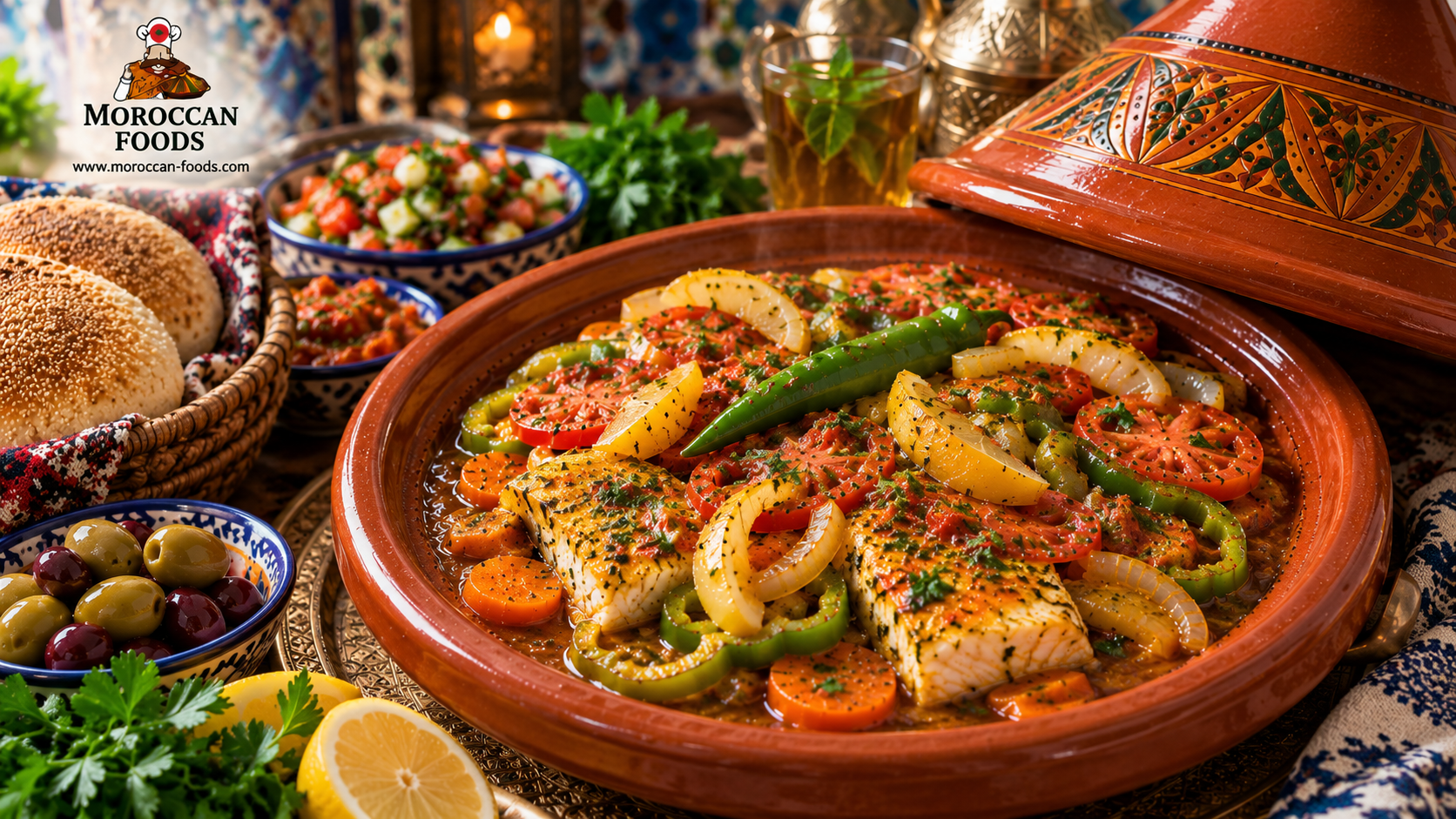
This Moroccan Corb Fish Tagine with Carrot Rounds, Tomatoes and Preserved Lemon is a colorful and aromatic Moroccan seafood dish prepared with thick pieces of corb fish, fresh vegetables, preserved lemon, herbs, and a fragrant chermoula-style seasoning.
The tagine begins with a layer of carrot rounds at the bottom, followed by finely chopped onion and well-seasoned pieces of fish. Onion rings, green bell pepper rings, and tomato rounds are then arranged over the fish, creating attractive layers while gradually releasing moisture and flavor during cooking.
Half a preserved lemon adds the distinctive salty-citrus character associated with Moroccan fish tagines, while a whole green chili pepper placed on top adds aroma and gentle heat without overpowering the fish.
Everything is slowly cooked until the carrots are tender, the fish is moist and flaky, and the tomatoes, onions, olive oil, herbs, spices, and natural fish juices form a rich and flavorful sauce at the bottom of the tagine.
Recipe Information
- Cuisine: Moroccan
- Course: Main Course
- Preparation Time: 20 minutes
- Marinating Time: 30 minutes
- Cooking Time: Approximately 35–45 minutes
- Total Time: Approximately 1 hour 20 minutes
- Servings: 4
- Difficulty: Medium
- Cooking Method: Traditional Moroccan tagine / slow cooking
Cooking time may vary depending on the thickness of the fish pieces, carrot slices, heat level, and type of tagine used.
Ingredients
For the Fish
- 1 kg corb fish, cleaned and cut into thick steaks or large pieces
- 2 medium carrots, cut into rounds
- 1 medium onion
- Half finely chopped
- Half cut into rings
- 2 medium ripe tomatoes, cut into rounds
- 1 green bell pepper, cut into rings
- 1 whole green chili pepper
- 1/2 preserved lemon, cut into strips or small wedges
- 3 tablespoons olive oil
- 80–100 ml warm water, approximately
Moroccan Fish Marinade
Chermoula-Style Seasoning
- 3 garlic cloves, crushed
- 3 tablespoons fresh cilantro, finely chopped
- 2 tablespoons fresh parsley, finely chopped
- 1 teaspoon paprika
- 1 teaspoon ground cumin
- 1/2 teaspoon turmeric
- 1/2 teaspoon ground ginger
- 1/2 teaspoon black pepper
- A small pinch of saffron threads, optional
- 1/2 teaspoon salt, or to taste
- Juice of 1/2 fresh lemon
- 1 tablespoon olive oil

Use salt carefully because the preserved lemon already contributes saltiness to the tagine.
Preparing the Ingredients
Prepare the Fish
Clean the fish and cut it into thick steaks or substantial pieces suitable for tagine cooking.
Pat the pieces dry with paper towels.
Keeping the fish pieces relatively thick helps them remain intact during slow cooking.
Prepare the Carrots
Peel or thoroughly scrub the carrots.
Cut them crosswise into medium rounds approximately 0.7–1 cm thick.
Avoid making the rounds extremely thick because they need to become tender within the relatively short cooking time required for fish.
Prepare the Onion
Finely chop half of the onion.
Cut the remaining half crosswise into rounds or rings.
The finely chopped onion will help create the sauce at the bottom, while the onion rings will remain more visible over the fish.
Prepare the Green Pepper
Remove the stem and seeds from the green bell pepper.
Cut it crosswise into medium-thick rings.
Prepare the Tomatoes
Cut the tomatoes crosswise into medium rounds.
Keep them thick enough to remain visible after cooking.
Prepare the Preserved Lemon
Cut half a preserved lemon into thin strips or small wedges.
If it is especially salty, rinse it briefly before using.

How to Make Moroccan Corb Fish Tagine
Step 1: Prepare the Fish Marinade
In a bowl, combine:
- Garlic
- Cilantro
- Parsley
- Paprika
- Cumin
- Turmeric
- Ginger
- Black pepper
- Saffron, if using
- Salt
- Fresh lemon juice
- 1 tablespoon olive oil
Mix everything thoroughly until you have a fragrant Moroccan chermoula-style marinade.
Step 2: Season the Fish
Place the fish pieces in a large bowl or shallow dish.
Spread the marinade generously over every piece, coating both sides well.
Gently massage the seasoning into the fish.
Cover and refrigerate for approximately 30 minutes.
Why Marinate the Fish?
The marinade allows the garlic, fresh herbs, lemon, cumin, paprika, and other spices to flavor the fish before it enters the tagine.
Avoid marinating it for excessively long periods in lemon juice because prolonged exposure to acid can begin changing the fish’s texture.
Step 3: Arrange the Carrot Rounds
Drizzle the remaining olive oil over the bottom of the tagine.
Arrange the carrot rounds in a single overlapping layer across the base.
The carrots create a protective layer between the fish and the bottom of the tagine while absorbing the seasoned cooking juices.
Step 4: Add the Finely Chopped Onion
Scatter the finely chopped half onion evenly over the carrot rounds.
Do not create an excessively thick layer.
As the tagine cooks, the chopped onion will soften and become part of the sauce.
Step 5: Add the Marinated Fish
Arrange the seasoned fish pieces over the carrots and chopped onion.
Pour any marinade remaining in the bowl over the fish.
Try to keep the pieces in a single layer whenever possible so they cook evenly.
Step 6: Add the Onion Rings
Arrange the onion rings over and around the fish.
These onions will soften slowly while retaining some of their shape.
Step 7: Add the Green Pepper Rings
Place the green bell pepper rings over the fish and onions.
Distribute them evenly so their fresh flavor infuses the whole tagine.

Step 8: Arrange the Tomato Rounds
Place the tomato rounds over the fish and vegetables.
You can slightly overlap them for an attractive presentation.
As the tomatoes cook, their juices combine with the onion, chermoula, olive oil, and fish juices to enrich the sauce.
Step 9: Add the Preserved Lemon
Arrange the preserved lemon pieces over the tomatoes.
Spread them around the tagine rather than concentrating all of them in one place.
This allows the salty-citrus flavor to perfume the dish more evenly.
Step 10: Add the Whole Green Chili Pepper
Place the whole green chili pepper in the center of the tagine.
Keep it whole and unpierced for relatively gentle heat.
If you prefer a noticeably spicier tagine, make a very small slit in the pepper.
Step 11: Add a Small Amount of Liquid
Mix approximately 80–100 ml warm water with any remaining marinade in the bowl.
Pour it carefully around the edges of the tagine, rather than directly over the beautifully arranged vegetables.
You only need a modest amount of liquid because the tomatoes, onions, fish, and vegetables will release additional moisture.
Step 12: Cook the Tagine Slowly
Cover the tagine and cook over low heat.
Allow it to simmer gently for approximately 30–40 minutes.
Avoid vigorous boiling, which can cause the delicate fish pieces to break apart.
During cooking:
- The carrots become tender
- The onions soften into the sauce
- The tomatoes release their juices
- The pepper becomes tender
- The preserved lemon perfumes the dish
- The fish absorbs the chermoula flavors
Step 13: Check the Fish and Carrots
The tagine is ready when the fish is opaque and flakes easily with gentle pressure.
The carrot rounds should also be tender when pierced with a knife.
For food safety, fish should reach an internal temperature of about 63°C / 145°F at its thickest point.
Step 14: Reduce the Sauce
If there is too much liquid near the end of cooking, remove the lid and allow the tagine to simmer gently for a few minutes.
The final sauce should be flavorful and slightly concentrated, not excessively watery.
Avoid stirring the tagine because this can break the fish and disturb the vegetable layers.

How the Finished Fish Tagine Should Look
The finished tagine should have clearly visible layers and vibrant Moroccan colors.
The carrot rounds at the bottom should be completely tender and infused with the chermoula sauce.
The fish pieces should remain intact but become moist, tender, and easy to flake.
The onion rings and green pepper should be soft, while the tomato rounds should have partially melted into the sauce without disappearing completely.
The preserved lemon should remain visible over the vegetables, and the whole green chili pepper should form an attractive centerpiece.
At the bottom of the tagine, the olive oil, tomato juices, onions, herbs, fish juices, and Moroccan spices should create a rich, aromatic sauce ideal for scooping up with Moroccan bread.

Serving Suggestions
You can serve this tagine with traditional Moroccan salads and Moroccan bread. Afterward, you might offer milk-and-fruit drinks, orange-juice-and-fruit beverages, or Moroccan tea, along with fresh fruit or melon varieties for dessert.
Moroccan Roasted Tomato, Onion & Pepper Salad Recipe
Traditional Moroccan Tomato Cucumber and Onion Salad Recipe
Moroccan salad with tomatoes, onions, and roasted green peppers
Moroccan salad with onions, tomatoes, and roasted red and yellow peppers
Moroccan Lettuce, Tomato, Onion & Cucumber Salad
Cucumber and tomato salad with cheese and boiled chickpeas | A healthy, protein-rich, and easy-to-make

note:
- This recipe is suitable for both lunch and dinner.
- In Morocco, after finishing a tagine, fruits or types of melon are served as a dessert.
- Some people like to drink Moroccan tea after a meal.
- Some people enjoy drinking one of the juices on the Moroccan beverage menu.
Show Health Benefits and Nutritional Value
Nutritional Benefits of Moroccan Corb Fish Tagine
This Moroccan fish tagine combines lean protein, vegetables, olive oil, fresh herbs, and aromatic spices, making it a nutrient-rich main dish when enjoyed as part of a balanced diet.
High-Quality Protein from Corb Fish
Corb fish provides a good amount of high-quality protein, which helps:
- Maintain and repair muscle tissue
- Support normal body functions
- Promote fullness after meals
- Contribute to a balanced, protein-rich diet
Fish also provides important nutrients such as vitamin B12, selenium, phosphorus, and other minerals, although exact amounts vary by species and serving size.
Healthy Fats from Olive Oil
Olive oil is an important part of the Mediterranean and Moroccan diet.
It provides mainly monounsaturated fats, which can be a healthier replacement for foods high in saturated fat when consumed in appropriate amounts.
Olive oil also contains naturally occurring antioxidant compounds.
Beta-Carotene from Carrots
Carrots are particularly known for their beta-carotene, which the body can convert into vitamin A.
Vitamin A contributes to:
- Normal vision
- Immune function
- Healthy skin
- Normal cell growth
Carrots also provide dietary fiber.
Vitamin C and Antioxidants from Tomatoes
Tomatoes provide:
- Vitamin C
- Potassium
- Folate
- Lycopene and other plant compounds
Cooking tomatoes with olive oil may also help the body absorb some fat-soluble carotenoids more efficiently.
Vitamin C from Green Pepper
Green bell pepper contributes additional vitamin C, along with small amounts of fiber and several antioxidant compounds.
It also adds flavor and color without contributing many calories.
Fiber from Vegetables
Carrots, tomatoes, onions, and peppers contribute dietary fiber.
Fiber supports normal digestion and can help promote satiety.
Beneficial Plant Compounds from Onion and Garlic
Onions and garlic contain naturally occurring sulfur compounds and antioxidants.
They also add significant flavor to the tagine without requiring large amounts of additional fat or sugar.
Fresh Herbs Add Flavor and Micronutrients
Parsley and cilantro contribute small amounts of:
- Vitamin K
- Vitamin C
- Carotenoids
- Antioxidant plant compounds
Their main advantage in this recipe is that they add freshness and aroma with very few calories.
Preserved Lemon Adds Flavor Without Heavy Sauces
Preserved lemon gives the tagine its characteristic Moroccan citrus flavor.
Because preserved lemon can contain a considerable amount of sodium, it is best to use additional salt sparingly.
Moroccan Spices Add Flavor Without Extra Calories
Spices such as cumin, paprika, turmeric, ginger, black pepper, and saffron add depth and aroma without significantly increasing the calorie content of the dish.
They also contain naturally occurring plant compounds.
Overall Nutritional Profile
This tagine can provide a balanced combination of:
- High-quality protein
- Unsaturated fats
- Dietary fiber
- Vitamin A precursors
- Vitamin C
- Vitamin B12
- Minerals such as selenium and phosphorus
- Antioxidant plant compounds
Serving it with Moroccan vegetable salads can further increase the meal’s vegetable and fiber content.
Nutrition Note
The nutritional benefits and nutrient amounts can vary depending on the exact type of corb fish, portion size, amount of olive oil, vegetables, and preserved lemon used. Because preserved lemon contains sodium, additional salt should be added carefully.

Tips for the Best Moroccan Fish Tagine
Keep the Fish Pieces Thick
Thin pieces can cook too quickly and fall apart.
Large steaks or substantial pieces are better for slow tagine cooking.
Do Not Stir After Arranging the Fish
Once all the ingredients are layered, allow the tagine to cook naturally.
Stirring can break the fish and ruin the presentation.
Keep the Carrot Rounds Moderately Thin
The fish cooks faster than carrots.
Cutting the carrots approximately 0.7–1 cm thick helps them become tender during the same cooking period.
Control the Salt
Both preserved lemon and some marinades can contribute considerable salt.
Start with a modest amount and adjust only if necessary.
Cook Gently
Fish does not benefit from aggressive boiling.
Low, steady heat helps keep the pieces intact while allowing the vegetables and sauce to develop gradually.
Frequently Asked Questions
What is Moroccan Corb Fish Tagine?
Moroccan Corb Fish Tagine is a traditional-style fish dish prepared with thick pieces of corb fish, carrot rounds, onions, green pepper, tomatoes, preserved lemon, a whole green chili pepper, olive oil, fresh herbs, and Moroccan chermoula spices.
The ingredients are slowly cooked in layers until the fish becomes tender and flaky and the vegetables create a rich, aromatic sauce.
What type of fish is best for this tagine?
Corb fish works very well because it can be cut into substantial pieces that hold their shape during gentle tagine cooking.
Other firm white fish can also be used if corb fish is unavailable.
How should the fish be cut?
Cut the fish into thick steaks or large substantial pieces.
Avoid very thin pieces because they cook quickly and are more likely to break apart.
Should I remove the fish skin?
It is optional.
Leaving the skin on can help the pieces stay intact during cooking, especially when using fish steaks.
What is chermoula?
Chermoula is a traditional North African seasoning mixture commonly used with fish.
In this recipe, it is made with garlic, cilantro, parsley, paprika, cumin, turmeric, ginger, black pepper, saffron, lemon juice, olive oil, and salt.
How long should I marinate the fish?
Approximately 30 minutes in the refrigerator is enough to allow the chermoula flavors to penetrate the fish.
Avoid leaving fish in a lemon-based marinade for excessively long periods because the acid can begin changing its texture.
Why are carrot rounds placed at the bottom of the tagine?
The carrots create a protective layer between the fish and the base of the tagine.
They also absorb the chermoula, fish juices, tomato juices, and spices while cooking.
How thick should the carrot rounds be?
Approximately 0.7–1 cm thick works well.
This allows them to become tender during the relatively short cooking time required for fish.
Why is half the onion finely chopped?
The finely chopped onion softens during cooking and becomes part of the sauce.
It adds sweetness, moisture, and body to the base of the tagine.
Why is the other half of the onion cut into rings?
Onion rings are placed over the fish so they remain more visible in the finished dish.
They soften during cooking while contributing sweetness and flavor.
Why are green pepper rings used?
Green bell pepper adds freshness, color, and a mild vegetal flavor that pairs especially well with fish, tomato, preserved lemon, and chermoula.
How should the tomatoes be cut?
Cut the tomatoes into medium-thick rounds.
They should be thick enough to remain partially visible after cooking while still releasing their juices into the sauce.
Why are tomatoes placed on top of the fish?
Tomatoes release moisture as they cook.
Their juices combine with the onion, olive oil, chermoula, fish juices, and spices to create the sauce at the bottom of the tagine.
Why is preserved lemon used?
Preserved lemon adds a distinctive salty and citrusy Moroccan flavor.
It pairs especially well with fish, garlic, cilantro, cumin, paprika, and tomatoes.
How much preserved lemon should I use?
This recipe uses approximately half a preserved lemon.
Cut it into strips or small wedges and distribute it across the top of the tagine.
Should preserved lemon be rinsed first?
If it is especially salty, you can rinse it briefly before using.
This helps control the salt level of the final dish.
Should I use less salt because of the preserved lemon?
Yes.
Preserved lemon already contains salt, so season the chermoula lightly and adjust only if necessary.
Why is the green chili pepper kept whole?
A whole chili pepper adds aroma and gentle heat without making the entire tagine overly spicy.
For stronger heat, you can make a small slit in the pepper.
Can I omit the chili pepper?
Yes.
The tagine will still be flavorful without it.
How much water should I add?
Approximately 80–100 ml of warm water is usually enough.
The fish, tomatoes, onions, and vegetables will release additional moisture during cooking.
Why should I pour the liquid around the edges?
Pouring the liquid around the edges helps preserve the layered presentation.
It also prevents the marinade and vegetables on top from being washed away.
How long should the fish tagine cook?
Cook the covered tagine over low heat for approximately 30–40 minutes.
The exact time depends on the thickness of the fish pieces and carrot rounds.
Why should fish tagine be cooked over low heat?
Gentle heat helps the fish remain intact and prevents aggressive boiling.
It also allows the vegetables, chermoula, and natural juices to slowly combine into a flavorful sauce.
Should I stir the tagine while it cooks?
No.
Avoid stirring after the fish and vegetables have been arranged.
Stirring can break the fish and disturb the vegetable layers.
How do I know when the fish is cooked?
The fish should become opaque and flake easily when gently tested with a fork.
For food safety, the thickest part should reach about 63°C / 145°F.
How do I know when the carrots are ready?
The carrot rounds should be tender enough to pierce easily with a knife or fork.
They should remain recognizable rather than completely breaking down.
What should the finished sauce look like?
The sauce should be rich, aromatic, and slightly concentrated.
It should contain the combined flavors of tomato, onion, olive oil, chermoula, fish juices, preserved lemon, and spices.
What if the tagine has too much liquid?
Remove the lid near the end of cooking and allow the tagine to simmer gently for a few minutes.
This will help reduce and concentrate the sauce.
What if the tagine becomes too dry?
Add a small splash of warm water around the edge of the tagine.
Avoid adding too much at once.
Can I use another fish instead of corb fish?
Yes.
A firm white fish that holds its shape during gentle cooking can be used.
Cooking time should be adjusted according to the thickness of the fish.
Can I prepare this recipe without a traditional tagine?
Yes.
A heavy-bottomed pot or Dutch oven with a tight-fitting lid can be used.
Keep the heat low and avoid excessive stirring.
What can I serve with Moroccan Corb Fish Tagine?
It pairs especially well with:
- Traditional Moroccan bread
- Moroccan tomato and cucumber salad
- Taktouka
- Zaalouk
- Moroccan carrot salad
- Roasted pepper salad
- Green or red olives
Why is Moroccan bread a good accompaniment?
Moroccan bread is ideal for scooping up the fish, vegetables, and concentrated chermoula sauce from the bottom of the tagine.
What drinks pair well with this fish tagine?
Moroccan mint tea is a classic choice.
Fresh orange-and-fruit juice also pairs very well with the meal.
How many servings does this recipe make?
Using approximately 1 kg of corb fish, the recipe makes about 4 servings.
The final number depends on portion size and the side dishes served.
Can I prepare the ingredients in advance?
Yes.
You can cut the vegetables and prepare the chermoula in advance.
Keep them covered in the refrigerator until ready to cook.
Marinate the fish closer to cooking time.
Can leftovers be stored?
Yes.
Allow the tagine to cool, then transfer leftovers to an airtight container and refrigerate promptly.
Reheat gently until thoroughly hot.
Can I freeze this fish tagine?
It is possible, but the texture of the fish and vegetables may change after freezing and reheating.
For the best texture, it is preferable to enjoy the tagine fresh or refrigerated for a short period.
Is this fish tagine high in protein?
Yes.
Fish provides a substantial amount of high-quality protein, making this tagine a protein-rich main dish.
What makes this Moroccan fish tagine special?
The combination of chermoula-marinated corb fish, carrot rounds, finely chopped and sliced onion, green pepper rings, tomato rounds, preserved lemon, and a whole green chili pepper creates a layered tagine with vibrant color, tender fish, and a deeply aromatic Moroccan sauce.


Leave a Reply