
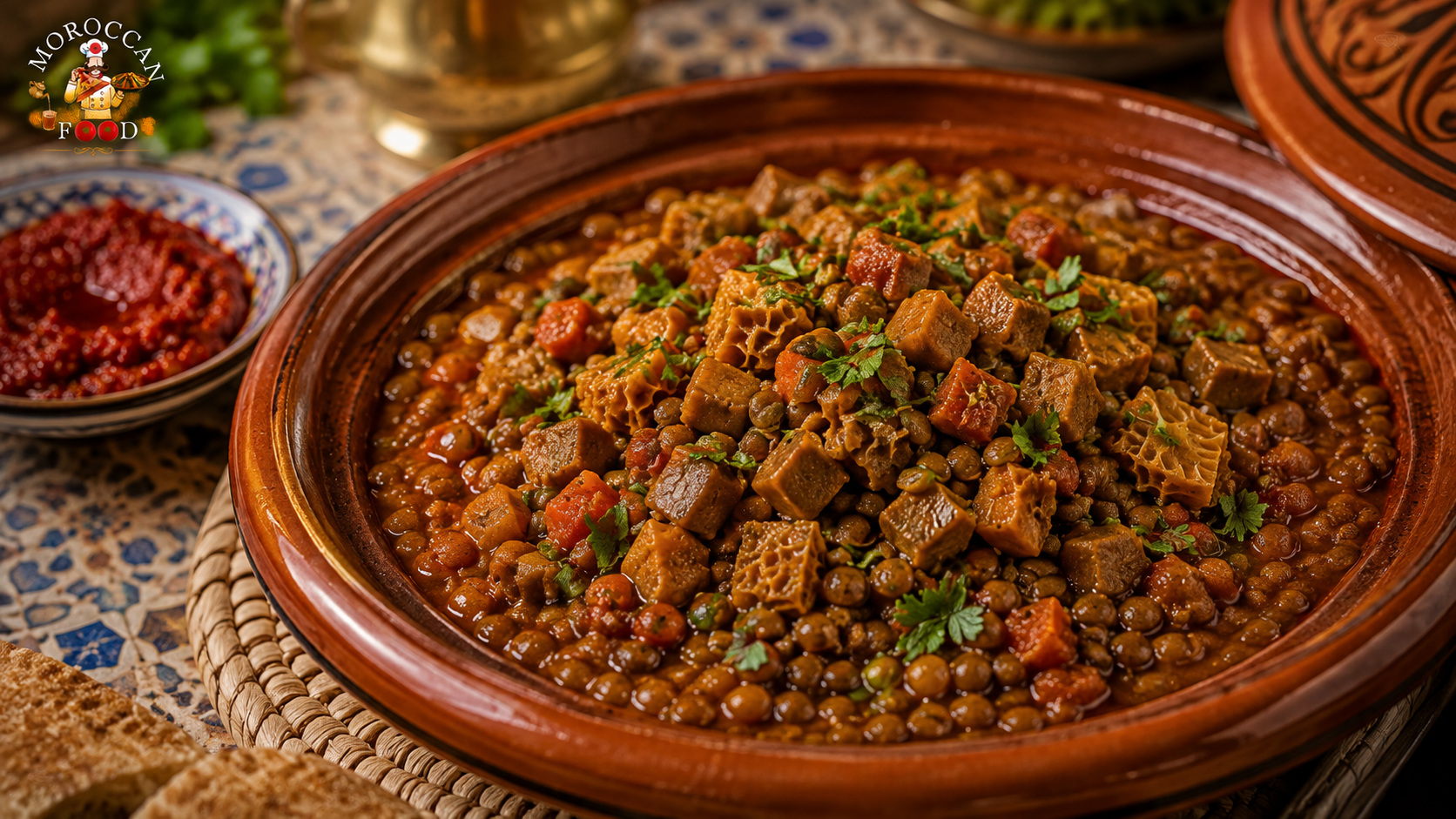
Moroccan Lentils with Tqalia is a hearty and flavorful traditional Moroccan dish that combines tender lentils with delicious Tqalia (tripe), aromatic spices, garlic, herbs, and a rich tomato-based sauce. Slow-cooked until the lentils are creamy and the Tqalia is tender, this comforting recipe brings together authentic Moroccan flavors in a satisfying homemade meal. Perfect for lunch or dinner, it can be served hot with fresh Moroccan bread and traditional Moroccan salads.
Recipe Information:
| Information | Details |
|---|---|
| Prep Time | 10 minutes |
| Cook Time | 40 minutes |
| Total Time | 50 minutes |
| Servings | 6 people |
| Cuisine | Moroccan |
| Difficulty | Easy |


serving recipe:
=>When preparing these two recipes, take a nice serving dish, place the lentils in it, and top with the fried onions in a professional manner. Add a little olive oil and a sprinkle of cumin. Serve the dish with harissa, traditional Moroccan salads in small bowls, Moroccan tea, and other Moroccan drinks such as milk with fruit or orange juice with fruit.

note:
=>These two Moroccan recipes are among the Moroccan recipes that complement each other and blend together to give us an authentic and delicious Moroccan flavor. Just try the two recipes and enjoy!
Show Health benefits and nutritional value
Health Benefits and Nutritional Value of Moroccan Lentils with Tqalia
Moroccan Lentils with Tqalia is a hearty traditional dish that combines nutrient-rich lentils with tender Tqalia (tripe), tomatoes, onions, garlic, olive oil, herbs, and Moroccan spices. This combination provides protein, dietary fiber, iron, and several essential vitamins and minerals.
🌿 Health Benefits
1. Rich in Protein
Lentils and Tqalia provide protein, which supports muscle maintenance, tissue repair, and satiety.
2. High in Dietary Fiber
Lentils are an excellent source of fiber. Fiber supports healthy digestion and helps you feel full for longer.
3. Good Source of Iron
Lentils and tripe can contribute iron to the diet. Iron is essential for normal red blood cell formation and oxygen transport.
4. Provides Vitamin B12 and Zinc
Tqalia provides vitamin B12 and minerals such as zinc. Vitamin B12 supports normal nervous-system function and red blood cell formation, while zinc contributes to normal immune function.
5. Rich in Plant-Based Nutrients
Tomatoes, onions, garlic, parsley, and Moroccan spices provide various plant compounds and antioxidants.
6. Provides Healthy Fats
When used in moderation, olive oil provides monounsaturated fats and naturally occurring antioxidant compounds.
7. A Filling and Satisfying Meal
The combination of lentils, protein, fiber, and fats makes this dish particularly satisfying and suitable for a substantial lunch or dinner.
🍽️ Approximate Nutritional Value
For one serving, assuming the recipe makes 6 servings, the exact values depend on the quantities of lentils, Tqalia, and oil used. A reasonable estimate is:
| Nutrient | Approx. Per Serving |
|---|---|
| Calories | 450–600 kcal |
| Protein | 25–35 g |
| Carbohydrates | 40–50 g |
| Dietary Fiber | 10–14 g |
| Fat | 20–30 g |
| Iron | 4–7 mg |
| Zinc | 3–5 mg |
| Vitamin B12 | Good source |
| Potassium | 700–1,000 mg |
Note: These values are estimates rather than laboratory measurements. Actual nutritional values will vary according to the amount of Tqalia, lentils, olive oil, and other ingredients used, as well as the serving size.
⚠️ Nutritional Note
Tqalia, olives, preserved lemon, and added salt can contribute a significant amount of sodium, while olive oil and Tqalia can increase the total fat and calorie content. For a balanced meal, serve a moderate portion with fresh Moroccan salads and vegetables.

Frequently Asked Questions (FAQ) – Moroccan Lentils with Tqalia
1. What are Moroccan Lentils with Tqalia?
Moroccan Lentils with Tqalia is a traditional Moroccan dish that combines tender lentils with flavorful Tqalia (tripe), tomatoes, garlic, onions, herbs, olive oil, and aromatic Moroccan spices. It is a hearty and comforting meal full of authentic Moroccan flavors.
2. What is Tqalia?
Tqalia is a traditional Moroccan preparation made mainly with beef or sheep tripe. The tripe is cleaned, boiled, cut into pieces, and slowly cooked with Moroccan spices and other ingredients until tender.
3. Do I need to soak the lentils before cooking?
No. Unlike dried beans, lentils generally do not require overnight soaking. Simply rinse them well before cooking.
4. Should I cook the Tqalia before adding it to the lentils?
Yes. For the best texture, the Tqalia should be cleaned and pre-boiled before being added to the lentil stew. This helps ensure that the tripe becomes tender during the final cooking process.
5. Can I use beef or sheep Tqalia?
Yes. Both beef and sheep tripe can be used. The cooking time may vary depending on the type and size of the tripe.
6. Can I prepare this recipe without a pressure cooker?
Absolutely. You can cook the lentils and Tqalia in a regular heavy-bottomed pot. The cooking time will be longer, but slow cooking can produce a deliciously rich and thick stew.
7. How do I know when the lentils are fully cooked?
The lentils should be tender and creamy while still holding their shape, and the sauce should have a thick, rich consistency.
8. How do I know when the Tqalia is ready?
The Tqalia should be very tender and easy to chew. If it remains tough, continue cooking until it reaches the desired texture.
9. What spices give this recipe its Moroccan flavor?
The traditional flavor comes from spices such as cumin, ginger, paprika, turmeric, black pepper, along with garlic, parsley, coriander, and olive oil.
10. Can I make Moroccan Lentils with Tqalia spicy?
Yes. You can serve the dish with Moroccan harissa or add chili peppers according to your preferred level of heat.
11. What can I serve with Moroccan Lentils with Tqalia?
This dish pairs beautifully with Moroccan bread, harissa, traditional Moroccan salads, olives, and Moroccan mint tea. You can also serve it with fresh fruit-based milk drinks or orange juice with fruit.
12. Can I prepare this dish in advance?
Yes. Moroccan Lentils with Tqalia is suitable for meal preparation. You can make it in advance, refrigerate it, and gently reheat it before serving.
13. How should I store leftovers?
Allow the stew to cool, place it in an airtight container, and refrigerate it. Reheat only the portion you intend to eat.
14. Can I freeze Moroccan Lentils with Tqalia?
Yes. Divide the cooled stew into portions and place it in freezer-safe containers. Thaw it safely in the refrigerator and reheat thoroughly before serving.
15. Is Moroccan Lentils with Tqalia healthy?
This dish provides protein, dietary fiber, iron, zinc, vitamin B12, potassium, and other nutrients. Lentils are particularly rich in fiber and plant-based protein, while Tqalia contributes protein, vitamin B12, and minerals. Because Tqalia, olives, preserved lemon, and salt can increase the sodium content, moderate portions are recommended.
16. How can I make the lentil stew thicker?
Allow the stew to simmer uncovered toward the end of cooking so that excess liquid evaporates. You can also gently stir some of the lentils to naturally thicken the sauce.
17. Can I use canned lentils?
Yes. Canned lentils can be used for a quicker version. Since they are already cooked, add them toward the end of the preparation and reduce the cooking time.
18. What makes this recipe traditionally Moroccan?
The combination of lentils, Tqalia, Moroccan spices, olive oil, garlic, herbs, harissa, and traditional accompaniments gives this dish its distinctive Moroccan character and makes it a comforting example of Moroccan home cooking.


Leave a Reply