
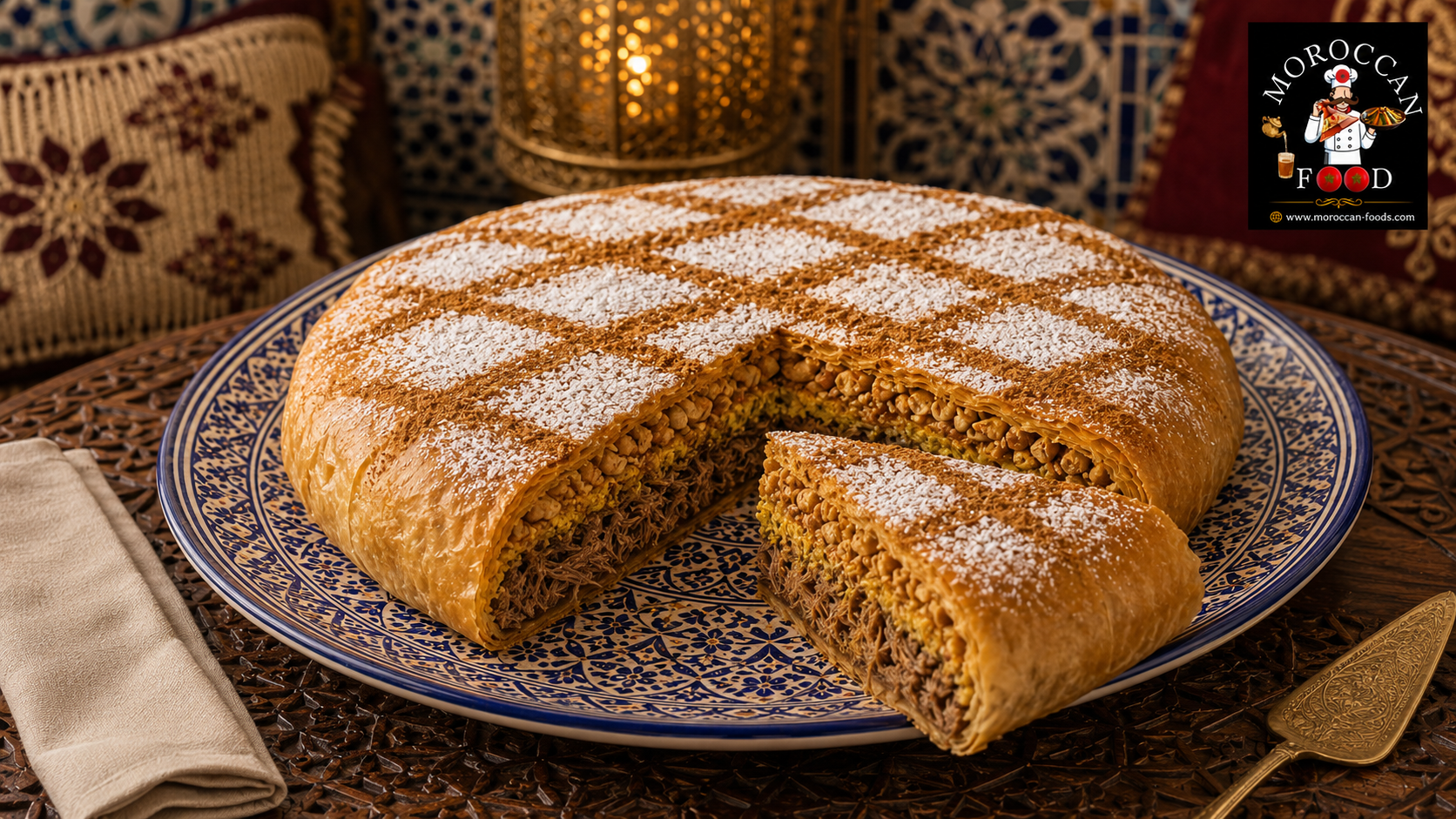
Moroccan Beef Pastilla with T-Bone Steak is a luxurious sweet-and-savory pie featuring slow-cooked, tender beef, saffron-spiced onions, a rich egg filling, and crunchy almonds flavored with cinnamon and orange blossom water. The layered filling is wrapped in delicate warqa pastry and baked until crisp and golden. Finished with powdered sugar and cinnamon, this impressive Moroccan pastilla is ideal for celebrations, festive dinners, and special family gatherings.
Recipe Information
- Cuisine: Moroccan
- Course: Main Course
- Preparation Time: 50 minutes
- Cooking Time: 2 hours
- Total Time: Approximately 2 hours 50 minutes
- Servings: 8–10
- Difficulty: Intermediate
- Cooking Method: Stovetop and oven
- Oven Temperature: 180°C (350°F)
Ingredients
For the T-Bone Steak Filling
- 1.5 kg T-bone steaks
- 5 large onions, thinly sliced
- 3 tablespoons olive oil
- 1 tablespoon smen or unsalted butter
- 1 teaspoon ground ginger
- 1 teaspoon turmeric
- 1 teaspoon ground cinnamon
- ½ teaspoon black pepper
- A generous pinch of saffron threads, soaked in ¼ cup warm water
- 1½ teaspoons salt, or to taste
- 2 tablespoons finely chopped parsley
- 2 tablespoons finely chopped cilantro
- ½ cup water, plus more if necessary
- 6 large eggs
For the Almond Filling
- 350 g blanched almonds
- Vegetable oil, for frying
- 100 g granulated sugar
- 1 teaspoon ground cinnamon
- 2 tablespoons orange blossom water
For Assembling the Pastilla
- 10–12 large sheets of Moroccan warqa pastry
- 120 g melted butter
- 1 egg yolk, lightly beaten, for sealing
For Garnishing
- 3 tablespoons powdered sugar
- 1 teaspoon ground cinnamon

Preparation Method
1. Season the T-Bone Steaks
Pat the T-bone steaks dry with paper towels. Season them evenly with salt and black pepper.
Heat the olive oil in a large heavy-bottomed pot over medium-high heat.
2. Brown the Beef
Place the T-bone steaks in the hot pot and brown them for approximately 2–3 minutes on each side.
Work in batches if necessary to avoid overcrowding. Transfer the browned steaks to a plate and set them aside.
3. Cook the Onions and Spices
Reduce the heat to medium and add the smen or butter to the same pot.
Add the sliced onions, ginger, turmeric, cinnamon, saffron water, parsley, and cilantro. Stir well and cook for approximately 8–10 minutes, until the onions begin to soften.
4. Slow-Cook the T-Bone Steaks
Return the browned steaks to the pot and add ½ cup of water.
Cover and cook over low heat for approximately 75–90 minutes, turning the steaks occasionally, until the beef becomes tender and separates easily from the bones.
Add a small amount of hot water only when necessary to prevent the sauce from sticking.
5. Shred the Beef
Remove the cooked T-bone steaks from the pot and allow them to cool slightly.
Separate the meat from the bones and remove any large pieces of excess fat. Shred or finely chop the beef, then set it aside. Discard the bones.
6. Reduce the Onion Sauce
Leave the onion mixture in the uncovered pot and cook it over medium heat until most of the liquid evaporates.
Stir regularly until the onions become thick, soft, and concentrated. The mixture should not contain any watery sauce.
7. Prepare the Egg Filling
Lightly beat the eggs in a separate bowl.
Gradually pour them into the reduced onion mixture while stirring continuously. Cook over medium-low heat until the eggs are incorporated and the filling becomes thick and softly set.
Remove the pot from the heat and allow the onion-and-egg filling to cool completely.

8. Prepare the Almond Filling
Fry the blanched almonds in vegetable oil until lightly golden. Drain them thoroughly on paper towels and allow them to cool.
Coarsely grind the almonds in a food processor. Keep some texture and avoid processing them into a paste.
Combine the ground almonds with the granulated sugar, cinnamon, and orange blossom water. Mix well and set aside.
9. Prepare the Baking Pan
Preheat the oven to 180°C (350°F).
Brush a round baking pan, approximately 30–32 cm in diameter, generously with melted butter.
Arrange 5–6 warqa sheets in an overlapping circle, allowing a large part of every sheet to hang over the rim. Brush each sheet lightly with melted butter before adding the next one.
Place one additional buttered sheet in the center to reinforce the base.
10. Add the Beef Layer
Spread the shredded T-bone steak evenly over the pastry base.
Press the beef gently into a compact, level layer. Avoid adding cooking liquid because it can soften the pastry.
11. Add the Onion-and-Egg Layer
Spread the completely cooled onion-and-egg mixture evenly over the shredded beef.
Make sure the filling is distributed to the edges without becoming excessively thick in the center.
12. Add the Almond Layer
Sprinkle the sweetened almond mixture evenly over the onion-and-egg filling.
Press it down gently to create a uniform layer while maintaining its coarse, crunchy texture.
13. Fold and Seal the Pastilla
Fold the overhanging warqa sheets inward over the filling, brushing them lightly with melted butter as you work.
Place 2–3 additional buttered pastry sheets over the top. Carefully tuck their edges underneath the pastilla to create a smooth, round shape.
Brush the surface with melted butter and use the beaten egg yolk to seal any loose edges.
14. Bake the Beef Pastilla
Bake in the preheated oven for approximately 35–45 minutes, or until the pastry becomes crisp and evenly golden brown.
If the top begins to brown too quickly, cover it loosely with aluminum foil during the final part of baking.
15. Garnish and Serve
Remove the pastilla from the oven and allow it to rest for approximately 10 minutes.
Transfer it carefully to a large Moroccan serving platter. Dust the surface lightly with powdered sugar and decorate it with ground cinnamon in a traditional diamond pattern.
Serve the Moroccan Beef Pastilla warm.

Important Tips for the Best Beef Pastilla
- Cook the T-bone steaks slowly until the meat separates easily from the bones.
- Remove excess fat before shredding the beef.
- Reduce the onion mixture thoroughly to prevent soggy pastry.
- Cool the beef, egg filling, and almonds before assembling the pastilla.
- Keep unused warqa sheets covered with a clean, slightly damp cloth.
- Brush every pastry layer lightly with melted butter for a crisp finish.
- Assemble the pastilla shortly before baking for the best texture.
- Thin phyllo pastry can replace warqa when traditional Moroccan pastry is unavailable.
Serving the recipe:
If you exercise, you can eat this dish after your workout with traditional Moroccan salads.

You can serve this dish for lunch or dinner with traditional Moroccan salads.

Moroccan Roasted Tomato, Onion & Pepper Salad Recipe
Traditional Moroccan Tomato Cucumber and Onion Salad Recipe
Moroccan salad with tomatoes, onions, and roasted green peppers
Moroccan salad with onions, tomatoes, and roasted red and yellow peppers
Moroccan Lettuce, Tomato, Onion & Cucumber Salad
Show Nutritional Value
Estimated Nutritional Value
Based on 10 servings, with each serving equal to approximately one medium slice:
| Nutrient | Per Serving |
|---|---|
| Calories | Approximately 850 kcal |
| Protein | Approximately 38 g |
| Carbohydrates | Approximately 48 g |
| Total Fat | Approximately 56 g |
| Saturated Fat | Approximately 17 g |
| Dietary Fiber | Approximately 5 g |
| Total Sugars | Approximately 18 g |
| Sodium | Varies according to salt, smen, and pastry |
Estimated Value for the Whole Pastilla
- Calories: approximately 8,500 kcal
- Protein: approximately 380 g
- Carbohydrates: approximately 480 g
- Total fat: approximately 560 g
- Dietary fiber: approximately 50 g
Key Nutritional Benefits
- High-quality protein: Beef, eggs, and almonds support muscle maintenance and recovery.
- Iron and vitamin B12: T-bone beef provides nutrients involved in red blood cell formation.
- Zinc and selenium: Beef and eggs supply minerals that support normal immune function.
- Unsaturated fats: Almonds and olive oil provide primarily unsaturated fats.
- Vitamin E and magnesium: Almonds contribute antioxidants and essential minerals.
- Energy-rich meal: Warqa pastry, almonds, sugar, butter, and beef make this a substantial dish.
These values are estimates and may vary according to the edible amount of T-bone meat, fat trimming, pastry weight, frying-oil absorption, butter, and portion size. This pastilla is energy-dense, so a smaller slice may be preferable when served with salads or other dishes.

Frequently Asked Questions
1. What is Moroccan T-Bone Beef Pastilla?
It is a sweet-and-savory Moroccan pie made with slow-cooked T-bone steak, saffron-spiced onions, eggs, sweetened almonds, and delicate warqa pastry.
2. Is it called pastilla or bastilla?
Both names refer to the same Moroccan dish. “Pastilla” and “Bastilla” are different English transliterations of the original Arabic name.
3. What is a T-bone steak?
A T-bone steak contains a distinctive T-shaped bone separating two cuts of beef: strip loin on the larger side and tenderloin on the smaller side.
4. Why use T-bone steak in beef pastilla?
The bone contributes flavor during slow cooking, while the meat becomes tender enough to shred. This creates a rich and distinctive beef filling.
5. How many T-bone steaks are needed?
Approximately 1.5 kg, usually 3–4 thick steaks, is suitable for one large 30–32 cm pastilla. The exact number depends on their size and bone weight.
6. Should the steaks be browned before slow cooking?
Yes. Browning develops deeper flavor and gives the beef an appetizing roasted character before it cooks slowly with the onions and spices.
7. How long should T-bone steaks be cooked?
Cook them over low heat for approximately 75–90 minutes, or until the meat separates easily from the bones. The exact time depends on the thickness of the steaks.
8. Can I cook the beef in a pressure cooker?
Yes. After browning the steaks and adding the onion mixture, pressure-cook them for approximately 35–45 minutes. Cooking time varies according to the meat and appliance.
9. Should the bones remain in the pastilla filling?
No. Remove every bone carefully after cooking. Also trim large pieces of excess fat before shredding the beef.
10. Can I use another beef cut?
Yes. Chuck roast, beef shoulder, short ribs, or another slow-cooking cut may be substituted. However, the flavor and cooking time will differ from the T-bone version.
11. Why must the onion sauce be reduced?
Excess liquid can make the delicate pastry soggy. Cook the onion mixture uncovered until it becomes thick and concentrated before adding the beaten eggs.
12. How should the egg filling be cooked?
Gradually pour the beaten eggs into the reduced onion mixture while stirring continuously. Cook until the filling is thick and softly set, with no watery liquid remaining.
13. Why should the almonds remain coarse?
Coarsely ground almonds provide a pleasant crunchy texture that contrasts with the tender beef and creamy onion-and-egg filling.
14. Can the almonds be roasted instead of fried?
Yes. Roast them until lightly golden, allow them to cool, and grind them coarsely. This reduces the amount of oil absorbed during preparation.
15. Is orange blossom water essential?
Orange blossom water gives the almond layer a traditional Moroccan fragrance. It can be omitted, but the pastilla will have a less distinctive aroma.
16. What is warqa pastry?
Warqa is an exceptionally thin Moroccan pastry used for pastilla and briouats. When brushed with butter and baked, it becomes delicate, crisp, and flaky.
17. Can phyllo pastry replace warqa?
Yes. Use several overlapping phyllo sheets and brush each one lightly with melted butter. The final texture will differ slightly but will still be crisp.
18. How do I keep warqa pastry from drying out?
Keep unused sheets covered with a clean, slightly damp cloth while assembling the pastilla. Work with one sheet at a time.
19. How do I prevent Beef Pastilla from becoming soggy?
Reduce the onion filling thoroughly, avoid adding beef cooking liquid, cool all fillings completely, and assemble the pastilla shortly before baking.
20. Why must the fillings cool before assembly?
Warm filling produces steam that can soften or tear the pastry. Completely cooled fillings help the warqa remain crisp while baking.
21. What temperature should I use to bake Beef Pastilla?
Bake it in a preheated oven at 180°C (350°F) for approximately 35–45 minutes, or until the pastry is crisp and evenly golden.
22. How is Moroccan Beef Pastilla traditionally decorated?
Dust the baked pastilla lightly with powdered sugar and create lines or a diamond lattice pattern with ground cinnamon.
23. Can Beef Pastilla be prepared in advance?
Yes. Prepare the beef, onion-and-egg filling, and almond mixture one day ahead. Refrigerate them separately and assemble the pastilla shortly before baking.
24. Can Moroccan Beef Pastilla be frozen?
Yes. Assemble it without baking or decorating, wrap it tightly, and freeze it for up to two months. Bake it directly from frozen, allowing additional cooking time.
25. What can I serve with T-Bone Beef Pastilla?
Serve it with light Moroccan salads such as zaalouk, taktouka, carrot salad, or beet salad. These salads balance the richness of the beef, almonds, and pastry.
26. How many people does this recipe serve?
A large 30–32 cm T-Bone Beef Pastilla generally serves 8–10 people, depending on portion size and the accompanying dishes.
27. What is the estimated nutritional value per serving?
When divided into ten portions, each serving provides approximately 850 calories, 38 g of protein, 48 g of carbohydrates, 56 g of fat, and 5 g of dietary fiber. These values are estimates.
28. How should leftovers be stored?
Place leftovers in an airtight container and refrigerate them within two hours. Consume them within 3–4 days.
29. What is the best way to reheat Beef Pastilla?
Reheat it in a preheated oven at 180°C (350°F) until thoroughly hot and crisp. Avoid the microwave when possible because it can soften the pastry.
30. Does this recipe contain common allergens?
Yes. It contains almonds, eggs, and dairy butter. Warqa or phyllo pastry may contain gluten. Check every packaged ingredient if food allergies are a concern.


Leave a Reply