
Introduction
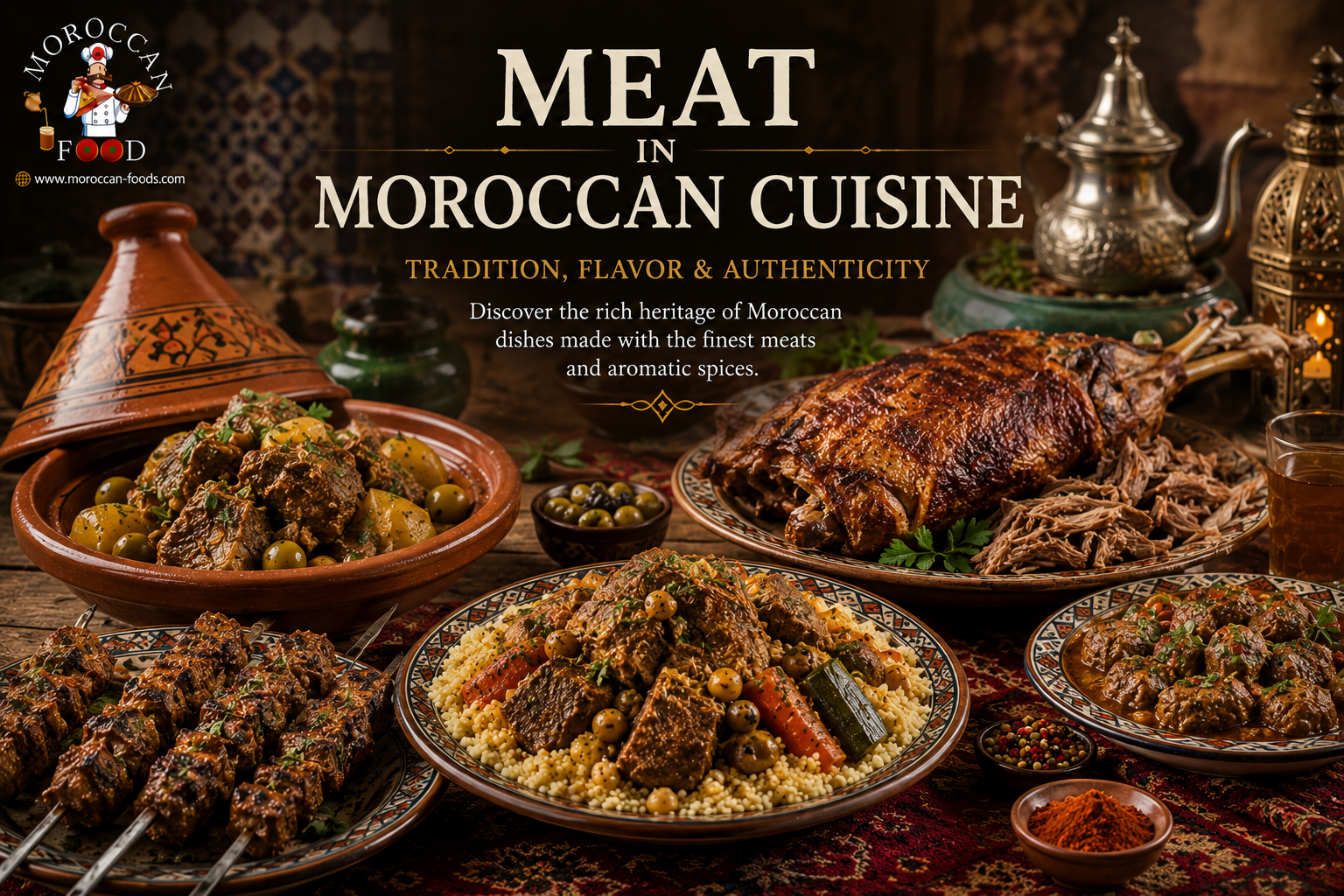
Meat is one of the most important ingredients in Moroccan cuisine and has held a special place on Moroccan tables for centuries. Throughout Morocco’s history, meat has been closely associated with local customs and traditions, becoming a key ingredient in many dishes that reflect the country’s rich cultural heritage.
Moroccan cuisine is renowned for its ability to transform different types of meat into flavorful dishes through the use of aromatic spices, fresh herbs, extra virgin olive oil, and traditional cooking techniques. These methods give the meat its distinctive taste and exceptionally tender texture. Although recipes vary from one region to another, they all preserve the authenticity and identity of Moroccan culinary traditions.
Beyond its nutritional value, meat also symbolizes generosity and hospitality in Morocco. It is served during religious celebrations, family gatherings, weddings, and social occasions, highlighting the important role that food plays in Moroccan culture.
The Importance of Meat in Moroccan Culture
In Morocco, meat represents more than food. It symbolizes:
- Hospitality and generosity
- Family gatherings
- Religious celebrations
- Weddings and special occasions
- Friday family lunches
- Eid celebrations
- Traditional feasts
Serving meat to guests is considered a sign of respect and honor throughout Moroccan culture.
Meat and Moroccan Celebrations
Meat plays a major role during:
- Eid al-Adha Moroccan cuisine during Eid al-Adha
- Family reunions
- Religious celebrations
- Ramadan iftar
- Friday lunches
Many traditional recipes are reserved specifically for these important occasions.
Weddings
Meat is also the centerpiece of traditional Moroccan weddings.
In many towns, villages, and working-class neighborhoods, guests are commonly served:
- Lamb with prunes.
- Fried or roasted chicken.
- Seffa, a traditional sweet vermicelli or couscous dish served during celebrations.

At more luxurious weddings, the menu often includes:
- Chicken Pastilla.
- Seafood Pastilla.
- Beef Kofta Pastilla.
- Whole roasted lambs or goats cooked in traditional clay ovens.

Meat is also an essential part of family feasts, Ramadan meals, Friday couscous, religious celebrations, and many other social occasions.

This deep cultural connection has contributed to the development of countless traditional Moroccan meat recipes that have been passed down from one generation to the next.
The Most Popular Types of Meat in Morocco
Lamb
Lamb is the king of Moroccan cuisine.
It is tender, flavorful, and perfectly suited for slow cooking.
Common lamb cuts include:
- Shoulder
- Leg
- Neck
- Ribs
- Shanks
- Chops
Popular dishes include:
- Lamb Tagine
- Lamb with Prunes
- Lamb Couscous
- Mechoui (roasted lamb)
- Lamb Skewers

Beef
Beef is widely consumed across Morocco and is often used in everyday family meals.
Popular beef dishes include:
- Beef Tagine
- Beef with Onions
- Beef Couscous
- Beef Kebabs
- Slow-cooked Beef Stews
Common beef cuts:
- Chuck
- Shoulder
- Brisket
- Round
- Shank

Chicken
Chicken is one of the most affordable and versatile meats.
It appears in:
- Chicken Tagine with Preserved Lemon and Olives
- Chicken Couscous
- Roasted Chicken
- Chicken Pastilla
- Grilled Chicken

Goat Meat
Goat meat is especially popular in rural areas and mountainous regions.
It has a stronger flavor than lamb and is commonly prepared in:
- Traditional tagines
- Slow-roasted dishes
- Village-style stews

Camel Meat
Camel meat is mainly found in southern Morocco and Saharan regions.
It is lean, nutritious, and traditionally prepared in:
- Camel tagines
- Camel couscous
- Grilled camel meat

Traditional Moroccan Meat Cooking Methods
Tagine Cooking
Tagine is Morocco’s most famous cooking technique.
Meat is slowly cooked inside a clay tagine pot with:
- Vegetables
- Fruits
- Herbs
- Olive oil
- Moroccan spices

Slow cooking allows the meat to become incredibly tender while absorbing every flavor.
Roasting (Mechoui)
Mechoui is traditionally prepared for:
- Weddings
- Eid al-Adha
- Large family celebrations

The whole lamb is slowly roasted until the meat becomes soft enough to fall off the bone.
Grilling
Moroccans love grilled meats.
Popular grilled dishes include:
- Lamb skewers
- Beef skewers
- Chicken skewers
- Liver skewers
- Kofta

Charcoal grilling gives the meat its distinctive smoky flavor.
Steaming
Although vegetables are more commonly steamed, meat is also steamed in the traditional Moroccan couscoussier.
Steamed meat is often served with:
- Couscous
- Seasonal vegetables
- Olive oil
- Cumin

Slow Simmering
Many Moroccan stews are cooked for several hours over low heat, producing rich sauces and extremely tender meat.
Traditional Moroccan Spices Used with Meat
Moroccan cuisine is famous for its rich variety of spices, which give meat dishes their distinctive flavor, deep aroma, and vibrant color. Although each recipe has its own unique spice blend, several spices are considered essential ingredients in most traditional Moroccan meat dishes.
The most commonly used spices include:
- Cumin
- Ginger
- Turmeric
- Black Pepper
- Paprika
- Cinnamon
- Saffron
- Ground Coriander
- Garlic
- Ras El Hanout

Among these, Ras El Hanout is Morocco’s most iconic spice blend. It is traditionally made from a carefully balanced mixture of numerous spices—sometimes more than twenty different ingredients—creating a complex, aromatic flavor that distinguishes Moroccan cuisine from other culinary traditions around the world.
Fresh Herbs Used with Moroccan Meat
Fresh herbs play an equally important role in Moroccan cooking. They enhance the flavor of meat dishes while adding freshness and fragrance.
The most commonly used herbs include:
- Fresh Parsley
- Fresh Cilantro (Coriander)
- Mint
- Thyme
- Bay Leaves
These herbs are used for marinades, slow-cooked tagines, grilled meats, and as fresh garnishes before serving.

Olive Oil and Preserved Ingredients
Moroccan meat recipes often include:
- Extra Virgin Olive Oil
- Preserved Lemons
- Green Olives
- Dried Apricots
- Raisins
- Prunes
- Almonds
- Dates
These ingredients create the famous sweet-and-savory balance that defines Moroccan cuisine.
Famous Moroccan Meat Dishes
Moroccan cuisine offers a wide variety of traditional meat dishes, including:
- Lamb Tagine with Prunes
- Meat Tagine with Vegetables
- Meat and Onion Tagine(Beef Shoulder Tagine with Onions – Authentic & Easy Recipe
) - Meat Tagine with Olives
- Moroccan Couscous with Meat
- Marrakchi Tanjia
- Mrouzia
- Moroccan Beef Kofta
- Moroccan Mechoui (Roasted Lamb)
- Moroccan Kebabs (Brochettes)
- Chicken Pastilla
- Rfissa
- Steamed Meat
- Charcoal-Grilled Meat
Each region of Morocco has developed its own variations of these recipes while preserving the authentic spirit of Moroccan cooking.
Popular Meat Cuts Used in Moroccan Cooking
Different Moroccan recipes require different cuts of meat to achieve the best flavor and texture.
The most commonly used cuts include:
- Shoulder
- Leg
- Neck
- Ribs
- Shank
- Brisket
- Loin
- Liver
- Heart
- Tongue
- Tail
- Tripe
- Intestines
- Head
- Feet (Trotters)

One of the unique aspects of Moroccan cuisine is the complete utilization of the animal. Almost every edible part is used to prepare traditional dishes, reflecting Morocco’s long-standing culinary tradition of minimizing waste while maximizing flavor.
Regional Moroccan Meat Specialties
Marrakech
Marrakech is famous for several iconic meat dishes, including:
- Marrakchi Tanjia
- Mechoui (Slow-Roasted Lamb)
- Lamb Tagine with Prunes
- Grilled Kofta

Fez
Fez is renowned for elegant dishes that combine sweet and savory flavors, including:
- Lamb Tagine with Prunes and Almonds
- Chicken Pastilla
- Tagines flavored with Cinnamon and Saffron

The Atlas Mountains
Traditional cuisine in the Atlas Mountains relies heavily on:
- Goat Meat
- Lamb
- Slow-cooked Tagines prepared with wild mountain herbs

The Moroccan Sahara
Southern Morocco is known for dishes prepared with:
- Camel Meat
- Traditional Charcoal-Grilled Meats
- Saharan Tagines

Nutritional Value of Meat
Meat is one of the richest sources of essential nutrients needed for a healthy diet.
Protein
Protein helps:
- Build muscle.
- Repair body tissues.
- Support a healthy immune system.
Iron
Red meat is an excellent source of iron, which is essential for producing hemoglobin and helping prevent iron-deficiency anemia.
Vitamin B12
Vitamin B12 contributes to:
- Maintaining a healthy nervous system.
- Producing red blood cells.
- Supporting normal brain function.
Zinc
Zinc helps:
- Strengthen the immune system.
- Speed up wound healing.
- Support normal growth and development.
Phosphorus
Phosphorus plays an important role in maintaining healthy bones and teeth.

Tips for Choosing High-Quality Meat
To achieve the best cooking results, consider the following recommendations:
- Traditional Moroccan free-range, well-fattened veal is considered among the finest meats for Moroccan cooking.
- Choose meat with a fresh, natural color.
- Avoid meat with unpleasant odors.
- Select firm, fresh meat.
- Purchase meat from a trusted butcher.
- Keep meat refrigerated at the proper temperature.
- Never leave meat at room temperature for extended periods.
- Cook meat thoroughly before serving.

What Makes Moroccan Meat Cuisine Unique?
Moroccan cuisine is considered one of the world’s richest culinary traditions thanks to several distinctive characteristics:
- A wide variety of traditional cooking techniques.
- The use of tagines, couscous steamers (couscoussiers), and traditional clay ovens.
- A perfect balance between sweet and savory flavors.
- Generous use of natural spices.
- Fresh herbs and extra virgin olive oil.
- Regional diversity in recipes across Morocco.
- Strong connections between food, family traditions, and cultural heritage.
These qualities have made Moroccan meat dishes some of the most appreciated traditional foods among lovers of Moroccan cuisine around the world.

Conclusion
Meat is one of the pillars of Moroccan cuisine, combining exceptional nutritional value with centuries of culinary heritage. From flavorful tagines and traditional couscous to Marrakchi Tanjia, Mrouzia, and charcoal-grilled meats, Moroccan recipes showcase the richness, diversity, and authenticity of Morocco’s gastronomic traditions.
Today, these recipes continue to be prepared using traditional techniques passed down through generations, preserving Morocco’s culinary identity and inspiring food enthusiasts worldwide to discover the remarkable flavors of Moroccan cuisine.
Frequently Asked Questions About Meat in Moroccan Cuisine
What is the most popular meat in Moroccan cuisine?
Lamb is considered the most popular meat in Moroccan cuisine because of its rich flavor and tender texture. It is commonly used in traditional dishes such as Lamb Tagine, Lamb Couscous, Mechoui, and Lamb with Prunes.
What types of meat are commonly used in Moroccan cooking?
Moroccan cuisine mainly uses lamb, beef, chicken, goat, and camel meat. Each type of meat is prepared using traditional cooking techniques and authentic Moroccan spices.
What are the most famous Moroccan meat dishes?
Some of the most famous Moroccan meat dishes include Lamb Tagine, Beef Tagine, Chicken Tagine with Preserved Lemon and Olives, Mechoui, Moroccan Couscous with Meat, Kofta, and grilled meat skewers.
Why is lamb so important in Moroccan cuisine?
Lamb is highly valued in Morocco because it becomes incredibly tender when slow-cooked in a tagine or roasted for traditional celebrations. Its rich flavor pairs perfectly with Moroccan spices, dried fruits, and vegetables.
What cooking methods are used for meat in Morocco?
Traditional Moroccan cooking methods include tagine cooking, charcoal grilling, roasting (Mechoui), steaming in a couscoussier, and slow simmering. These techniques create tender meat with deep, aromatic flavors.
What spices are commonly used in Moroccan meat dishes?
Moroccan meat dishes are seasoned with cumin, ginger, turmeric, paprika, black pepper, cinnamon, saffron, coriander, parsley, garlic, and Ras El Hanout, along with olive oil for extra richness.
What is Mechoui in Moroccan cuisine?
Mechoui is a traditional Moroccan roasted lamb dish prepared for weddings, Eid al-Adha, and family celebrations. The whole lamb is slowly roasted until the meat becomes exceptionally tender and easily falls off the bone.
Is camel meat eaten in Morocco?
Yes. Camel meat is traditionally eaten in southern Morocco and the Sahara region. It is lean, nutritious, and commonly prepared in tagines, couscous dishes, and grilled recipes.
Is goat meat popular in Morocco?
Goat meat is especially popular in rural villages and mountainous regions of Morocco. It has a stronger flavor than lamb and is often slow-cooked in traditional tagines and hearty stews.
What is the best cut of lamb for Moroccan tagine?
The shoulder, shank, neck, and leg are considered the best cuts for Moroccan tagine because they become tender during slow cooking while developing a rich, flavorful sauce.
What is the best beef cut for Moroccan cooking?
Chuck, brisket, shoulder, round, and shank are excellent beef cuts for Moroccan recipes because they remain juicy and tender after long, slow cooking.
Why is Moroccan meat so flavorful?
Moroccan meat is famous for its rich flavor because it is slowly cooked with aromatic spices, fresh herbs, olive oil, preserved lemons, dried fruits, and seasonal vegetables, allowing every ingredient to blend perfectly.
Is Moroccan meat healthy?
Many Moroccan meat dishes are nutritious when prepared traditionally. They often include lean meats, olive oil, vegetables, legumes, and natural spices while relying on slow cooking instead of deep frying.
What is served with Moroccan meat dishes?
Moroccan meat dishes are commonly served with couscous, freshly baked Moroccan bread, seasonal vegetables, olives, salads, and mint tea, creating a balanced and satisfying meal.
What makes Moroccan meat dishes unique?
Moroccan meat dishes are unique because they combine slow cooking techniques, fragrant spice blends, sweet and savory ingredients, and centuries-old culinary traditions that create complex, unforgettable flavors.
Leave a Reply