
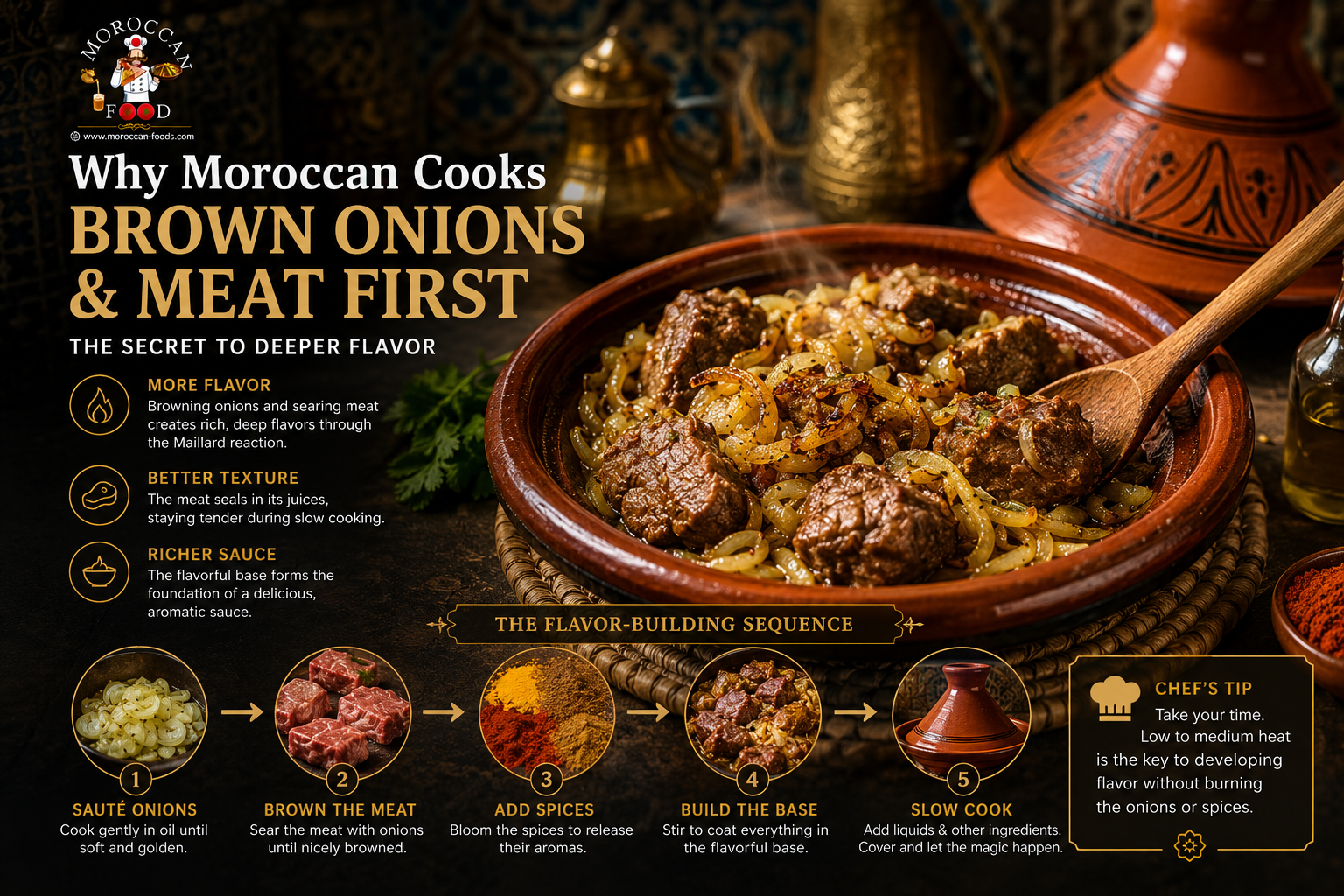
In many Moroccan dishes, cooking begins with a deceptively simple step: onions and meat are placed in the cooking vessel with oil and gently browned before the remaining ingredients are added.
This technique is especially important in many Moroccan tagines. The onions are softened and lightly browned while the meat is seared, allowing the first layer of flavor to develop before vegetables, spices, and liquid are introduced.
But why is this step so important?
It is not simply a traditional habit. The order in which ingredients are cooked changes their flavor, aroma, texture, and the final character of the dish.
Why Do Moroccan Recipes Often Start With Onions?
Onions are one of the fundamental flavor-building ingredients in Moroccan cooking.
When raw onions are heated in oil, several changes occur. They gradually lose water, soften, become sweeter, and develop more complex aromas.
Instead of remaining a sharp, raw ingredient, the onion becomes part of the foundation of the sauce.
This is why many Moroccan recipes begin with onions before adding the main ingredients.
The goal is to create a flavor base that will continue developing throughout the cooking process.
Browning Onions Is Different From Simply Cooking Them
There is an important difference between softening onions and browning onions.
When onions are cooked gently, they become soft and translucent as their moisture is released.
With longer cooking and appropriate heat, their surface can begin to brown, producing deeper flavors and aromas.
This browning involves complex chemical reactions, including the Maillard reaction and, depending on the temperature and conditions, caramelization.
These processes create new flavor compounds that are not present in the raw onion.
However, Moroccan cooking does not necessarily aim to deeply brown onions in every dish.
The desired level of browning depends on the recipe.
For many tagines, the onions are cooked until they become soft and develop a rich base without being burned.
Why Is the Meat Browned With the Onions?
In many Moroccan tagine preparations, the meat is added early and cooked together with the onions, oil, and seasonings.
This serves several purposes.
First, exposing the surface of the meat to heat develops additional aromas and savory flavors.
Second, the meat releases some of its own juices and fat into the cooking base.
Third, the onions absorb some of these flavors as they cook.
The result is a relationship between the ingredients:
Onions → Meat → Spices → Cooking Juices
Each contributes something to the developing sauce.
This is particularly important in a tagine because the dish is usually cooked slowly afterward, giving these flavors time to combine.
What Happens When Meat Is Browned?
When the surface of meat becomes sufficiently hot and relatively dry, chemical reactions can produce browned aromas and flavors.
One of the most important is the Maillard reaction.
The Maillard reaction occurs between amino acids and reducing sugars under suitable heating conditions and produces hundreds of flavor and aroma compounds.
This is why browned meat tastes different from meat that has only been gently simmered.
The important point is that browning creates flavor; it is not simply about changing the color of the meat.
However, the surface needs enough heat for browning to occur. If the meat is surrounded by a large amount of liquid from the beginning, the surface temperature is limited by the water-rich environment, making browning much more difficult.
Why Is Oil Used at the Beginning?
Oil plays an important role in the first stage of many Moroccan dishes.
It helps transfer heat from the cooking vessel to the onions and meat and allows the ingredients to cook more evenly.
Moroccan recipes may use olive oil, vegetable oil, or a combination depending on the dish and family tradition.
The oil also helps carry fat-soluble aromatic compounds from spices and herbs, contributing to the overall flavor of the dish.
In a traditional tagine, the initial oil, onions, meat, and spices can therefore form the foundation of the sauce before moisture increases during the later stages of cooking.
When Should the Spices Be Added?
This is where Moroccan cooking becomes particularly interesting.
Spices are not necessarily added at one single moment.
In many tagine preparations, spices such as ginger, turmeric, black pepper, or paprika are introduced early, allowing them to cook briefly with the onions and meat.
This helps distribute their aromas through the oil and cooking base.
However, different spices and herbs can behave differently during cooking.
Some aromatic ingredients benefit from gentle heating, while delicate fresh herbs may be better added later or used at different stages.
There is therefore no universal rule that every Moroccan spice must be added at the beginning.
The timing depends on the recipe and the desired flavor.
Why Should You Avoid Burning the Onions?
Browning and burning are not the same thing.
A properly cooked onion develops sweetness, aroma, and complexity.
A burned onion develops bitter and unpleasant flavors.
This is especially important when cooking in a traditional tagine because the vessel is designed for gradual cooking rather than aggressive high-heat frying.
The goal is controlled browning.
A useful principle for beginners is:
Build color gradually rather than trying to create it quickly.
If the onions become dark brown or black before the meat and other ingredients are ready, the heat is probably too high.
The Special Case of Moroccan Tagine
The initial browning stage is particularly interesting in Moroccan tagine cooking.
A common sequence is:
Oil → Onions → Meat → Spices → Slow Cooking → Vegetables → Final Sauce
The exact order varies from recipe to recipe, but the principle is similar.
The onions and meat are first cooked together to create a flavorful foundation.
Then the cooking becomes slower and more moist.
As the tagine continues cooking, vegetables release water, the lid retains steam, and the ingredients gradually cook in the resulting juices.
This creates a transition from browning to slow moist cooking.
That combination is one of the reasons Moroccan tagines can have both deep roasted flavors and tender, juicy ingredients.
Why Doesn’t Everything Go Into the Tagine at Once?
For someone learning Moroccan cooking, this is one of the most useful lessons.
It may seem easier to put the meat, vegetables, onions, spices, and liquid into the vessel simultaneously.
But cooking ingredients at different stages gives the cook greater control.
The onions need time to soften and develop flavor.
The meat benefits from initial contact with heat.
Spices can be briefly cooked with the fat and aromatic ingredients.
Vegetables may need to be added later so that they retain their shape and do not become excessively soft.
The sequence is therefore part of the recipe.
Cooking is not only about what ingredients you use—it is also about when you use them.
Does Every Moroccan Tagine Brown the Meat First?
No.
This is an important distinction.
Moroccan cuisine contains many regional and family recipes, and cooking techniques vary.
Some tagines begin with onions, oil, meat, and spices and allow the meat to cook gently rather than aggressively searing it.
Others may develop more noticeable browning.
Vegetarian tagines obviously do not involve meat, while fish and certain vegetable preparations require different approaches.
Therefore, it is more accurate to say that browning or initial cooking of onions and meat is a common flavor-building technique in many Moroccan dishes, especially certain tagines, rather than a universal rule for every Moroccan recipe.
What About the Onions in a Moroccan Tagine?
The onion has an especially important role because it can eventually become part of the sauce itself.
As onions cook, their structure breaks down and their moisture is released.
With prolonged cooking, they become soft and blend with the cooking juices.
Instead of remaining visible as separate pieces, they can help create a thick, flavorful base surrounding the meat and vegetables.
This is one reason Moroccan tagine sauces can have a rich texture even when relatively little liquid is added at the beginning.
Why Low and Moderate Heat Matter
The first stage requires enough heat to cook and develop the ingredients, but excessive heat can work against the dish.
Too much heat can:
- Burn the onions
- Scorch spices
- Dry the meat’s surface
- Cause uneven cooking
- Damage some traditional clay cookware
Moroccan tagine cooking generally benefits from patience.
The initial stage develops the flavor base, while the later stage uses gentle heat to cook the ingredients slowly.
This is particularly important when using traditional clay or ceramic cookware, which may require gradual heating to reduce the risk of thermal shock.
Browning vs. Caramelization: Are They the Same?
Not exactly.
These terms are often used interchangeably in everyday cooking, but scientifically they describe different processes.
Maillard browning involves reactions between amino acids and reducing sugars and is especially important in the browning of meat.
Caramelization is the thermal decomposition of sugars and can contribute to the sweetness and color of cooked onions.
Both processes can contribute to the flavor of browned onions and other foods, but they are not identical.
Understanding this distinction helps explain why different cooking temperatures and conditions produce different flavors.
What Can Home Cooks Learn From This Technique?
The Moroccan approach teaches an important general cooking principle:
Build flavor in stages.
Instead of treating all ingredients equally from the beginning, think about what each ingredient needs.
Onions:
Need time to soften and develop sweetness.
Meat:
Can benefit from initial browning and seasoning.
Spices:
Can develop aroma when gently heated with the cooking base.
Vegetables:
May be added at a later stage depending on their size and cooking time.
Liquid:
Can be introduced when the dish moves from browning toward slow cooking.
This principle can improve not only Moroccan food but many other cuisines around the world.
Moroccan Cooking and Other World Cuisines
This technique also reveals an interesting connection between Moroccan cuisine and other culinary traditions.
French cuisine uses mirepoix, a combination of aromatic vegetables cooked to create a flavor base.
Italian cooking often begins sauces with soffritto, where ingredients such as onion, carrot, and celery are gently cooked in fat.
Many other cuisines have their own versions of building flavor before adding liquid.
The techniques are not identical, but they share a fundamental culinary idea:
Develop the flavor of aromatic ingredients before diluting them with liquid.
Moroccan cooking expresses this principle through its own ingredients, spices, cooking vessels, and traditions.
Common Mistakes When Browning Onions and Meat
1. Using Excessive Heat
High heat can burn onions and spices before the meat has had time to develop properly.
2. Adding Too Much Liquid Too Early
Large amounts of liquid can prevent the surface of meat and onions from reaching the conditions needed for effective browning.
3. Stirring Constantly
Constant movement can make it difficult for ingredients to develop contact with the hot cooking surface.
4. Burning the Spices
Spices can become bitter if exposed to excessive heat for too long.
5. Treating Every Tagine the Same Way
Different Moroccan recipes use different techniques. The method should follow the ingredients and the specific dish.
The Technique in One Simple Sequence
For many Moroccan tagines, the flavor-building process can be understood like this:
1. Heat the oil gently.
2. Add the onions and begin softening them.
3. Add the meat when the recipe calls for it.
4. Season with the appropriate Moroccan spices.
5. Allow the onions and meat to develop flavor without burning.
6. Add the remaining ingredients and the appropriate amount of liquid.
7. Cover the tagine and reduce the heat.
8. Let the dish cook slowly while moisture and flavors circulate.
The exact sequence will vary from one recipe to another, but understanding the purpose of each stage makes Moroccan recipes much easier to follow.
Final Thoughts
The simple act of cooking onions and meat before adding the remaining ingredients is one of the most useful techniques to understand in Moroccan cooking.
It creates a flavorful foundation through controlled heating, develops aromas, allows the meat to contribute its juices, and prepares the dish for the slow, moist cooking that follows.
In a Moroccan tagine, this first stage is especially important because it connects two different cooking processes:
Browning and flavor development → Slow and moist cooking
Once you understand this transition, Moroccan recipes become easier to understand rather than simply instructions to memorize.
And that is one of the secrets of becoming a better cook:
Don’t just ask what goes into the pot—understand what each cooking stage is doing to the food.
Frequently Asked Questions About Browning Onions and Meat in Moroccan Cooking
Why do Moroccan cooks cook onions before adding the other ingredients?
Cooking onions first allows them to soften, release moisture, and develop deeper aromas and flavor. In many Moroccan dishes, they form the foundation of the sauce and help build flavor throughout the cooking process.
Why are onions and meat browned together in Moroccan tagines?
Cooking onions and meat together allows their flavors to combine from the beginning. Browning the meat can also create additional savory aromas, while the onions absorb some of the meat’s juices and fat.
Does Moroccan tagine always require browning the meat?
No. Cooking methods vary between Moroccan recipes and families. Some tagines brown the meat more noticeably, while others gently cook the meat with onions, spices, and oil without strong searing.
What is the Maillard reaction in cooking?
The Maillard reaction is a series of chemical reactions that occur when foods containing amino acids and sugars are heated under suitable conditions. It produces many of the browned colors and savory aromas associated with cooked meat and other foods.
Is browning onions the same as caramelizing them?
No. Browning can involve several chemical processes, including the Maillard reaction, while caramelization specifically involves the thermal breakdown of sugars. Both can contribute to the flavor and color of cooked onions.
Why shouldn’t onions be cooked over very high heat?
Excessive heat can cause onions to burn before they have time to soften and develop their flavor. Moroccan cooking often favors controlled heat so the onions become deeply flavorful without developing a bitter taste.
Why is oil added before the onions and meat?
Oil helps transfer heat to the ingredients and provides a medium in which onions, meat, and spices can cook evenly. It can also help distribute aromatic compounds from spices throughout the dish.
When should Moroccan spices be added?
The timing depends on the recipe. Many Moroccan dishes add spices during the early cooking stage so they can gently heat with the onions and meat, while fresh herbs and more delicate ingredients may be added later.
Why shouldn’t you add too much liquid before browning the meat?
A large amount of liquid creates a moist environment that limits the surface temperature of the meat, making browning more difficult. Developing some flavor through initial cooking before adding substantial liquid can produce a deeper-tasting dish.
Why are onions so important in Moroccan tagines?
Onions provide sweetness, aroma, moisture, and body to the cooking base. As they cook slowly, they can break down and become part of the sauce, helping create the rich texture associated with many Moroccan tagines.
Can I use this technique with Moroccan dishes other than tagine?
Yes. The principle of building flavor with onions, oil, meat, and spices can be found in many Moroccan dishes, including some bean, lentil, vegetable, and stew preparations. However, the exact cooking sequence varies according to the recipe.
How can I prevent onions and spices from burning?
Use low to moderate heat, monitor the cooking closely, and add ingredients according to the recipe’s timing. The goal is to develop color and aroma gradually rather than trying to brown everything quickly.
What is the main lesson of this Moroccan cooking technique?
The key lesson is that the order in which ingredients are cooked matters. Developing the onions and meat first creates a flavorful foundation that can then be transformed through slow cooking into a rich Moroccan sauce.


Leave a Reply