
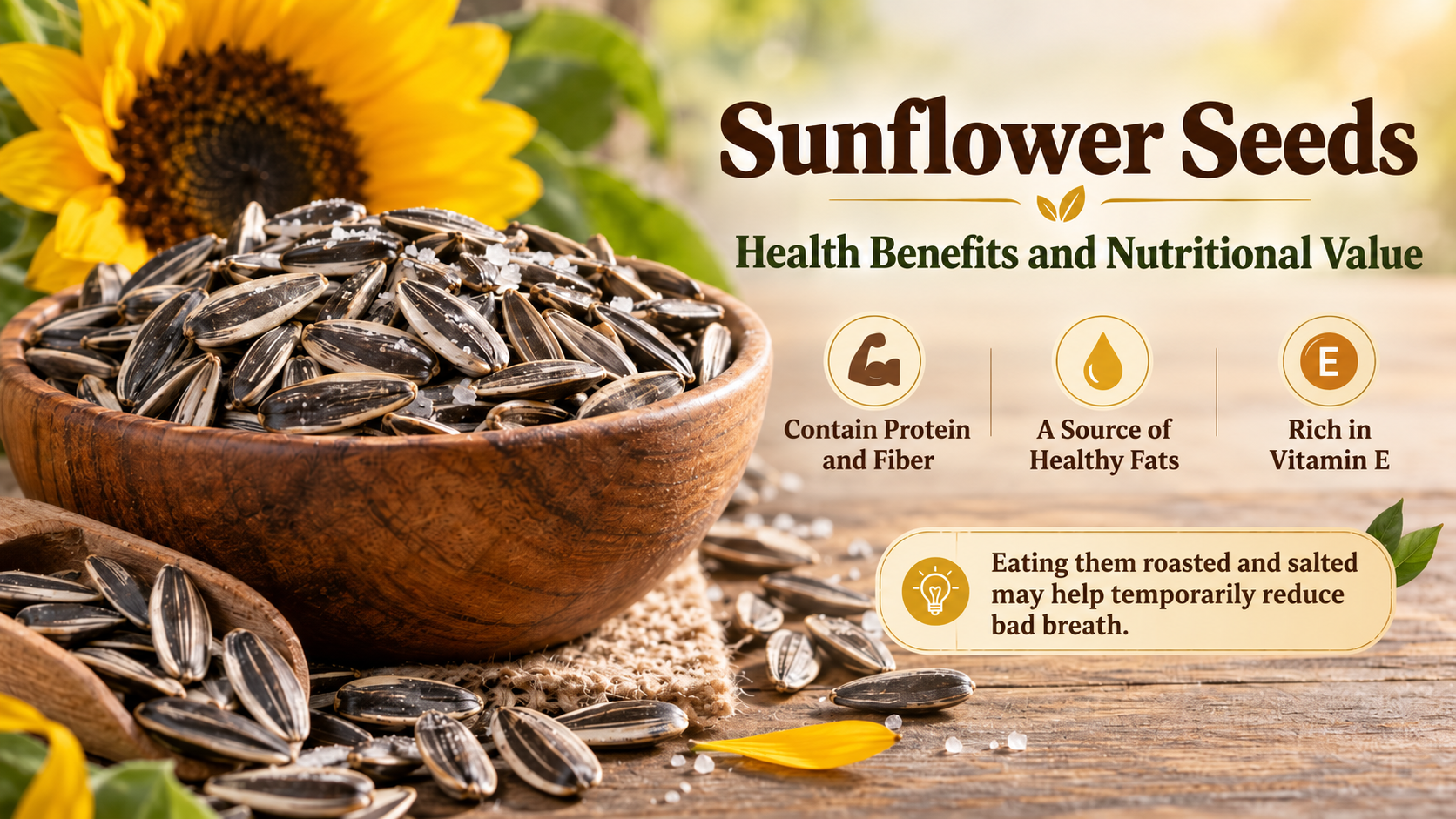
Sunflower seeds are the seeds found inside the sunflower head. Despite their small size, they are packed with valuable nutrients. They can be eaten raw or roasted and are available either in their shells or shelled. Sunflower seeds can also be added to salads, baked goods, breakfast dishes, and snacks.
Although small, sunflower seeds provide an impressive combination of unsaturated fats, plant-based protein, fiber, vitamin E, selenium, copper, and magnesium, making a moderate portion a nutritious addition to a balanced diet.
Nutritional Value of Sunflower Seeds
The nutritional content of sunflower seeds can vary slightly depending on whether they are roasted and whether oil or salt is added. However, approximately 28 grams (1 ounce) of dry-roasted, unsalted sunflower seeds provides around 165 calories, 5.5 grams of protein, 14 grams of fat, 6.8 grams of carbohydrates, and approximately 3 grams of fiber. They also provide around 7.4 mg of vitamin E.
| Nutrient | Approximate Amount per 28 g |
|---|---|
| Calories | 165 kcal |
| Protein | 5.5 g |
| Fat | 14.1 g |
| Carbohydrates | 6.8 g |
| Fiber | 3.1 g |
| Vitamin E | 7.4 mg |
| Magnesium | 36.6 mg |
| Selenium | 22.5 mcg |
| Copper | 0.52 mg |
Sunflower seeds are considered an excellent dietary source of vitamin E. A serving of approximately 28 grams of dry-roasted sunflower seeds provides close to 49% of the Daily Value for vitamin E.
Rich in Vitamin E and Antioxidants
One of the most notable nutritional qualities of sunflower seeds is their high vitamin E content.
Vitamin E is an antioxidant that helps protect the body’s cells against damage caused by free radicals. It also contributes to the normal function of the immune system.
Seeds, nuts, and vegetable oils, including sunflower seeds and sunflower oil, are among the most important natural dietary sources of this vitamin.
For this reason, a small handful of sunflower seeds can be a simple way to increase vitamin E intake through food without unnecessarily relying on supplements.
A Good Source of Healthy Fats
Sunflower seeds are relatively high in fat, but a large proportion of this fat consists of unsaturated fats.
A serving of approximately 28 grams can contain more than 9 grams of polyunsaturated fat in some roasted varieties.
When consumed in moderation as part of a balanced diet, seeds and nuts can be valuable sources of plant-based fats alongside foods such as olive oil, fish, and avocado.
A Source of Plant-Based Protein and Fiber
A small handful of sunflower seeds provides approximately 5 to 6 grams of protein, along with around 3 grams of dietary fiber.
This combination makes sunflower seeds a convenient snack, particularly when paired with other foods such as natural yogurt, fruit, oatmeal, or salads.
Seeds, together with legumes, nuts, and whole grains, can also help diversify the sources of plant-based protein in your diet.
A Source of Selenium
Sunflower seeds contain selenium, a mineral that the body requires in small amounts for several important biological functions.
Selenium contributes to normal thyroid function, DNA production, protection of cells, and proper immune system function.
A small serving of roasted sunflower seeds can provide approximately 22 micrograms of selenium, although the exact amount may vary depending on the variety and preparation method.
Rich in Copper and Magnesium
Sunflower seeds are also a good source of copper. About a quarter cup of roasted sunflower seeds can provide approximately 68% of the Daily Value for copper, according to data from the U.S. National Institutes of Health.
They also contain magnesium, phosphorus, zinc, and manganese, all of which play important roles in various functions throughout the body.
Are Sunflower Seeds Good for Heart Health?
The presence of unsaturated fats, vitamin E, and various plant compounds makes sunflower seeds a nutritious food that can fit well into a heart-conscious diet, especially when they replace snacks that are high in saturated fats and added sugars.
However, their benefits depend on portion size and the overall quality of the diet.
Eating very large amounts can quickly increase total calorie intake, so the fact that sunflower seeds are nutritious does not mean they should be consumed without limits.
Roasted and Salted Sunflower Seeds and Bad Breath
A Practical Tip for Fresher Breath
Some people notice that chewing a small amount of roasted and salted sunflower seeds may temporarily help reduce unpleasant breath, particularly after certain meals.
Part of this effect may be related to the chewing itself. Chewing stimulates saliva production, and saliva helps rinse the mouth and remove some food particles and bacteria. Dry mouth, on the other hand, can contribute to unpleasant breath.
However, it is important to understand that there is currently no strong scientific evidence showing that salted sunflower seeds directly treat bad breath, and salt itself should not be considered the ingredient responsible for eliminating the odor.
If you enjoy sunflower seeds for this purpose, consume only a small amount and drink some water afterward. Choosing a lower-sodium variety is generally preferable, especially if you eat sunflower seeds regularly.
If bad breath persists despite brushing your teeth, cleaning your tongue, flossing, and staying well hydrated, you should not rely on sunflower seeds to simply mask the problem. Persistent bad breath can sometimes be associated with plaque buildup, gum disease, dry mouth, or other conditions that may require evaluation by a dentist.
However, if the bad breath is occasional rather than persistent, eating roasted and salted sunflower seeds may help freshen your breath, particularly when a toothbrush and toothpaste are not available. This is a simple method that many people find useful in everyday situations.
Try it when needed and let us know whether it works for you.
Roasted or Raw Sunflower Seeds: Which Is Better?
Both raw and roasted sunflower seeds can be included in a balanced diet.
Roasting gives the seeds a richer flavor and a pleasantly crunchy texture, while unsalted varieties generally contain considerably less sodium.
For example, 28 grams of dry-roasted unsalted sunflower seeds may contain less than 1 mg of sodium, while oil-roasted sunflower seeds with added salt can contain more than 100 mg of sodium in the same serving. The exact amount can vary significantly depending on the product and manufacturer.
Therefore, for regular consumption, unsalted or lightly salted roasted sunflower seeds are generally the better choice, while salted varieties can still be enjoyed in moderation.
How Many Sunflower Seeds Should You Eat per Day?
Approximately 20 to 30 grams, or roughly a small handful, is a practical serving for most people when sunflower seeds are consumed as a snack or added to meals.
This amount provides approximately 165 to 170 calories, so paying attention to portion size is useful, particularly when eating directly from a large package.
Ways to Eat Sunflower Seeds
Sunflower seeds can be enjoyed on their own as a snack, or shelled sunflower kernels can be sprinkled over salads.
They can also be added to oatmeal or yogurt, incorporated into homemade breads and baked goods, or mixed with nuts and dried fruits to create a nutritious snack mixture.
When consuming sunflower seeds regularly, it is generally better to choose varieties that do not contain excessive amounts of added salt or oil.
Are There Any Risks of Eating Too Many Sunflower Seeds?
Sunflower seeds are relatively high in calories, so consuming large quantities every day can make it easy to take in more calories than your body needs.
Heavily salted varieties can also contribute significant amounts of sodium to your diet.
If you purchase sunflower seeds in their shells, only the inner kernel should be eaten. The hard outer shell is not intended to be consumed.
People with allergies to seeds or nuts should also be alert for possible allergic reactions and seek medical assistance if they experience a severe reaction.
Conclusion
Sunflower seeds may be small, but they are packed with valuable nutrients. They provide vitamin E, unsaturated fats, plant-based protein, fiber, selenium, copper, and magnesium, and they can easily be incorporated into everyday meals and snacks.
A small handful is usually enough to benefit from their nutritional value without consuming excessive calories. For regular consumption, roasted unsalted or lightly salted sunflower seeds are generally the best choice.
When it comes to bad breath, chewing roasted sunflower seeds, including salted varieties, may temporarily help some people experience fresher breath by stimulating saliva production and through the mechanical action of chewing.
For occasional bad breath, they may also be a convenient option when you do not have immediate access to a toothbrush and toothpaste. However, sunflower seeds should not be considered a medical treatment for chronic bad breath and should never replace regular brushing, tongue cleaning, flossing, proper hydration, and professional dental care when needed.
إذا أردت، أستطيع أيضًا إعداد SEO Title + Meta Description + Focus Keyword + Excerpt + Tags + FAQ بالإنجليزية لهذا المقال ليكون جاهزًا للنشر في WordPress وRank Math.


Leave a Reply