
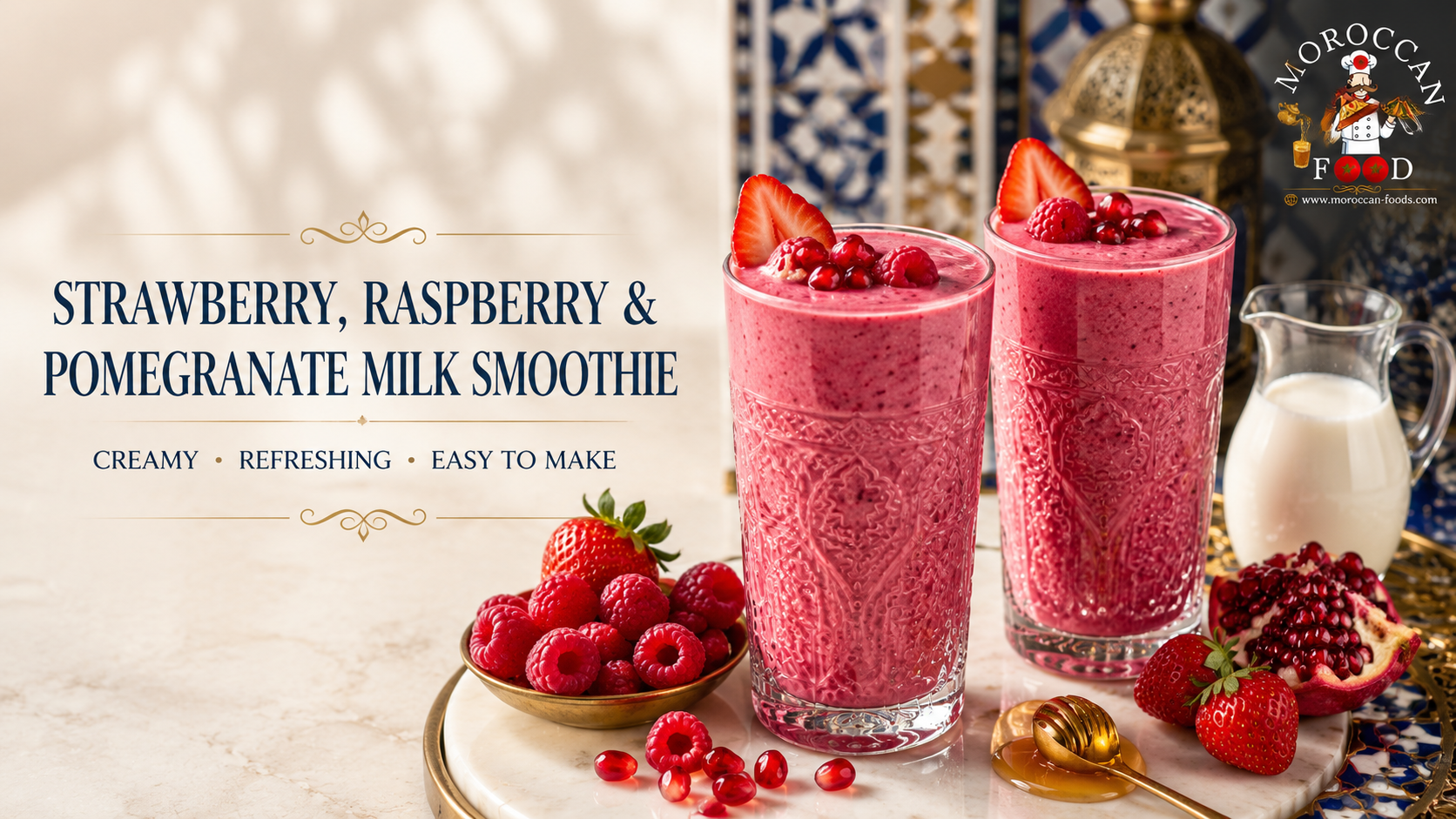
This Strawberry, Raspberry and Pomegranate Milk Smoothie with Honey is a creamy, colorful, and refreshing homemade drink prepared with fresh fruit and cold whole milk. Sweet strawberries balance the pleasantly tart flavor of raspberries and pomegranate, while natural honey adds a smooth sweetness.
Ready in only a few minutes, this easy fruit and milk smoothie is ideal for breakfast, an afternoon snack, or a refreshing post-workout drink. Using very cold milk and serving it immediately helps maintain its creamy texture and fresh fruity flavor.
Recipe Information
- Preparation time: 10 minutes
- Blending time: 1 minute
- Total time: 11 minutes
- Servings: 2 glasses
- Difficulty: Easy
- Method: Blender
Ingredients
- 1 cup fresh strawberries, hulled and halved — 150 g
- ½ cup fresh raspberries — 65 g
- ¾ cup fresh pomegranate arils — 130 g
- 1 cup very cold whole milk — 240 ml
- 2 tablespoons natural honey — 42 g
- A few strawberries, raspberries, and pomegranate arils for serving, optional

Instructions
1. Prepare the fruit
Rinse the strawberries and raspberries gently under plain running water, then dry them carefully. Remove the strawberry stems and cut large strawberries into halves. Separate the pomegranate arils from the peel and white membrane.
2. Add the fruit to the blender
Place the strawberries, raspberries, and pomegranate arils in a clean blender jug.
3. Add the milk and honey
Pour the very cold whole milk over the fruit, then add two tablespoons of natural honey.
4. Blend the smoothie
Blend on high speed for 45–60 seconds, or until the fruit is thoroughly blended and the drink has a thick, creamy consistency.
5. Strain if desired
Raspberries and pomegranate contain small seeds. For a smoother drink, pour the smoothie through a fine-mesh strainer. Skip this step if you prefer to retain more of the fruit’s natural fiber.
6. Serve immediately
Divide the Strawberry, Raspberry and Pomegranate Milk Smoothie between two glasses. Garnish with a few pieces of the same fruits and serve immediately while cold and creamy.

Professional Tips
- Use very cold, fresh milk because pomegranate’s natural acidity can affect warm milk.
- Serve the smoothie immediately instead of allowing it to stand for a long time.
- Taste the fruit before blending and reduce the honey if the strawberries and pomegranate are naturally sweet.
- Frozen strawberries or raspberries can create a thicker, colder smoothie without adding ice.
- Add one tablespoon of milk at a time if you prefer a thinner consistency.
Serving juice
If you exercise, you can drink this juice after your workout as a nutritious and easy-to-prepare beverage.

You can serve this juice with traditional Moroccan sweets, chocolate cake, and regular cake for breakfast on ordinary days, holidays, and special occasions.

Show Health Benefits and Nutritional Value
Strawberry, Raspberry and Pomegranate Milk Smoothie Health Benefits
This Strawberry, Raspberry and Pomegranate Milk Smoothie with Honey combines whole fruit, cold milk, and natural honey in a creamy and refreshing drink. It provides vitamin C, dietary fiber, calcium, potassium, carbohydrates, and a moderate amount of protein, making it suitable for breakfast, an afternoon snack, or alongside a balanced post-workout meal.
1. Rich in Vitamin C
Strawberries, raspberries, and pomegranate provide approximately 59 mg of vitamin C per serving, or about 66% of the Daily Value. Vitamin C supports normal immune function, collagen production, and the absorption of iron from plant-based foods. NIH Vitamin C fact sheet
2. Provides Dietary Fiber
Because the whole fruits are blended rather than juiced and strained, much of their natural fiber remains in the smoothie. Each serving provides approximately 6.2 g of fiber, which supports normal digestion and can help make the drink more satisfying.
3. Supports Bones and Normal Muscle Function
Whole milk contributes calcium, protein, and phosphorus. Calcium is needed to build and maintain strong bones and teeth, while also supporting normal muscle movement and nerve function. NIH calcium guidance
4. Contains Natural Plant Compounds
Strawberries, raspberries, and pomegranate naturally contain colorful plant compounds, including polyphenols and anthocyanins. These compounds contribute to the fruits’ antioxidant properties and form part of a varied, fruit-rich diet.
5. Provides Energy and Moderate Protein
Fruit, milk, and honey supply carbohydrates that can contribute energy, while whole milk provides approximately 5.9 g of protein per serving. The smoothie can be enjoyed after exercise, although it should be paired with a protein-rich food when greater post-workout protein intake is needed.
6. Provides Potassium
One serving contains approximately 478 mg of potassium from the fruit and milk. Potassium is an essential mineral involved in normal nerve signaling, muscle function, and fluid balance.
Estimated Nutritional Value
Serving size: 1 glass
Recipe yield: 2 glasses
| Nutrient | Amount per serving | Approximate Daily Value |
|---|---|---|
| Calories | 233 kcal | — |
| Protein | 5.9 g | 12% |
| Total Carbohydrates | 44.9 g | 16% |
| Dietary Fiber | 6.2 g | 22% |
| Total Sugars | 37.3 g | — |
| Added Sugars from Honey | 17.2 g | 34% |
| Total Fat | 5.2 g | 7% |
| Saturated Fat | 2.4 g | 12% |
| Cholesterol | 12 mg | 4% |
| Sodium | 55 mg | 2% |
| Calcium | 165 mg | 13% |
| Potassium | 478 mg | 10% |
| Vitamin C | 59 mg | 66% |
The estimates are calculated from 150 g strawberries, 65 g raspberries, 130 g pomegranate arils, 240 ml whole milk, and 2 tablespoons (42 g) of natural honey, divided into two servings. Nutrient values may vary according to fruit size, ripeness, milk brand, and exact measurements. Calculations are based on standard ingredient data from USDA FoodData Central, while Daily Values follow FDA nutrition-label guidance.
Important Nutrition Note
Although honey is natural, it is still considered an added sugar. With two tablespoons of honey, each glass contains approximately 17 g of added sugars. For a less-sweet version, reduce or omit the honey when the fruit is naturally ripe and sweet.
Nutrition information is an estimate provided for general informational purposes and is not a substitute for individualized medical or dietary advice.

Frequently Asked Questions
1. What is a Strawberry, Raspberry and Pomegranate Milk Smoothie?
It is a creamy fruit smoothie made by blending fresh strawberries, raspberries, pomegranate arils, cold whole milk, and natural honey. This recipe makes two refreshing glasses.
2. What does this berry and pomegranate milk smoothie taste like?
It has a creamy, fruity, and pleasantly sweet-tart flavor. Strawberries provide natural sweetness, raspberries add a slightly tangy note, and pomegranate gives the smoothie a fresh, vibrant finish.
3. Can pomegranate and milk be blended together?
Yes. Fresh pomegranate arils can be blended with cold milk, strawberries, and raspberries. Use very cold, fresh milk and serve the smoothie soon after blending for the best flavor and texture.
4. Why did my pomegranate milk smoothie become grainy?
Pomegranate is naturally acidic, and its acidity can affect dairy milk, particularly when the milk is warm or the smoothie is left standing for too long. Use cold ingredients and drink the smoothie shortly after preparing it.
5. Why does the smoothie separate after blending?
Natural separation can occur when a fruit-and-milk smoothie rests. This does not necessarily mean it has spoiled. Stir or shake it thoroughly before serving, provided it has remained properly refrigerated and still smells and tastes fresh.
6. What type of milk works best in this smoothie?
Cold whole milk produces the richest and creamiest texture. Semi-skimmed or low-fat milk can be used for a lighter version, although the finished smoothie may be slightly less creamy.
7. Can I use lactose-free milk?
Yes. Replace regular milk with the same amount of cold lactose-free dairy milk. The flavor and consistency should remain similar, although nutritional values may vary by brand.
8. Can I make this smoothie with plant-based milk?
Yes. Unsweetened soy, oat, or almond milk can replace dairy milk. Soy milk generally provides more protein than many other plant-based drinks, but the flavor, texture, and nutritional value will change.
9. Can I use frozen strawberries and raspberries?
Yes. Frozen unsweetened berries make the smoothie colder and thicker without requiring ice cubes. They can usually be added directly to a powerful blender.
10. Can I use frozen pomegranate arils?
Yes. Frozen pomegranate arils can be blended directly or allowed to soften for a few minutes first. Check that they contain no added syrup or sugar.
11. Can I use pomegranate juice instead of pomegranate arils?
Yes. Unsweetened pomegranate juice can be used, but it will produce a thinner smoothie with less fiber than one prepared with whole pomegranate arils. Reduce the milk slightly if necessary.
12. Should I strain the smoothie?
Straining is optional. It can remove harder pomegranate seed particles and create a smoother texture, but it may also remove some of the fruit’s dietary fiber. Use a powerful blender if you prefer to serve it without straining.
13. How can I make this smoothie thick without banana?
Use cold milk, maintain a generous fruit-to-milk ratio, and blend with frozen strawberries or raspberries. This produces a thick texture without adding banana, yogurt, ice cream, or artificial thickeners.
14. Does this smoothie need ice cubes?
No. Ice cubes are unnecessary when the milk and fruit are very cold. Frozen berries can make the smoothie colder and thicker without diluting its flavor.
15. Can I reduce or omit the natural honey?
Yes. Taste the smoothie before adding all the honey. When the strawberries and pomegranate are naturally sweet, the honey can be reduced or omitted.
16. Is natural honey considered added sugar?
Yes. Although honey is natural, it is considered an added sugar when incorporated into a recipe. Two tablespoons provide approximately 17.2 g of added sugars per serving when the smoothie is divided into two glasses. FDA information about added sugars
17. How many calories are in one glass?
One glass contains approximately 233 calories, based on a recipe made with 150 g strawberries, 65 g raspberries, 130 g pomegranate arils, 240 ml whole milk, and 42 g natural honey. Values may vary by ingredient and brand. Estimates are based on standard data from USDA FoodData Central.
18. Is this Strawberry, Raspberry and Pomegranate Milk Smoothie healthy?
It can form part of a balanced diet. Each serving provides approximately 6.2 g of fiber, 5.9 g of protein, 59 mg of vitamin C, 165 mg of calcium, and 478 mg of potassium. However, the honey increases the drink’s added-sugar content, so the quantity can be reduced according to individual dietary needs.
19. Can I drink this smoothie after exercise?
Yes. It provides carbohydrates, fluid, potassium, and a moderate amount of milk protein. It can be enjoyed after exercise as part of a balanced snack, although one glass contains only about 5.9 g of protein and may need to be paired with another protein-rich food after demanding training.
20. Is this smoothie suitable for breakfast?
Yes. It can be served at breakfast alongside eggs, oatmeal, nuts, whole-grain bread, or another protein-rich food to create a more complete and satisfying meal.
21. Can I prepare the smoothie in advance?
It is best served immediately while cold, creamy, and fresh. If necessary, prepare it shortly in advance and keep it covered in the refrigerator until serving.
22. How should leftover smoothie be stored?
Transfer leftovers to a clean, airtight container and refrigerate immediately. Consume them within approximately 24 hours, stir well before drinking, and discard the smoothie if it develops an unusual smell, flavor, or appearance.
23. What can I serve with this smoothie?
It pairs well with plain cake, chocolate cake, Moroccan ghriba cookies, kaab el ghazal, almond briouats, chebakia, pancakes, or a light breakfast.
24. Is this smoothie naturally gluten-free?
The basic ingredients—fruit, milk, and honey—are naturally gluten-free. If preparing it for someone with celiac disease or severe gluten sensitivity, check packaged ingredients and prevent cross-contact during preparation.


Leave a Reply