
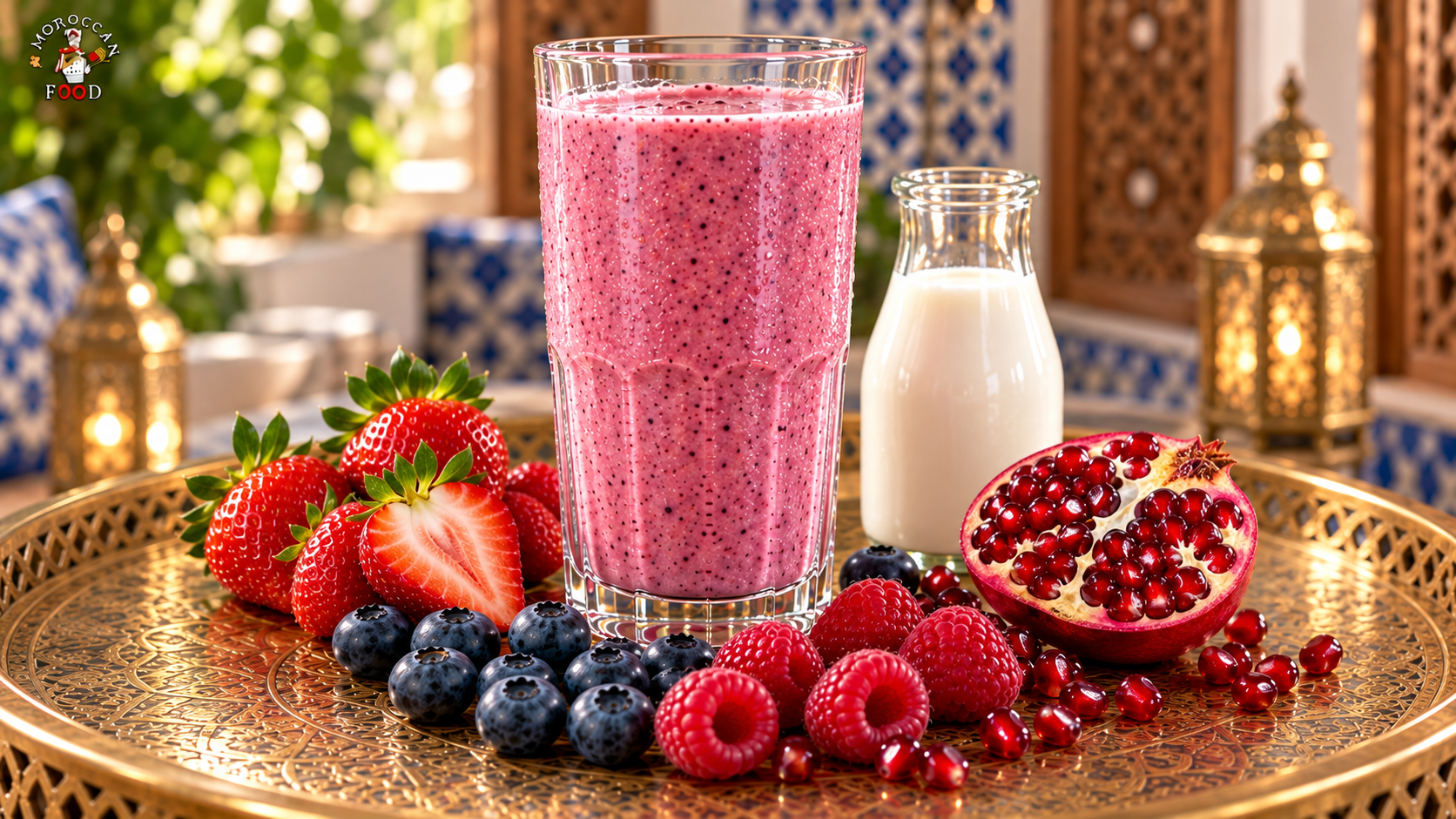
This Strawberry, Blueberry, Raspberry and Pomegranate Milk Smoothie is a creamy and refreshing homemade drink prepared with cold milk and a colorful combination of fresh fruits.
Sweet strawberries, juicy blueberries, tangy raspberries, and ruby-red pomegranate arils create a naturally vibrant pink smoothie with a balanced fruity flavor. The milk adds creaminess while softening the natural acidity of the berries and pomegranate.
Enjoy this mixed-berry milk smoothie for breakfast, as a refreshing afternoon drink, or as a light post-workout snack. It is quick to prepare and can be served with or without natural honey, depending on the sweetness of the fruit.
Recipe Information
- Preparation Time: 10 minutes
- Blending Time: 1–2 minutes
- Total Time: About 12 minutes
- Servings: 2 medium glasses
- Difficulty: Easy
- Preparation Method: Blender
- Best Served: Cold
Ingredients
- 1/2 cup (75 g) fresh strawberries, washed, hulled, and halved
- 1/3 cup (50 g) fresh blueberries, washed
- 1/2 cup (60 g) fresh raspberries, washed carefully
- 1/2 cup (85 g) fresh pomegranate arils
- 1 cup (240 ml) cold whole milk
- 1 tablespoon natural honey, optional

How to Make Strawberry, Blueberry, Raspberry and Pomegranate Milk Smoothie
Step 1: Prepare the Fruits
Wash the strawberries, blueberries, and raspberries carefully under cold running water.
Remove the strawberry stems and cut large strawberries into halves. Separate the pomegranate arils and remove any pieces of white membrane, as they may give the smoothie a bitter taste.
Step 2: Add the Milk to the Blender
Pour the cold milk into the blender first. Adding the liquid before the fruit helps the blades move easily and produces a smoother mixture.
Step 3: Add the Fruits
Add the prepared strawberries, blueberries, raspberries, and pomegranate arils to the blender.
Use cold fruit for the most refreshing result.
Step 4: Blend Thoroughly
Secure the blender lid and blend on high speed for approximately 45–60 seconds, or until the fruits are completely combined with the milk.
Stop the blender and scrape down the sides if necessary, then blend again until creamy.
Step 5: Adjust the Flavor and Consistency
Taste the smoothie. If the fruits are not sweet enough, add one tablespoon of natural honey and blend for another 10–15 seconds.
If the smoothie is too thick, add two or three tablespoons of cold milk and blend briefly until it reaches the desired consistency.
Step 6: Strain if Desired
For a smoother drink, pass the smoothie through a fine-mesh strainer to remove some of the raspberry and pomegranate seeds.
Straining is optional. Serving the smoothie without straining preserves more of the fruit’s natural fiber.
Step 7: Serve Immediately
Pour the smoothie into two glasses and serve immediately while cold and creamy.
Because raspberries and pomegranate are naturally acidic, the drink may gradually thicken or separate if left standing. Stir it well before drinking if natural separation occurs.

Recipe Tips
- Use ripe fruit for better natural sweetness and less need for honey.
- Frozen strawberries, blueberries, or raspberries may be used for a colder and thicker smoothie.
- Avoid using warm milk because cold milk produces a fresher flavor and better texture.
- Blend the pomegranate arils thoroughly, especially if the drink will not be strained.
- For the best color, flavor, and consistency, enjoy the smoothie immediately after preparation.
Serving juice
You can serve this juice with traditional Moroccan sweets, chocolate cake, and regular cake for breakfast on ordinary days, holidays, and special occasions.

If you exercise, you can drink this juice after your workout as a nutritious and easy-to-prepare beverage.

Show Nutritional Value and Health Benefits
Health Benefits
This Strawberry, Blueberry, Raspberry and Pomegranate Milk Smoothie combines fresh fruit with whole milk to provide carbohydrates, fiber, protein, vitamins, minerals, and naturally occurring plant compounds.
1. Provides Antioxidant-Rich Fruits
Strawberries, blueberries, raspberries, and pomegranate contain vitamin C and colorful plant compounds, including anthocyanins and other polyphenols. These compounds contribute to the antioxidant properties of the fruits.
2. Supports Normal Immune Function
Each serving provides approximately 36.7 mg of vitamin C, mainly from the strawberries and raspberries. Vitamin C contributes to normal immune function, collagen production, antioxidant protection, and the absorption of non-heme iron. NIH Vitamin C Fact Sheet
3. Contributes to Healthy Digestion
An unstrained serving provides approximately 5 g of dietary fiber. Keeping the smoothie unstrained preserves more of the fiber naturally present in the berries and pomegranate.
4. Supplies Calcium and Protein
Whole milk provides most of the smoothie’s calcium and protein. Each serving contains approximately 157–158 mg of calcium and 5.4 g of protein.
Calcium supports healthy bones and teeth and is also involved in normal muscle function and nerve transmission. NIH Calcium Fact Sheet
5. Provides Potassium
Each serving contributes approximately 383–389 mg of potassium. Potassium is involved in normal nerve transmission, muscle contraction, and fluid balance. NIH Potassium Fact Sheet
6. Provides Energy After Physical Activity
The fruits and milk provide carbohydrates, while milk contributes protein. This makes the smoothie suitable as a light post-workout drink.
However, with approximately 5.4 g of protein per serving, it is not a high-protein recovery meal on its own. Athletes with higher protein requirements can accompany it with eggs, plain Greek yogurt, cheese, or another protein-rich food.
Estimated Nutritional Value per Serving
The complete recipe makes two medium servings.
| Nutrient | Without Honey | With 1 Tbsp Honey in the Full Recipe |
|---|---|---|
| Calories | 152 kcal | 184 kcal |
| Protein | 5.4 g | 5.4 g |
| Total carbohydrates | 23.9 g | 32.5 g |
| Dietary fiber | 5 g | 5 g |
| Total sugars | 17.6 g | 26.2 g |
| Added sugars | 0 g | 8.6 g |
| Total fat | 4.9 g | 4.9 g |
| Saturated fat | 2.3 g | 2.3 g |
| Calcium | 157 mg | 158 mg |
| Potassium | 383 mg | 389 mg |
| Vitamin C | 36.7 mg | 36.7 mg |
| Sodium | 55 mg | 55 mg |
Important Nutritional Notes
- The sugars in the version without honey occur naturally in the fruit and milk.
- Adding one tablespoon of honey to the complete recipe adds approximately 32 calories and 8.6 g of added sugar to each serving.
- Straining the smoothie removes some seeds and pulp and may reduce its fiber content.
- Using skimmed, lactose-free, or plant-based milk will change the calories, protein, fat, calcium, and other nutritional values.
- People with a milk allergy should use a suitable non-dairy alternative. Those with lactose intolerance may use lactose-free milk.
- The nutritional values cover the smoothie only and do not include cakes, banana bread, or Moroccan sweets served alongside it.
These figures are estimates calculated from standard food-composition data provided by USDA FoodData Central. Actual values can vary according to fruit size, milk type, ingredient brands, and serving size.

Frequently Asked Questions
Can You Mix Strawberries, Blueberries, Raspberries, and Pomegranate with Milk?
Yes. Strawberries, blueberries, raspberries, and fresh pomegranate arils can be blended with cold milk to prepare a creamy mixed-fruit smoothie. Use ripe fruit and serve the drink shortly after blending for the best flavor and consistency.
Can You Mix Pomegranate with Milk?
Yes. Fresh pomegranate arils can be blended directly with cold milk. Because pomegranate is naturally acidic, the drink may become slightly thicker or separate when left standing. This is primarily a texture change, so stir the smoothie and enjoy it while fresh.
Can I Add Milk to Pomegranate Juice?
Milk can be combined with pomegranate, but adding it directly to concentrated pomegranate juice may cause more noticeable separation. For this recipe, blending fresh pomegranate arils with cold milk and the other fruits produces a creamier and more balanced result.
Can I Use Frozen Berries?
Yes. Fresh strawberries, blueberries, and raspberries can be replaced with frozen berries. Frozen fruit produces a colder and thicker smoothie, so additional ice is unnecessary. Add a little more milk if the mixture becomes too thick.
Is Natural Honey Necessary?
No. Natural honey is optional. Ripe strawberries and berries may provide enough natural sweetness. Preparing the smoothie without honey reduces each serving from approximately 184 calories to 152 calories and eliminates added sugar.
What Type of Milk Is Best for This Smoothie?
Whole milk creates a richer and creamier texture. Semi-skimmed, skimmed, or lactose-free milk may also be used. Unsweetened soy, oat, or almond milk can be used for a dairy-free version, but the flavor and nutritional values will change.
How Can I Make the Smoothie Thicker?
Use frozen berries or slightly reduce the quantity of milk. Begin with most of the milk, blend the ingredients, and add the remaining milk gradually until the smoothie reaches your preferred consistency.
How Can I Make the Smoothie Thinner?
Add cold milk one or two tablespoons at a time and blend briefly after each addition. Avoid adding too much liquid at once because this may weaken the fruit flavor.
Should I Strain the Smoothie?
Straining is optional. It removes some raspberry and pomegranate seeds and creates a smoother drink. However, serving the smoothie without straining preserves more of its natural fiber.
Can I Prepare This Smoothie in Advance?
The smoothie is best served immediately because its color, flavor, and texture are freshest after blending. If necessary, refrigerate it promptly in a tightly sealed container and consume it within 24 hours. Stir or shake thoroughly before serving.
Is This Smoothie Suitable After Exercise?
Yes. It supplies fluids and carbohydrates along with approximately 5.4 grams of protein per serving when prepared with whole milk. It can be enjoyed as a light post-workout drink, but it is not a high-protein recovery meal by itself.
How Many Calories Are in One Serving?
One serving contains approximately 152 calories without honey. When one tablespoon of natural honey is added to the complete two-serving recipe, each serving contains approximately 184 calories.
What Nutrients Does This Smoothie Provide?
One serving prepared without honey provides approximately 5.4 g protein, 5 g fiber, 157 mg calcium, 383 mg potassium, and 36.7 mg vitamin C. Values may vary depending on the fruit, milk, sweetener, and serving size.
Can People with Lactose Intolerance Enjoy This Smoothie?
People with lactose intolerance can prepare it with lactose-free milk or a suitable plant-based alternative. People with a milk allergy should avoid dairy milk and choose an appropriate non-dairy substitute.


Leave a Reply