
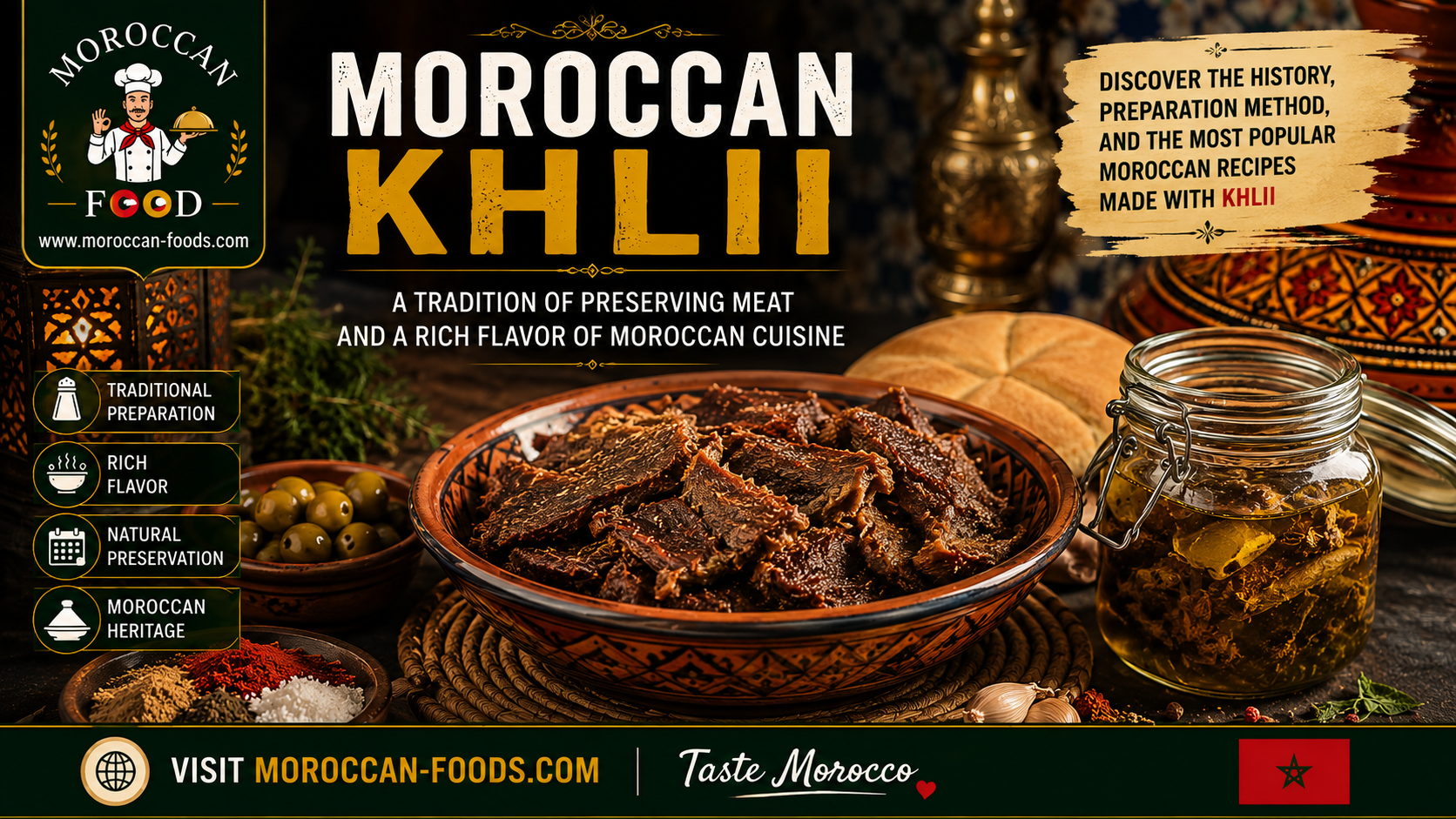
Moroccan Khlii: A Traditional Preserved Meat and a Distinctive Flavor of Moroccan Cuisine
Khlii, also known as Khlea, is one of the most famous traditional foods that reflects the ingenuity of Moroccan cuisine in preserving meat and making use of it for extended periods, especially before the invention of modern refrigeration. It is more than simply dried meat: traditionally, the meat is salted, seasoned, dried, and then slowly cooked and preserved in fat and oil, giving it a concentrated and distinctive flavor.
Khlii is particularly associated with the city of Fez, which has long been considered one of Morocco’s most important centers for its preparation.
What Is Moroccan Khlii?
Khlii is a type of preserved and dried meat, traditionally prepared from pieces of meat, most commonly beef. The meat is cut, salted, seasoned, and dried to produce what is known as Gueddid, or Moroccan dried meat.
After the drying stage, the meat is slowly cooked in a mixture of animal fat and oil. Some traditional methods use animal fat together with oil to give the meat its characteristic richness and flavor. The finished Khlii is then traditionally preserved under a layer of fat and oil.
This is why Khlii is different from ordinary dried meat: Gueddid is an important stage in the preparation of Khlii, while Khlii is the finished cooked and preserved product.
How Is Traditional Moroccan Khlii Made?
In the past, preparing Khlii was often an important family tradition. It was usually prepared in relatively large quantities after slaughtering an animal, allowing families to preserve the meat and use it over a long period.
1. Choosing the Meat
The meat is selected and cut into suitable strips or pieces. Depending on the traditional method, some excess fat may be removed.
2. Salting and Seasoning
The meat is generously salted and seasoned with a mixture of aromatic spices. Recipes vary from one family to another, but traditional seasonings can include cumin, coriander, garlic, and other Moroccan spices.
3. Drying the Meat
After being salted and seasoned, the meat is dried under suitable conditions until it loses a significant amount of moisture and becomes Gueddid.
This is one of the most important stages in traditional Khlii preparation.
4. Slow Cooking
Once the Gueddid is ready, it is slowly cooked in fat and oil. This process gives Khlii its characteristic texture and deep flavor.
Traditional preparation can result in three recognizable components: the meat, the fat, and flavorful cooking residues, sometimes referred to in different Moroccan regions as ghriss or aghriss.
5. Preservation
Traditionally, the cooked Khlii was placed in suitable containers and covered with fat and oil. Historically, this method helped protect the meat and extend its storage life before modern refrigeration became widespread.
Important note: Traditional preservation methods should not automatically be considered modern food-safety instructions. When preparing preserved meat at home today, it is best to follow current, reliable food-safety and storage guidelines.
Fez: The Heart of the Moroccan Khlii Tradition
If there is one Moroccan city most strongly associated with Khlii, it is Fez.
Khlii has an important place in traditional Fassi cuisine and remains closely connected to the city’s culinary heritage. Specialized sources on Moroccan cuisine often describe Fez as one of the country’s main centers for Khlii because of its long history and strong culinary tradition.
Traditionally, preparing Khlii in Fez was a family activity requiring experience in selecting the meat, salting, drying, seasoning, cooking, and preserving it.
Other Moroccan Cities and Regions
Although Fez has the strongest association with Khlii, the tradition is not limited to one city. Khlii is known in different parts of Morocco, where preparation methods, spice blends, and culinary uses can vary from one region or family to another.
Cities such as Marrakech and Meknes are also associated with the preparation and consumption of traditional preserved meat.
This regional diversity is one of the beautiful characteristics of Moroccan cuisine: a single traditional food can have different variations depending on the city, region, or family recipe.
How Is Khlii Used in Moroccan Cuisine?
Khlii is not necessarily served on its own. It is often used as a rich and flavorful ingredient in a variety of Moroccan dishes.
1. Eggs with Khlii
One of the most famous and simplest ways to enjoy it is:
L’Bid Bel Khlii — Moroccan Eggs with Khlii
Small pieces of Khlii are gently heated in a pan before eggs are added. The dish is traditionally enjoyed with Moroccan bread and mint tea, making it a popular breakfast or simple meal associated with Moroccan home cooking.
Discover the most famous Moroccan recipes with khlii and eggs
2. Lentils with Khlii
Small pieces of Khlii can be added to lentil dishes to provide a rich, savory flavor. The preserved meat works particularly well with legumes and Moroccan spices.
3. Msemen Stuffed with Khlii
Khlii can also be finely chopped and used as a filling for Moroccan Msemen, or combined with other ingredients to create a flavorful savory filling.
This is a delicious way to combine two traditional Moroccan foods in one dish.
4. Soups and Savory Dishes
A small amount of Khlii can be added to certain soups, sauces, and slow-cooked dishes. Because its flavor is concentrated, even a modest amount can add depth and richness to a recipe.
5. Appetizers and Quick Meals
Because Khlii is already cooked and preserved, it can be chopped into small pieces and used in quick meals, particularly with eggs, bread, or other simple ingredients.
What Makes Moroccan Khlii Special?
Several characteristics make Khlii different from many other preserved meat products.
Concentrated Flavor
The combination of drying, seasoning, and slow cooking creates a deep and distinctive flavor.
Cultural Heritage
Khlii represents one of the traditional techniques Moroccans developed to preserve meat and make it last longer before modern refrigeration.
Versatility
It can be transformed from a simple ingredient into a complete meal when served with eggs and Moroccan bread, or used as a flavorful addition to lentils, soups, and other dishes.
Fassi Culinary Identity
Khlii has a particularly strong connection with Fez and Fassi cuisine, becoming part of the city’s culinary memory and gastronomic heritage.
Moroccan Khlii: From the Past to the Present
In the past, preparing Khlii was an important seasonal and family tradition. Its main purpose was to preserve meat and make it available for an extended period.
Today, Khlii is more widely available in markets and specialty food shops, and not every household prepares it completely from scratch. Nevertheless, some families continue to follow traditional preparation methods to preserve the authentic flavors and techniques passed down through generations.
As a result, Khlii has become much more than a method of preserving meat. It is now an important part of Morocco’s culinary heritage, connecting traditional food preservation, family cooking, and Moroccan dining culture.
Conclusion
Moroccan Khlii is a fascinating example of how Moroccan cuisine transforms simple ingredients into foods with a distinctive character and unforgettable flavor.
From dried Gueddid to meat slowly cooked and preserved in fat and oil, its preparation reflects generations of knowledge about traditional food preservation.
Although Fez remains the city most strongly associated with Khlii, the tradition can be found throughout Morocco, with different preparation methods and culinary uses from one region and family to another.
Today, Khlii remains an important ingredient in dishes such as eggs with Khlii, lentils, stuffed Msemen, soups, and various savory dishes.
It is not simply preserved meat—it is a story of Moroccan cuisine, a story that began with the need to preserve food and evolved into a traditional flavor that continues to have a place on Moroccan tables today.


Leave a Reply