
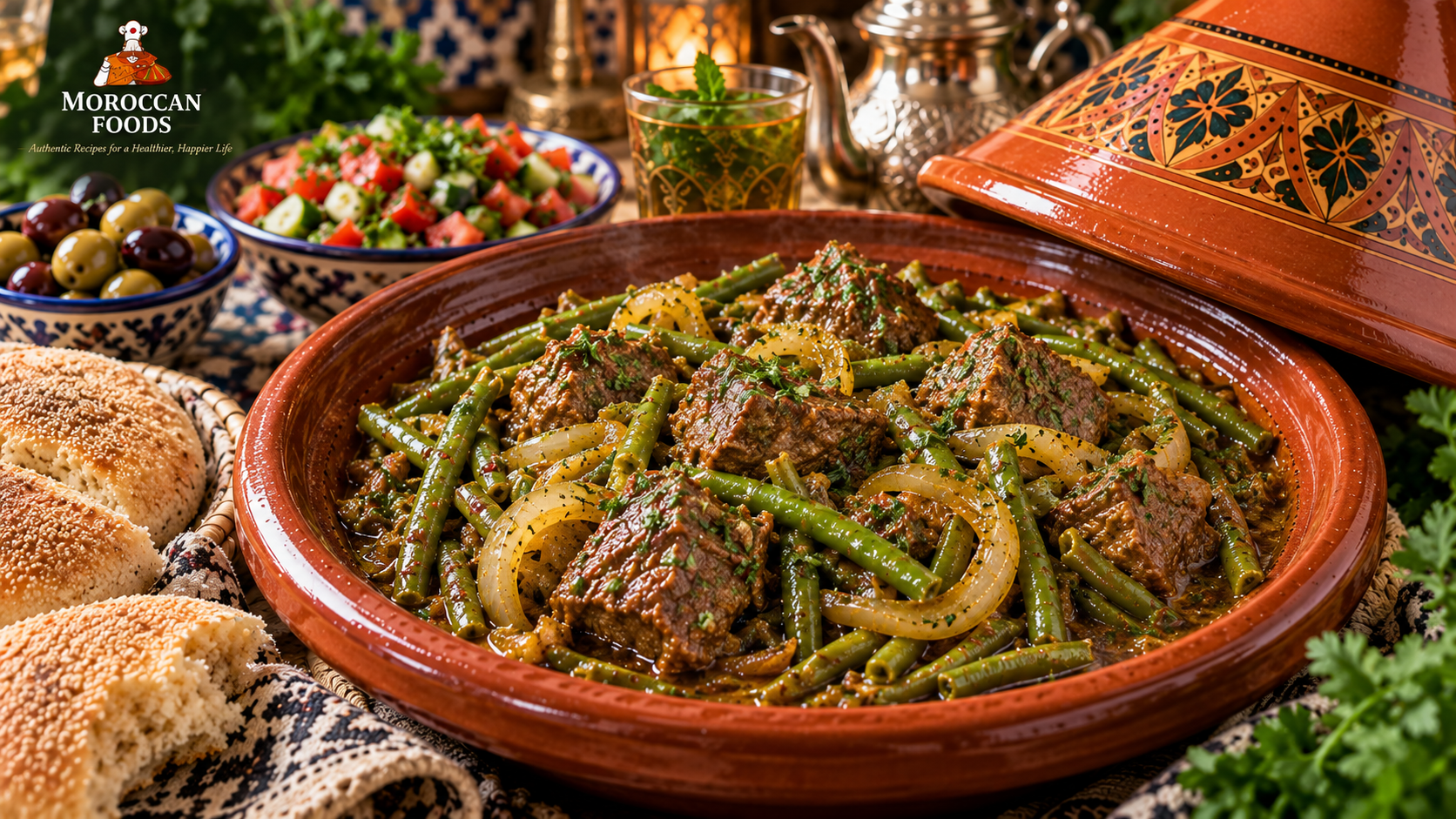
This Moroccan Fofili Beef Tagine with Onions and Green Beans is a comforting, slow-cooked Moroccan dish that combines tender pieces of seasoned beef with two different preparations of onion and fresh green beans.
The beef is first coated with aromatic Moroccan spices, fresh herbs, and garlic, then browned in olive oil to develop a rich savory flavor. A finely chopped onion is cooked directly with the meat until it softens and begins to blend into the sauce, while a second onion cut into half-rings is arranged over the beef to create another sweet and flavorful layer.
Fresh green beans are then placed over the top and allowed to cook gently with the meat, onions, spices, and natural cooking juices. As the tagine slowly simmers, the ingredients come together to create a rich, concentrated sauce, while the green beans become tender without losing their structure.
Served hot with traditional Moroccan bread, this simple yet flavorful tagine makes an excellent family lunch or dinner.
Recipe Information
- Cuisine: Moroccan
- Course: Main Course
- Preparation Time: 20 minutes
- Browning Time: 11 minutes
- Slow Cooking Time: Approximately 45–60 minutes
- Total Time: Approximately 1 hour 20 minutes
- Servings: 4
- Difficulty: Medium
- Cooking Method: Traditional Moroccan tagine / slow cooking
Cooking time can vary depending on the size and tenderness of the beef pieces and the type of tagine used.
Ingredients
For the Beef
- 800 g fofili beef, cut into medium-large pieces
- 3 tablespoons olive oil
- 1 large onion, finely chopped
- 1 medium onion, cut into half-rings
- 400 g fresh green beans
- 3 garlic cloves, crushed
- 2 tablespoons fresh parsley, finely chopped
- 2 tablespoons fresh cilantro, finely chopped
- 120–150 ml warm water, approximately
Moroccan Seasoning
- 1 teaspoon ground ginger
- 1 teaspoon turmeric
- 1/2 teaspoon paprika
- 1/2 teaspoon ground cumin
- 1/2 teaspoon black pepper
- A small pinch of saffron threads, optional
- Salt, to taste

Preparing the Ingredients
Prepare the Beef
Cut the beef into medium-large pieces suitable for slow tagine cooking.
Avoid making the pieces too small. Generous chunks remain juicier and are less likely to dry out during the long cooking process.
Pat the meat dry before seasoning.
Prepare the Green Beans
Wash the green beans thoroughly.
Trim both ends and remove any tough strings if necessary.
Cut very long beans into 2 or 3 sections, while shorter beans can be left whole.
Keeping the pieces reasonably long gives the finished tagine a more attractive appearance.
Prepare the Onions
Finely chop the large onion.
This onion will cook directly with the beef and gradually become part of the sauce.
Cut the second onion into half-rings.
These pieces will be arranged over the meat and remain more visible in the finished tagine.

Season the Beef
Place the beef pieces in a bowl.
Add:
- Crushed garlic
- Ginger
- Turmeric
- Paprika
- Cumin
- Black pepper
- Saffron, if using
- Salt
- Parsley
- Cilantro
- 1 tablespoon olive oil
Mix thoroughly until every piece of beef is evenly coated with the herbs and spices.
For deeper flavor, allow the seasoned meat to rest for approximately 20–30 minutes before cooking.

How to Make Moroccan Fofili Beef Tagine with Green Beans
Step 1: Brown the Beef
Place the tagine over medium-low to medium heat.
Add the remaining olive oil.
Arrange the seasoned beef pieces across the base of the tagine.
Brown the meat for approximately 5 minutes, turning occasionally so several sides develop a light golden-brown color.
The meat does not need to cook completely at this stage.
Why Brown the Beef First?
Browning creates deeper flavor and helps develop the savory cooking juices that will later combine with the onions, herbs, spices, and vegetables.
Step 2: Add the Finely Chopped Onion
Add the finely chopped large onion around and over the browned beef.
Add any seasoning or herbs remaining in the bowl.
Cook the onion and beef together for approximately 6 minutes.
Stir gently from time to time.
During this stage, the onion should begin to soften and absorb the flavorful beef juices and spices.
Step 3: Add a Small Amount of Warm Water
Pour approximately 120 ml warm water around the edges of the tagine.
Do not completely cover the meat.
The onions and green beans will release additional moisture during cooking, so only a modest amount of water is needed.
Step 4: Add the Onion Half-Rings
Arrange the second onion cut into half-rings over the beef.
Do not mix this onion completely into the sauce.
Allow it to form a separate layer over the meat.
As it cooks, it will gradually soften and add natural sweetness to the tagine.
Step 5: Arrange the Green Beans
Place the prepared green beans over the onions and beef.
Arrange them neatly around the tagine.
You can position the beans in small bundles or in a radial pattern for a more attractive presentation.
Avoid pressing them too tightly together so steam can circulate between the vegetables.
Step 6: Cover and Slow Cook
Cover the tagine and reduce the heat to low.
Allow it to cook slowly for approximately 35–45 minutes.
During this stage:
- The beef continues becoming tender
- The finely chopped onion melts gradually into the sauce
- The onion half-rings soften
- The green beans absorb the seasoned cooking juices
- The sauce slowly becomes richer and more concentrated
Avoid stirring the green beans after arranging them.
Step 7: Check the Beef and Green Beans
After approximately 35 minutes, carefully check the tagine.
The beef should be becoming tender, and the green beans should be soft but still recognizable.
If the meat needs more time, cover the tagine again and continue cooking gently.
If the sauce has reduced too quickly, add only a small splash of warm water around the edge.
Step 8: Continue Cooking Until Tender
Continue slow cooking until the beef is completely tender and the green beans are cooked through.
Depending on the beef cut, this may require an additional 10–15 minutes.
Do not rush this stage with high heat. Slow cooking gives the meat a better texture and allows the onions and spices to develop into a richer sauce.
Step 9: Reduce the Sauce
During the final minutes of cooking, allow excess liquid to reduce.
The finished sauce should be:
thick, glossy, aromatic, and concentrated.
It should naturally coat the beef and green beans rather than resemble a thin broth.
The sauce develops mainly from:
beef juices + softened onions + olive oil + garlic + herbs + Moroccan spices.

How the Finished Tagine Should Look
The beef pieces should be tender, juicy, and coated with the aromatic Moroccan sauce.
The finely chopped onion should have almost disappeared into the cooking juices, helping create a thick base.
The onion half-rings should be soft and lightly caramelized while remaining partially visible.
The green beans should be completely cooked and tender but still maintain their elongated shape.
At the bottom of the tagine, the meat juices, onions, olive oil, garlic, herbs, and spices should form a rich golden-brown sauce perfect for scooping up with Moroccan bread.

Serving Suggestions
Serve the Moroccan Fofili Beef Tagine with Onions and Green Beans hot directly from the tagine.
It pairs especially well with:
- Traditional Moroccan bread
- Traditional Moroccan Tomato Cucumber and Onion Salad Recipe
- Moroccan Lettuce, Tomato, Onion & Cucumber Salad
- Traditional Moroccan Zaalouk with Eggplant, Onions and Tomatoes
- Moroccan carrot salad
- Green or red olives
Moroccan bread is particularly useful for enjoying the concentrated onion and beef sauce at the bottom of the tagine.
For drinks, serve Moroccan mint tea, fresh orange juice, or a homemade fruit beverage.

note:
- This recipe is suitable for both lunch and dinner.
- In Morocco, after finishing a tagine, fruits or types of melon are served as a dessert.
- Some people like to drink Moroccan tea after a meal.
- Some people enjoy drinking one of the juices on the Moroccan beverage menu.
Tips for the Best Beef and Green Bean Tagine
Do Not Cut the Beef Too Small
Medium-large pieces remain more tender and juicy during slow cooking.
Cook the Two Onion Layers Differently
The finely chopped onion helps create the sauce, while the half-ring onion provides texture and visible layers.
Using both cuts gives the tagine a richer result.
Keep the Green Beans Relatively Long
Very small pieces lose some of the traditional presentation.
Whole beans or beans divided into two or three sections work particularly well.
Avoid Too Much Water
Green beans and onions release moisture naturally.
Start with a small amount of water and add more only when necessary.
Keep the Heat Low
After the initial browning stage, gentle heat is important.
Slow cooking allows the meat to become tender while developing a thick, deeply flavored Moroccan sauce.
Show Nutrition Information
Nutrition Information
Estimated per serving — based on 4 servings:
| Nutrient | Approximate Amount |
|---|---|
| Calories | 560–600 kcal |
| Protein | 46–49 g |
| Total Fat | 36–39 g |
| Saturated Fat | 10–12 g |
| Carbohydrates | 15–17 g |
| Dietary Fiber | 4–5 g |
| Natural Sugars | 6–7 g |
Approximate Nutrition for the Whole Tagine
- Calories: approximately 2,250–2,400 kcal
- Protein: approximately 185–195 g
- Total Fat: approximately 145–155 g
- Carbohydrates: approximately 60–68 g
- Dietary Fiber: approximately 18–20 g
Nutritional Highlights
This tagine is rich in protein thanks to the beef, making it a filling meal and a substantial source of protein.
Green beans contribute dietary fiber, vitamins C and K, folate, and various minerals, while onions and garlic provide antioxidant plant compounds.
Olive oil primarily adds monounsaturated fats, whereas beef provides iron, zinc, and vitamin B12 in addition to protein.
Nutrition Note
Nutritional values are approximate and may vary depending on the fat content of the beef, the exact amount of olive oil consumed with the sauce, the size of the onions and green beans, and the final serving size.
Regarding sodium content, it depends largely on the amount of salt added during cooking; therefore, it is best not to provide a specific figure without first determining the exact quantity of salt used.

Frequently Asked Questions
What is Moroccan Fofili Beef Tagine with Green Beans?
Moroccan Fofili Beef Tagine is a slow-cooked Moroccan dish made with seasoned beef, onions, fresh green beans, olive oil, garlic, herbs, and aromatic Moroccan spices.
The ingredients cook gently until the beef becomes tender and the onions form a rich, concentrated sauce.
What type of beef should I use for this tagine?
Use beef that is suitable for slow cooking and can be cut into medium-large chunks.
Pieces with some natural marbling generally remain more tender and flavorful during the longer cooking process.
How large should the beef pieces be?
Cut the beef into medium-large chunks.
Avoid very small pieces because they can dry out or become overly soft during slow cooking.
Why should I season the beef before cooking?
Seasoning the beef before browning helps the garlic, herbs, and Moroccan spices coat the meat evenly.
It also creates a more flavorful base once the meat begins releasing its juices.
What spices are used in this beef tagine?
This recipe uses:
- Ginger
- Turmeric
- Paprika
- Cumin
- Black pepper
- Saffron, optional
- Garlic
- Fresh parsley
- Fresh cilantro
- Salt
Together, these ingredients create a warm and aromatic Moroccan flavor.
How long should I marinate the beef?
About 20–30 minutes is enough to allow the spices and herbs to flavor the meat.
You can also season it immediately before cooking if you are short on time.
Why is the beef browned first?
Browning the beef for approximately 5 minutes develops deeper flavor and helps create savory cooking juices.
The meat does not need to cook completely during this stage.
Why is one onion finely chopped?
The finely chopped onion gradually softens and almost disappears into the sauce.
This helps create a thicker, richer base around the beef.
Why is the second onion cut into half-rings?
The half-rings remain more visible and provide another layer of texture and sweetness.
They soften during slow cooking without completely blending into the sauce.
How should the green beans be prepared?
Wash the beans thoroughly and trim both ends.
Very long beans can be cut into 2 or 3 sections, while shorter beans can be left whole.
Should the green beans be cut into small pieces?
It is better to keep them relatively long.
Longer pieces hold their shape better and create a more attractive presentation in the finished tagine.
Can I use frozen green beans?
Yes.
Frozen green beans can be used if fresh beans are unavailable.
They may cook faster than fresh beans, so check their texture earlier and avoid overcooking.
When should the green beans be added?
Add the green beans after the beef, chopped onion, warm water, and onion half-rings have been arranged.
Place them over the top so they cook gently in the steam and seasoned juices.
How much water should I add?
Start with approximately 120 ml of warm water.
Add only a small amount more if necessary during cooking.
Why should I avoid adding too much water?
The onions and green beans release moisture naturally.
Too much water can dilute the flavor and prevent the sauce from becoming thick and concentrated.
How long should the tagine cook?
After the initial browning stages, the tagine generally needs approximately 45–60 minutes of slow cooking.
The exact time depends on the beef cut and the size of the pieces.
What heat level should I use?
After browning the beef, cook the tagine over low heat.
Gentle cooking helps tenderize the beef and prevents the sauce from reducing too quickly.
Should I stir the green beans while the tagine cooks?
It is better to avoid frequent stirring.
Once the beans are arranged over the meat, allow them to cook gently so they retain their shape.
How do I know when the beef is ready?
The beef should be tender enough to cut easily with a fork or spoon.
If it still feels tough, continue cooking over low heat and add a small splash of warm water if necessary.
How do I know when the green beans are ready?
The green beans should be fully tender but still recognizable.
They should not be hard, but they also should not completely fall apart.
What should the finished sauce look like?
The sauce should be thick, glossy, aromatic, and concentrated.
It should coat the beef and green beans rather than look like a thin broth.
What if the sauce becomes too dry?
Add a small splash of warm water around the edge of the tagine.
Avoid adding a large amount at once.
What if the sauce is too watery?
Remove the lid during the final few minutes and allow the sauce to reduce gently.
This helps concentrate the flavors.
Can I add preserved lemon or olives?
Yes.
Preserved lemon or Moroccan olives can be added toward the end if you want an additional salty-citrus Moroccan flavor.
If using either ingredient, reduce the amount of added salt.
Can I make this recipe without a traditional tagine?
Yes.
A heavy-bottomed pot or Dutch oven with a tight-fitting lid can also be used.
Cook over low heat and monitor the liquid level during cooking.
What can I serve with this tagine?
This tagine pairs very well with:
- Traditional Moroccan bread
- Moroccan tomato and cucumber salad
- Taktouka
- Zaalouk
- Moroccan carrot salad
- Green or red olives
Why is Moroccan bread ideal with this tagine?
Moroccan bread is perfect for scooping up the tender beef, green beans, onions, and concentrated sauce from the bottom of the tagine.
What drinks pair well with this tagine?
Moroccan mint tea is a classic option.
Fresh orange juice or another homemade fruit drink also pairs well with the meal.
How many servings does this recipe make?
Using approximately 800 g of beef and 400 g of green beans, the recipe makes about 4 servings.
The exact number depends on portion size and the side dishes served.
Is this tagine high in protein?
Yes.
Beef provides a substantial amount of high-quality protein, making this a protein-rich main dish.
Is this tagine a good source of fiber?
Yes.
Green beans and onions contribute dietary fiber, while the vegetables also provide vitamins, minerals, and plant compounds.
Can I prepare this tagine in advance?
Yes.
The tagine can be prepared ahead and gently reheated over low heat.
Add a small splash of water only if the sauce has become too thick.
How should leftovers be stored?
Allow the leftovers to cool, then transfer them to an airtight container and refrigerate promptly.
Reheat thoroughly before serving.
What makes this beef and green bean tagine special?
Its distinctive character comes from the combination of seasoned beef, two different onion cuts, long green beans, Moroccan spices, fresh herbs, and a thick golden-brown sauce.
The slow cooking method gives the beef a tender texture while allowing the onions and spices to develop a deep Moroccan flavor.


Leave a Reply