
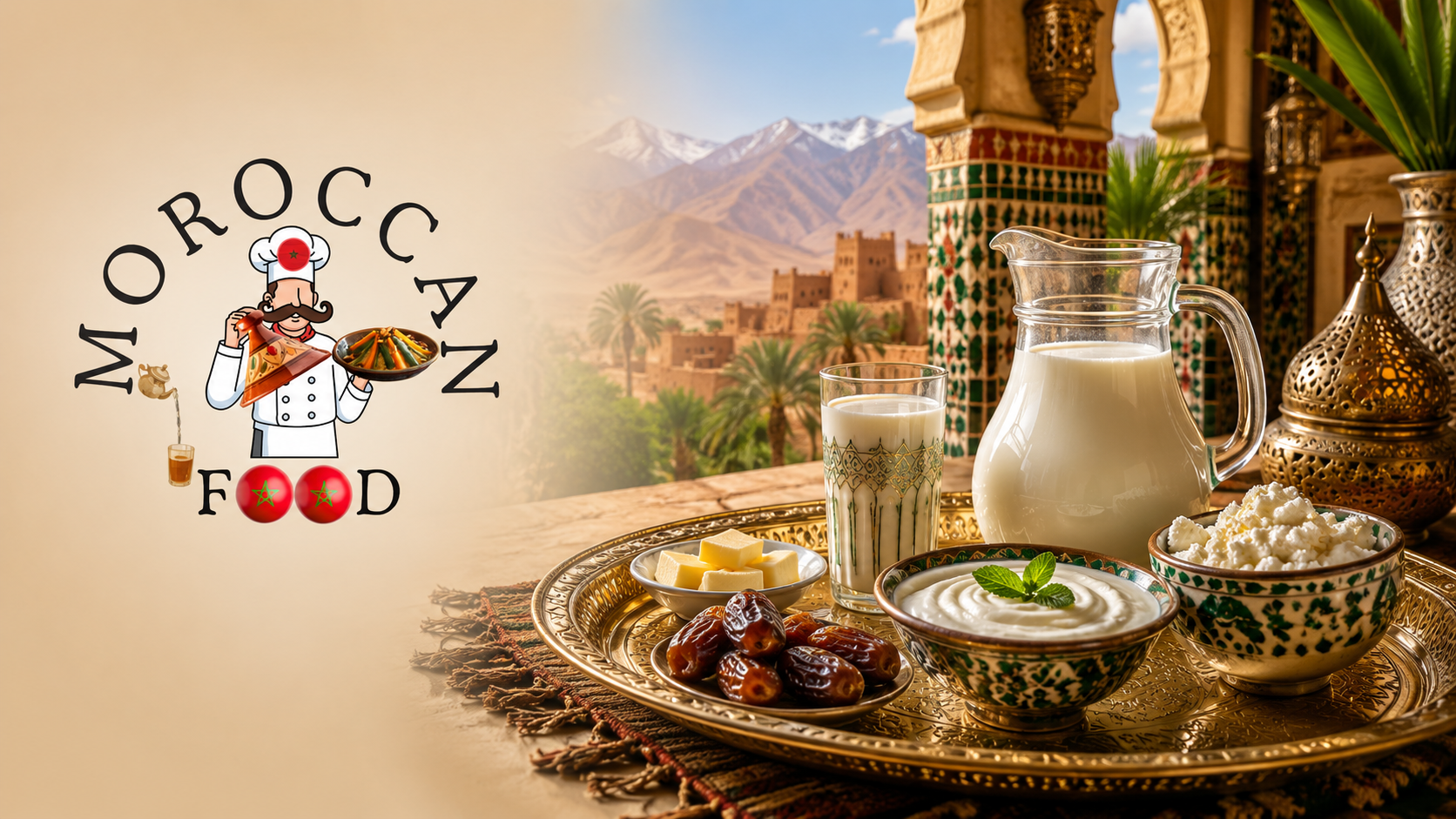
Milk has long been an essential part of Morocco’s food heritage and cultural identity. It holds a special place in the daily lives of Moroccans and plays an important role in many traditional customs and social practices. Across the country, different types of milk—including cow, goat, camel, and sheep milk—are widely consumed, making milk a cornerstone of the Moroccan diet.
Beyond its rich nutritional value, milk is deeply connected to Moroccan cuisine, hospitality traditions, and cultural celebrations. It is used in a variety of traditional recipes, desserts, and beverages that reflect the richness of Morocco’s culinary heritage. Milk is also associated with generosity, family gatherings, religious occasions, and traditional ceremonies throughout the country.
In this article, we will explore the importance of milk in Morocco, its nutritional benefits, the different types of milk consumed by Moroccans, and its strong connection to Moroccan culture, traditions, and food identity.
Nutritional Value of Milk (Per 100 ml Approx.)
| Nutrient | Amount |
|---|---|
| Energy | 60–65 Calories |
| Protein | 3.2 g |
| Fat | 3.5 g |
| Carbohydrates (Lactose) | 4.8 g |
| Calcium | 120 mg |
| Phosphorus | 95 mg |
| Potassium | 150 mg |
| Vitamin B12 | 0.4 µg |
| Vitamin D | Varies depending on the type |
| Water | Approximately 87% |
Benefits of Milk

1. Strengthens Bones and Teeth
Milk is rich in calcium, phosphorus, and vitamin D, which help maintain strong bones and healthy teeth.
2. Supports Muscle Growth
It contains high-quality proteins such as casein and whey protein, which are essential for building and repairing muscles.
3. Promotes Healthy Growth
Milk is especially important for children and teenagers during their growth and development stages.
4. Supports the Nervous System
It provides vitamin B12 and essential minerals that contribute to proper nerve function and overall brain health.
5. Helps with Hydration
Since milk is composed of about 87% water, it helps keep the body hydrated while providing important nutrients.
Milk in Morocco
Milk is considered one of the staple foods in Moroccan culture and is consumed daily in most Moroccan households. It plays an important role in the Moroccan diet and is deeply connected to the country’s culinary traditions, hospitality, and social customs.
Most Common Types of Milk Consumed in Morocco
Cow’s Milk – The most widely consumed type of milk across the country.

Goat’s Milk – Especially popular in mountainous regions, where goat farming is common.
Goat’s milk is considered the most delicious type of milk in terms of taste, as well as in terms of nutritional value and health benefits; it is considered the best in this respect.

Camel Milk – Traditionally consumed in the southern desert provinces and valued for its nutritional benefits.

Fermented Milk and Traditional Dairy Products – Including lben (Moroccan buttermilk) and other traditional dairy products that are widely enjoyed throughout Morocco.

Milk and Moroccan Culture
1. A Symbol of Generosity and Hospitality
In many regions of Morocco, especially rural and desert areas, milk is traditionally offered to guests as a symbol of welcome, generosity, and hospitality. This custom reflects the deep-rooted values of respect and kindness that are central to Moroccan culture.
2. Milk and Dates
Milk served with dates is one of the most popular traditional foods in Morocco. This simple yet meaningful combination holds a special place in Moroccan customs and traditions.

- It is often served to welcome guests and visitors.
- It is widely consumed during the holy month of Ramadan, especially at Iftar.
- It is considered a symbol of blessing, generosity, and traditional Moroccan hospitality.
- Milk and dates are also offered at the opening of shops and projects in the form of a simple celebration to announce and publicize that a shop will be opened for a specific purpose (meaning in Morocco, if you come across a shop of any kind that offers dates and milk to people for free, then that is evidence of the opening of that shop for a commercial purpose).

The combination of milk and dates remains an important part of Morocco’s cultural heritage and continues to be enjoyed across generations.
3. Milk in Moroccan Weddings
In some regions of Morocco, milk is served to newlyweds or wedding guests as part of traditional wedding ceremonies. This custom symbolizes purity, blessings, prosperity, and a happy beginning for the couple’s new life together.
In Moroccan weddings, milk and dates are offered to the bride and groom. The milk is served in two small, distinctive glasses. During the photo session, the groom splits a date in half and places one half in the bride’s mouth, then offers her a sip of milk. The bride then does the same, placing the other half of the date in the groom’s mouth and offering him a sip of milk from his designated glass. This is an essential ritual in Moroccan weddings and is also offered to the guests.

4.Dates and milk during diplomatic visits in Morocco:
You might notice the offering of milk and dates even at receptions and diplomatic visits. For example, when the King, in his capacity as Commander of the Faithful and symbol of national unity, receives a head of state from another country, the guest is often greeted with dates and milk as a sign of welcome. Similarly, anyone representing His Majesty the King in receiving important figures from other countries—such as the Prime Minister, a minister, a governor, or any other state official—often welcomes their guests with dates and milk, following the traditions of the Kingdom as a sign of welcome and hospitality that begins from the moment the guest arrives until their departure.


Milk in Moroccan cuisine:
Milk is used in many Moroccan recipes, such as:
1.Moroccan recipes prepared with milk only:

In Morocco, many recipes are traditionally made using milk aloneWhich are called milk derivatives.
- Traditional Moroccan Butter (Beurre Beldi)
- Raib (Traditional Fermented Yogurt)
- Lben (Moroccan Buttermilk)
- Cheese
- Yogurt
- Traditional Clarified Butter (Smen)
- Cream
In rural Morocco, women who raise cows, goats, or sheep in their homes traditionally make these dairy products by hand. Here’s how:
In the evening, the woman milks the cows or goats and places the container of milk in a cool place. In the morning, she collects the cream that rises to the top of the milk each day. The remaining milk is a source of income for these families, as they sell it to companies that collect milk from rural areas. After a while, when she has collected a significant amount of cream, she places it in a large, tightly sealed container and stirs it for about an hour until the two components (butter and yogurt) separate.
Note: This cream, from which the butter and yogurt are extracted, can be eaten on its own with a type of hot Moroccan bread. Why this method (collecting the cream that rises to the top of the milk)? Because this method:

- Yields a large quantity of butter of very high quality, with a color similar to golden banana peel.
- The yogurt extracted in this way is very thick and delicious, and its color… Method 2:

You can take milk directly, for example, 7 liters, and put it in a large, airtight container. Stir it for an hour or more (depending on the milk’s temperature; if it’s cold, the stirring time will be more than an hour, and if it’s warm, it may take an hour or less). This method also allows you to extract butter and buttermilk, but not in the same quantity or quality as the first method. In this method:
– The buttermilk will be white and not thick, with a taste closer to milk.
– The butter will be white and in smaller quantities.

=> The reason is that the cream collected by the women over a period of time is rich in fat, so the butter and buttermilk extracted from it will be of higher quality and contain a large amount of fat and protein.
=> Note that in Morocco, buttermilk is served:
– With couscous

– With hot Moroccan bread

-It is used in a delicious recipe called (Sikouk) klick her for show recipe.

=> Butter is served:
– At breakfast with Moroccan tea or Moroccan coffee prepared with milk, bread, white and black olives, honey, and olive oil.

=> The extracted butter is stored by the women in a Earthenware pots are tightly sealed and stored for a long time until they become (hot clarified butter). This is used for health purposes and also to flavor some Moroccan dishes such as couscous, tagine, and tanjia… with the delicious Moroccan hot clarified butter flavor.

Women, especially in rural areas of Morocco, also prepare a delicious traditional cheese recipe. They also make a type of yogurt called “rayeb,” which is prepared in two ways:

The first method uses a herb in rural areas (milk is mixed with a little sugar, then the herb’s liquid is dripped onto the milk and left to ferment overnight). The second method, used in cities, is the more common one employed by dairy owners and rayeb vendors in Morocco = Moroccan yogurt (Rib)recipe
2.Moroccan soup recipes that use milk:
- Rice of all kinds with milk
- Semolina of all kinds with milk
- Wheat porridge with milk
- Pastries of all kinds with milk
=>”All these recipes involve cooking the ingredients in water until tender, then adding milk and serving as a soup”.

3.Juice recipes that use milk in Morocco:
In Morocco, milk is used as a key ingredient in a range of delicious juice recipes.
this is moroccan drink list with milk:
| Popular Milk Juices | Milk Cocktails |
|---|---|
| Healthy Honey Milk Recipe – Natural Energy Drink for All Ages | The famous Moroccan juice (Zaazaa) is a mixture of fruits, milk, and nuts. |
| Date Milkshake Recipe – Healthy, Creamy and Naturally Sweet Drink | Banana Strawberry Apple Milkshake Recipe Healthy, Creamy and Naturally Sweet Drink |
| Apple Milk Smoothie Recipe – Creamy, Refreshing and Healthy Drink | Peach Mango Apricot Milk Smoothie-Creamy, Refreshing and Healthy Drink |
| Milk juice with bananasHealthy Banana Milk Smoothie: | Milk juice with strawberries, pomegranate, and red fruits |
| Strawberry Banana Milk Smoothie Healthy, Creamy & Easy to Make | Milk juice with avocado and bananas |
| Natural Honey Nut Milk Smoothie Recipe – Healthy, Creamy and Energy-Boosting Drink | __ |
| Strawberry Milk Smoothie Recipe – Creamy, Healthy & Ready in 5 Minutes | Milk juice with avocado and apples |
| Fresh Peach Smoothie with Milk – Easy Healthy Breakfast Recipe | Milk juice with avocado, apples, and bananas |
| Pomegranate Milk Smoothie Recipe – Creamy, Healthy and Refreshing Drink | — |
| Strawberry & Mixed Berries Milkshake – Easy and Refreshing Smoothie Recipe | — |
| Blueberry and Blackberry Smoothie – Easy Healthy Fruit Drink | __ |
| Pomegranate Mixed Berry Milk Smoothie Recipe – Healthy, Creamy and Antioxidant-Rich Drink | — |
| Fresh Mango Smoothie with Milk – A Tropical and Healthy Drink | — |
| Milk juice with avocado a healthy and refreshing drink | — |
| Fresh Apricot Milk Smoothie – A Creamy Summer Delight | — |
| Creamy Boiled Carrot Milk Smoothie Recipe | — |
| Creamy Papaya Milk Smoothie Recipe – Healthy, Easy & Delicious | — |

note:
If you want to try juices and enjoy delicious Moroccan drinks that contain many health benefits and high nutritional value, click on the links in the table below. You will be taken to the recipe, how to prepare these juices in the Moroccan way.
The role of milk during Ramadan in Morocco:

During Ramadan, milk is a prominent feature of the Iftar table, alongside:
- Dates
- Chebakia (a type of Moroccan pastry)
- Briouats (a type of Moroccan bread)
- Sfouf (a sweet pudding)
It is served as one of the drinks mentioned previously.
An important point to note during Ramadan: Milk and dates are the first things Moroccans break their fast with after Ramadan. Some people use water and dates, as we often see Muslim football players doing during Iftar. - During Ramadan, milk is served in the form of Moroccan coffee with milk.
Summary:
Milk is not just a beverage in Morocco; it is an integral part of Moroccan culinary and cultural identity. It is present in hospitality, weddings, rural areas, the desert, and the month of Ramadan, and is closely linked to the values of generosity, blessing, and authentic Moroccan traditions.


Leave a Reply