
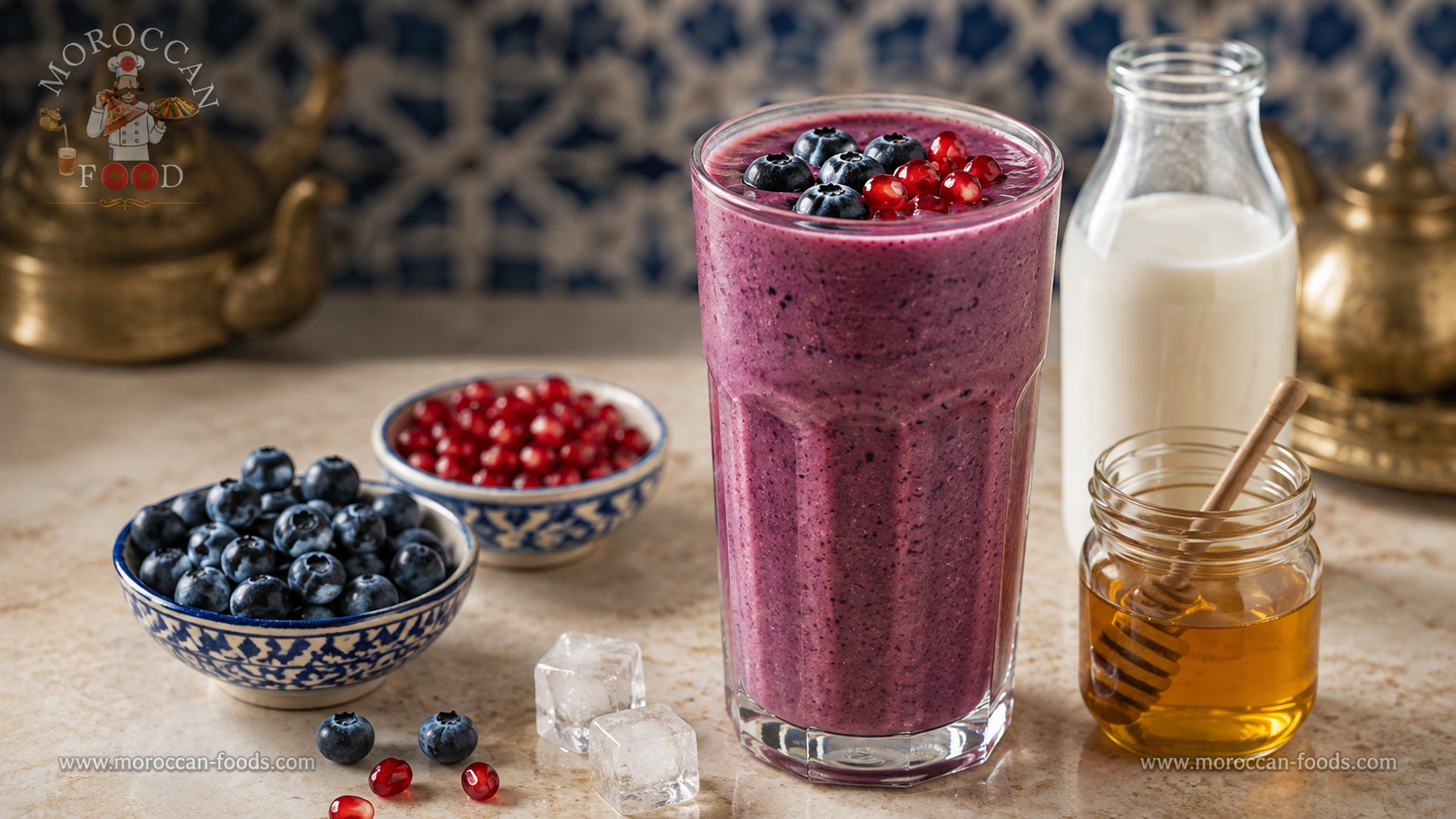
This Blueberry and Pomegranate Milk Smoothie with Natural Honey is a creamy, colorful, and refreshing homemade drink that combines the mildly tart flavor of blueberries with the vibrant fruity taste of pomegranate, the smooth richness of cold milk, and the natural sweetness of pure honey.
Quick and easy to prepare, this delicious fruit smoothie is perfect for breakfast, an afternoon snack, a post-workout refreshment, or a cooling summer drink. It can be made with fresh or frozen fruit and served with optional ice cubes for an extra-cold and refreshing finish.
Recipe Information:
| Info | Details |
|---|---|
| Prep Time | 4 minutes |
| cook Time | 0 minutes |
| Total time | 4 minutes |
| Servungs | 2 people |
| cuisine | Moroccan |
| Difficulty | easy |
Ingredients
- 2 cups (500 ml) cold milk
- 1 cup (150 g) fresh or frozen blueberries
- 1 cup (200 G) fresh or pomegranate seeds
- 4 tablespoons natural honey
- ½ cup ice cubes, optional

Preparation method:
Place the ingredients in a blender and blend well.

Serving juice
If you exercise, you can drink this juice after your workout as a nutritious and easy-to-prepare beverage.

You can serve this juice with traditional Moroccan sweets, chocolate cake, and regular cake for breakfast on ordinary days, holidays, and special occasions.

Show Health Benefits and Nutritional Value
Health Benefits
- Rich in antioxidants: Blueberries and pomegranate seeds contain anthocyanins and polyphenols that help protect cells from oxidative stress.
- Supports immune health: Blueberries and pomegranate provide vitamin C, which contributes to normal immune function and collagen production.
- Supports muscle recovery: Milk provides high-quality protein, while fruit, milk, and honey supply carbohydrates that help replenish energy after exercise.
- Promotes healthy bones and teeth: Milk provides calcium, protein, and phosphorus needed for maintaining normal bones and teeth.
- Supports digestion and satiety: Whole blueberries and pomegranate seeds provide dietary fiber. Serve the smoothie without straining to retain more fiber.
- Supports heart and muscle function: Potassium contributes to normal muscle function, nerve activity, and fluid balance.
- Provides quick energy: The carbohydrates in honey, fruit, and milk make this an energy-rich breakfast, snack, or post-workout drink.
- Helps with hydration: Milk, fruit, and optional ice contribute fluids, making the smoothie refreshing and hydrating.
Estimated Nutritional Value
Calculated using 500 ml whole milk, 150 g blueberries, 200 g pomegranate seeds, and four tablespoons of natural honey. The recipe makes approximately two servings.
| Nutrient | Whole Recipe | Per Serving |
|---|---|---|
| Calories | ≈ 812 kcal | ≈ 406 kcal |
| Protein | ≈ 20.5 g | ≈ 10.2 g |
| Carbohydrates | ≈ 152.6 g | ≈ 76.3 g |
| Total Sugars | ≈ 136.5 g | ≈ 68.3 g |
| Dietary Fiber | ≈ 11.6 g | ≈ 5.8 g |
| Total Fat | ≈ 19.1 g | ≈ 9.5 g |
| Saturated Fat | ≈ 9.5 g | ≈ 4.8 g |
| Calcium | ≈ 599 mg | ≈ 300 mg |
| Potassium | ≈ 1,291 mg | ≈ 646 mg |
| Vitamin C | ≈ 35 mg | ≈ 17.5 mg |
| Sodium | ≈ 226 mg | ≈ 113 mg |

Frequently Asked Questions
1. What is a Blueberry and Pomegranate Milk Smoothie?
It is a creamy homemade smoothie prepared with cold milk, blueberries, pomegranate seeds, natural honey, and optional ice. It has a refreshing fruity flavor and a vibrant purple-red color.
2. Can I use frozen blueberries?
Yes. Frozen blueberries make the smoothie colder and thicker. If you use frozen fruit, you can reduce or omit the ice cubes.
3. Can frozen pomegranate seeds be used?
Yes. Fresh or frozen pomegranate seeds can be used. Frozen seeds may produce a colder and slightly thicker smoothie.
4. What type of milk works best?
Whole milk creates the richest and creamiest texture. Semi-skimmed, skimmed, lactose-free, soy, oat, or almond milk may also be used, although the flavor and nutritional value will change.
5. Can I reduce the amount of honey?
Yes. Four tablespoons produce a noticeably sweet smoothie and add approximately 69 g of added sugar to the entire recipe. Use one or two tablespoons for a lower-sugar and lower-calorie drink.
6. Can I prepare this smoothie without honey?
Yes. The honey can be omitted, particularly when the fruit is naturally sweet. Taste the smoothie after blending and add a small amount of honey only if needed.
7. How can I make the smoothie thicker?
Use frozen blueberries and pomegranate seeds, reduce the amount of milk slightly, or add more fruit. Avoid adding too much ice because it can dilute the flavor.
8. How can I make it thinner?
Gradually add more cold milk and blend again until the smoothie reaches your preferred consistency.
9. Should the smoothie be strained?
Straining is optional. Pomegranate seeds can leave small particles in the drink. Straining creates a smoother texture, while leaving the smoothie unstrained helps retain more dietary fiber.
10. Is this smoothie suitable after exercise?
Yes. Milk provides protein, while the fruit and honey provide carbohydrates that can help replenish energy after physical activity. It can be enjoyed as a post-workout refreshment but should not replace a complete balanced meal.
11. How many servings does this recipe make?
The recipe makes approximately two generous servings. The final quantity may vary depending on the amount of ice and the size of the serving glasses.
12. How long can the smoothie be stored?
It is best served immediately after blending. Leftovers can be stored in an airtight container in the refrigerator for up to 24 hours. Shake, stir, or blend briefly before serving because natural separation may occur.
13. Can children drink this smoothie?
Yes, provided they have no allergy or intolerance to any ingredient. Consider reducing the honey because the fruit already contains natural sugars. Honey must never be given to children under 12 months old.
14. Is this recipe gluten-free?
The basic ingredients are naturally gluten-free. Check the labels of packaged milk or plant-based alternatives if cross-contamination is a concern.
15. Can this smoothie be made dairy-free?
Yes. Replace the dairy milk with an unsweetened plant-based alternative. Soy milk generally contains more protein than most almond or oat milk products.


Leave a Reply