
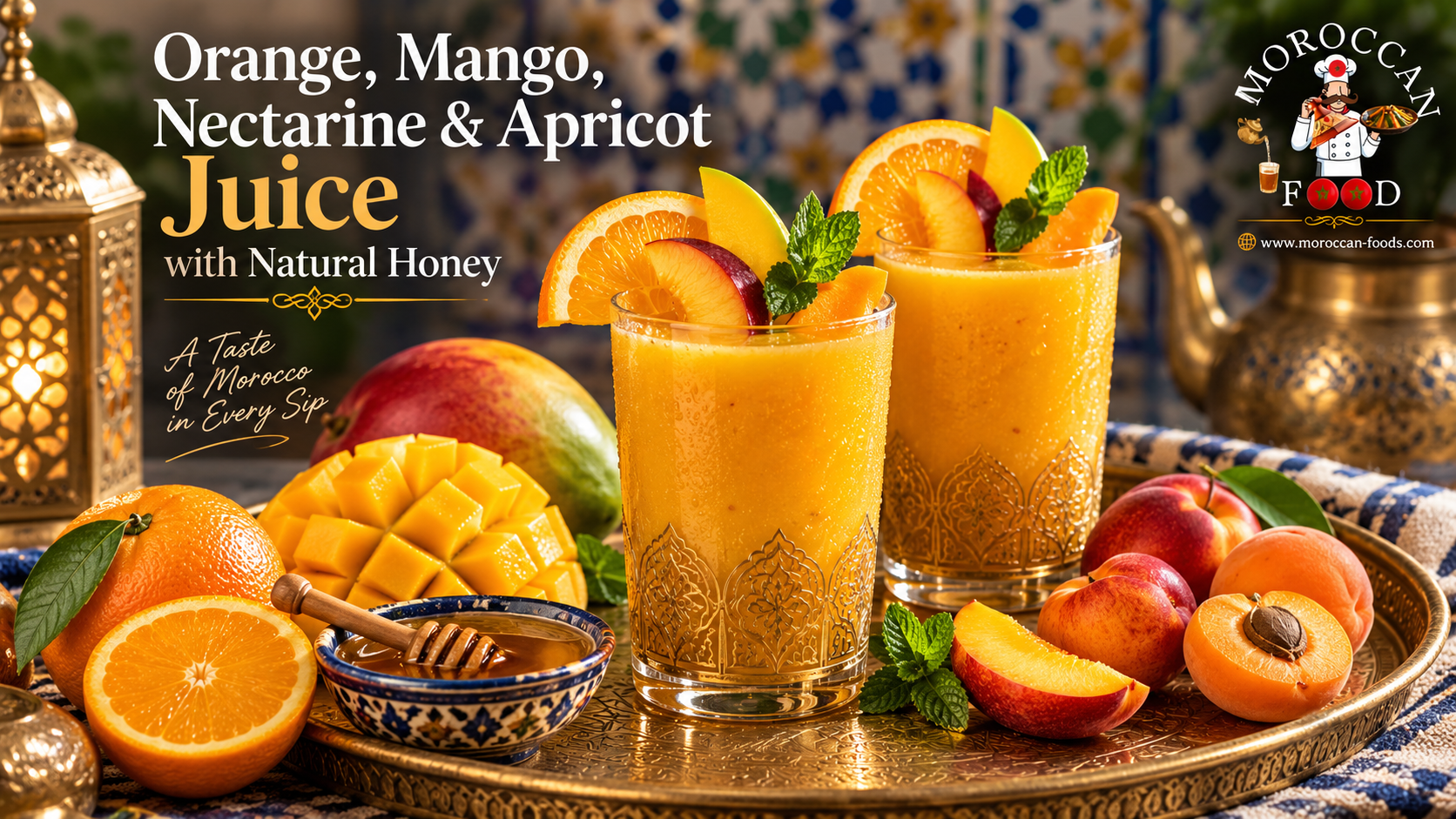
This Orange, Mango, Nectarine and Apricot Juice is a vibrant, naturally sweet fruit drink that combines fresh citrus flavor with the rich tropical taste of mango and the delicate sweetness of ripe nectarine and apricot.
The orange juice provides a refreshing base, while mango gives the drink a smooth, creamy texture. Nectarine adds a fragrant, juicy sweetness, and apricot brings a slightly tangy fruit flavor that balances the blend beautifully.
Prepared in just a few minutes, this homemade fruit juice is perfect for breakfast, warm afternoons, family gatherings, or a refreshing drink after physical activity.
Recipe Information
| Information | Details |
|---|---|
| Recipe Name | Orange, Mango, Nectarine & Apricot Juice |
| Category | Drinks / Fresh Fruit Juices |
| Prep Time | 10 minutes |
| Blending Time | 1–2 minutes |
| Total Time | About 12 minutes |
| Servings | 2–3 glasses |
| Difficulty | Easy |
| Serving Temperature | Chilled |
| Cooking Required | No |
Ingredients
- 500 ml fresh orange juice
- 1 large ripe mango
- 2 ripe nectarines
- 4 ripe apricots
- 4–6 ice cubes, optional
- 1–2 tablespoons natural honey, optional, depending on the sweetness of the fruit
Optional Garnish
- Orange slices
- Thin mango slices
- Nectarine wedges
- Apricot wedges
- Fresh mint leaves

How to Make Orange, Mango, Nectarine & Apricot Juice
1. Prepare the Mango
Peel the mango, remove the pit, and cut the flesh into medium-sized pieces.
Use a fully ripe mango for the sweetest flavor and smoothest texture.
2. Prepare the Nectarines
Wash the nectarines thoroughly.
Cut them in half, remove the pits, and chop the fruit into chunks.
The skin can be left on if you prefer to retain more of the fruit’s natural fiber, or removed for a smoother drink.
3. Prepare the Apricots
Wash the apricots, cut them in half, and remove the pits.
Cut them into smaller pieces so they blend easily.
4. Prepare the Fresh Orange Juice
Squeeze enough oranges to obtain approximately 500 ml of fresh orange juice.
You can strain the juice if you prefer a smoother final texture, although leaving some pulp adds body to the drink.
5. Add the Ingredients to the Blender
Place the following into a blender:
- Mango pieces
- Nectarine pieces
- Apricot pieces
- Fresh orange juice
If using honey, add it at this stage.
Add the ice cubes if you want the juice extra cold.
6. Blend Until Smooth
Blend on high speed for approximately 45–60 seconds, or until the fruit is completely blended and the drink becomes smooth and creamy.
7. Adjust the Consistency
If the juice is too thick, add a little more fresh orange juice and blend again.
For a thicker smoothie-style drink, reduce the amount of orange juice slightly.
8. Taste and Adjust the Sweetness
Taste the juice before serving.
When the mango, nectarines, and apricots are fully ripe, additional sweetener may not be necessary.
If you prefer a sweeter flavor, add 1–2 tablespoons of natural honey and blend briefly again.

Serving Suggestion
Pour the juice into chilled glasses and serve immediately.with Traditional Moroccan sweets, chocolate cake, plain cake, and banana bread.
- Discover the recipe for orange juice-soaked cake
- Discover the chocolate cake recipe
- Discover chocolate banana bread
- Discover whole wheat banana bread
- Traditional Moroccan sweets
- Yogurt
- Nuts
- Breakfast breads

Garnish each glass with an orange slice, mango slice, nectarine wedge, apricot wedge, or fresh mint leaves for an attractive presentation.
If you exercise, you can drink this juice after your workout; it is also ideal if you have a Vitamin C deficiency or simply enjoy healthy beverages.It is considered a refreshing drink in sammer and cold weather.

Show Health Benefits Nutritional Value
Health Benefits of Orange, Mango, Nectarine & Apricot Juice
1. Excellent Source of Vitamin C
Fresh orange juice and mango provide a generous amount of vitamin C, which contributes to normal immune function, collagen formation, and protection of cells from oxidative stress.
2. Rich in Natural Antioxidants
Mango, nectarines, apricots, and oranges contain carotenoids and other antioxidant plant compounds. These nutrients help protect cells from oxidative damage as part of a balanced diet.
3. Provides Beta-Carotene
Mango and apricots are particularly rich in beta-carotene, which the body can convert into vitamin A. Vitamin A supports normal vision, skin health, and immune function.
4. Supports Hydration
Because the recipe contains fresh orange juice and water-rich fruits, it provides fluids along with naturally occurring minerals, making it a refreshing drink for warm days or after physical activity.
5. Provides Natural Energy
The fruits naturally contain carbohydrates and sugars that provide readily available energy. Natural honey, when added, increases the carbohydrate content further.
6. Good Source of Potassium
Orange juice, mango, nectarines, and apricots all contribute potassium, an essential mineral involved in normal muscle function, nerve signaling, and maintaining normal blood pressure.
7. Supports Digestive Health
When the juice is blended and not strained, the mango, nectarines, and apricots provide dietary fiber that supports normal digestion and helps promote satiety.
8. Provides a Variety of Micronutrients
Combining several fruits in one drink provides a broad range of nutrients, including vitamin C, vitamin A precursors, potassium, folate, vitamin E, and several antioxidant compounds.
Nutritional Value
Estimated Nutrition per Serving
Based on 3 glasses and 1 tablespoon of natural honey
| Nutrient | Approximate Amount |
|---|---|
| Calories | 205–215 kcal |
| Protein | 2–3 g |
| Carbohydrates | 50–52 g |
| Dietary Fiber | 3–4 g |
| Total Sugars | 41–44 g |
| Fat | Less than 1 g |
| Potassium | 750–800 mg |
| Vitamin C | 115–130 mg |
| Calcium | 35–50 mg |
| Iron | 0.5–1 mg |
If you use 2 tablespoons of honey, each of 3 servings will contain roughly 225–235 kcal, with slightly more carbohydrates and sugar.
Nutritional Highlights
Vitamin C: Mainly from fresh orange juice and mango.
Beta-carotene: Particularly abundant in mango and apricots.
Potassium: Supplied by all four fruits.
Fiber: Best retained when the juice is blended rather than strained.
Natural carbohydrates: Provide quick, readily available energy.
Healthy Preparation Tip
When the mango, nectarines, and apricots are fully ripe, the juice is naturally sweet enough that honey may not be necessary. Reducing or omitting honey lowers the amount of added sugar and calories while preserving the natural fruit flavor.
For maximum fiber, blend the fruits thoroughly and avoid straining the finished drink.
Nutrition Note: These values are estimates and may vary depending on fruit size and ripeness, the type of orange juice used, the quantity of honey, and the final serving size.
Frequently Asked Questions (FAQ)
1. What is Orange, Mango, Nectarine & Apricot Juice?
It is a fresh homemade fruit drink made with orange juice, ripe mango, nectarines, apricots, and optional natural honey. The result is smooth, naturally sweet, fruity, and refreshing.
2. Is Orange, Mango, Nectarine & Apricot Juice healthy?
Yes. This juice provides vitamin C, potassium, carotenoids, antioxidants, and other micronutrients from the fruit. Its exact nutritional value depends on the fruit size, ripeness, and whether honey is added.
3. What are the main health benefits of this juice?
This fruit blend provides vitamin C, natural antioxidants, beta-carotene, potassium, and natural carbohydrates. When blended without straining, it also retains more dietary fiber.
4. Can I make this juice without honey?
Yes. If the mango, nectarines, and apricots are fully ripe, the juice may already be sweet enough without honey.
5. Can I use frozen mango?
Yes. Frozen mango works very well and gives the juice a colder, slightly thicker texture. If using frozen fruit, you may not need to add ice.
6. Can I use frozen nectarines or apricots?
Yes. Frozen nectarines and apricots can also be used. Let them soften slightly before blending if your blender is not very powerful.
7. Should I peel the mango?
Yes. Peel the mango and remove the pit before blending.
8. Should I peel the nectarines and apricots?
Peeling is optional. Their skins are edible and add more fiber, but removing the skins creates a smoother texture.
9. Should I use fresh orange juice?
Freshly squeezed orange juice gives the best flavor. Unsweetened 100% orange juice can also be used if fresh oranges are unavailable.
10. Should I strain the juice?
It is not necessary. Leaving the drink unstrained helps preserve more fruit pulp and fiber. Strain it only if you prefer a thinner and smoother consistency.
11. How can I make the juice thinner?
Add a little more fresh orange juice and blend again until the desired consistency is reached.
12. How can I make it thicker?
Use slightly less orange juice or add more mango. Chilled or frozen mango will also make the drink thicker.
13. Can I prepare the juice in advance?
It is best served immediately after blending. If necessary, store it in a tightly sealed container in the refrigerator and consume it within about 24 hours.
14. Why does the juice separate after sitting?
Natural separation happens because fruit pulp can settle over time. Stir, shake, or briefly blend the juice again before serving.
15. Is this juice suitable for breakfast?
Yes. It can be enjoyed at breakfast alongside yogurt, nuts, eggs, or whole-grain bread for a more complete meal.
16. Is this juice suitable after exercise?
Yes. It provides fluids and carbohydrates from fruit, making it a refreshing drink after physical activity. Since it is low in protein, pairing it with yogurt, milk, eggs, or another protein-rich food can make the snack more balanced.
17. How many calories are in Orange, Mango, Nectarine & Apricot Juice?
When the recipe is divided into 3 servings and made with 1 tablespoon of natural honey, each serving contains approximately 205–215 calories.
18. Can children drink this juice?
For most children who tolerate the ingredients, it can be served in an age-appropriate portion. Extra honey may not be necessary if the fruit is ripe. Honey should not be given to children under 12 months of age.
19. What can I serve with this juice?
It pairs well with orange juice-soaked cake, chocolate cake, chocolate banana bread, traditional Moroccan sweets, yogurt, nuts, and breakfast breads.
20. What can I use to garnish the glasses?
Orange slices, mango slices, nectarine wedges, apricot wedges, and fresh mint leaves all work well.
21. Can I add other fruits?
Yes. Kiwi, peach, strawberries, or pineapple can be added, but they will change the flavor, color, consistency, and nutritional profile of the original recipe.
22. What is the best way to serve this juice?
Serve it well chilled immediately after blending. For a more attractive presentation, use clear glasses and garnish with fresh fruit and mint.


Leave a Reply