
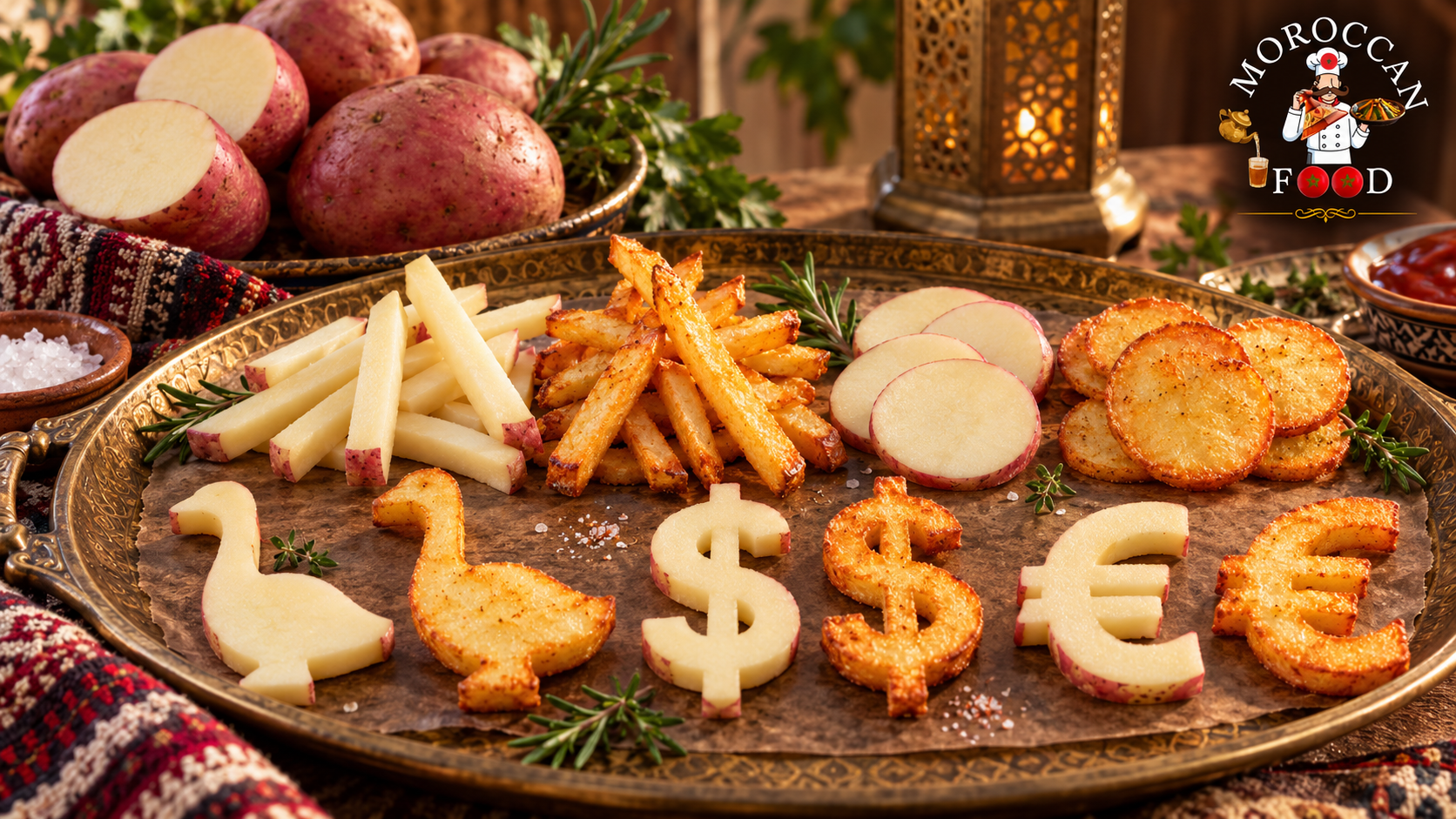
French fries are one of those foods that almost everyone recognizes instantly. Crispy on the outside, soft and fluffy on the inside, and delicious whether served with a burger, grilled meat, fish, sandwiches, or simply enjoyed on their own, fried potatoes have become a favorite in homes and restaurants around the world.
But there is one thing about French fries that is often overlooked: they do not have to be shaped like traditional sticks.
With the right potato, a sharp knife, or a few simple food cutters, potatoes can become stars, triangles, squares, hearts, flowers, birds, animals, cars, letters, numbers, or almost any shape you can imagine.
That simple idea can turn ordinary homemade fries into something playful, creative and memorable, especially for children.
Why Are French Fries So Popular Around the World?
Potatoes have an unusually versatile texture and relatively neutral flavor, which allows them to work with countless seasonings, sauces and dishes.
The contrast between a crisp golden exterior and a tender interior is one of the main reasons fried potatoes are so satisfying. They can also be seasoned in many different ways, from simple salt to paprika, garlic, herbs or spicy seasonings.
Their versatility has also helped French fries become popular across many cuisines.
You may find thin fries, thick-cut chips, wedges, crinkle-cut fries, curly fries, waffle fries, cubes and many regional variations.
And there is no culinary rule saying that potatoes must remain in those familiar shapes.
Once you understand how potatoes behave during frying, you can become much more creative.

What Is the Best Potato for French Fries?
Choosing the right potato is one of the most important steps when making crispy homemade fries.
In general, potatoes with higher starch and lower moisture tend to produce the best classic French fries.
They become fluffy inside while developing a crisp surface during frying.
Some good choices include:
- Russet potatoes – one of the most popular choices for French fries because of their high starch content and fluffy interior.
- Maris Piper – widely used for chips and fries because it produces a crisp exterior and soft center.
- Agria potatoes – an excellent frying potato with good dry matter and a rich yellow color.
- King Edward potatoes – another floury variety that works well for frying.
- Yukon Gold potatoes – slightly waxier and creamier, producing fries with a richer flavor and somewhat denser texture.
If these specific varieties are unavailable, look for potatoes described as floury, starchy or suitable for frying.
Very waxy potatoes can still be fried, but they usually remain firmer and may not develop the same fluffy interior.

Why Potato Starch Matters
When potatoes are fried, their surface loses moisture while starch contributes to the formation of the crispy outer layer.
Inside the potato, heat transforms the texture into something soft and tender.
This is why high-starch potatoes are particularly useful for traditional French fries.
However, when making decorative shapes, texture is only part of the equation.
The potato must also be large and firm enough to cut cleanly.
Large potatoes are especially useful when making stars, animals, cars or other designs because they provide a wider surface for cookie cutters.

French Fries Do Not Have to Be Sticks
Most people automatically imagine long potato sticks when they hear the words “French fries.”
But potatoes are essentially edible canvases.
Once peeled and sliced into thick flat pieces, they can be cut into almost any design.
A simple star-shaped cutter can transform a potato into golden stars.
A triangular cutter creates playful geometric fries.
Small square pieces can become crispy potato bites.
With children’s food cutters, you can create animal-shaped fries, birds, fish, cars, airplanes, flowers, hearts, moons, numbers and letters.
The possibilities are limited mainly by the size of your potato and the shape of your cutter.

Creative Fre nch Fries for Children
Many children already enjoy potatoes, which makes them an excellent food for creative presentation.
A plate filled with stars, cars, animals and letters immediately becomes more interesting than an ordinary pile of fries.
You can even build themed meals.
For example, star-shaped fries can accompany a space-themed meal.
Fish-shaped fries can be served beside grilled fish.
Car-shaped fries can become part of a playful lunch plate.
Letters can be used to spell a child’s name or create simple words.
This does not change the basic food. It simply changes how it is presented.
And presentation can make everyday meals much more fun.

Adults Can Enjoy Creative Fries Too
Creative potato shapes are not only for children.
Restaurants, parties and home gatherings can also benefit from more distinctive presentations.
Small potato stars can be served as an elegant garnish.
Crispy potato cubes can accompany grilled meat.
Diamond-shaped potatoes can create a more refined plate.
Thin geometric potato pieces can also work beautifully as appetizers.
Creative frying can therefore move in two directions: playful designs for children and sophisticated presentation for adults.

How to Prepare Potatoes for Creative Shapes
Begin with large, firm potatoes.
Peel them if you prefer a smooth appearance, although some shapes can also be prepared with the skin left on.
Slice the potatoes into flat pieces approximately 5–10 mm thick, depending on the design.
Then press your chosen cutter firmly through each potato slice.
Keep the thickness as consistent as possible.
This is important because pieces of similar thickness will cook at approximately the same speed.
Very thin sections may brown too quickly, while thick sections can remain undercooked inside.

Can You Use Cookie Cutters for Potatoes?
Yes.
Metal cookie cutters work particularly well because their sharper edges cut through raw potatoes more easily.
Small cutters are usually easier to work with than very large ones.
Simple shapes also tend to fry more evenly.
Stars, hearts, circles, squares, triangles and flowers are excellent beginner shapes.
Detailed animals and vehicles can work too, but extremely thin features such as tails, wings or small corners may brown faster than the rest of the potato.
That does not mean they should be avoided; it simply means they require more careful frying.

What Should You Do With the Potato Scraps?
When cutting decorative shapes, you will naturally have leftover potato pieces.
Do not throw them away.
They can be cut into small irregular fries, added to soups, mashed, roasted, cooked in omelets or fried separately as crispy potato bites.
This allows you to create decorative potatoes without unnecessary food waste.

The Secret to Crispy Homemade French Fries
Removing excess surface starch and moisture can help improve the texture of homemade fries.
After cutting the potatoes, rinse them in cold water.
For especially crisp results, they can also be soaked in cold water for approximately 20–30 minutes.
Drain them and dry them very thoroughly before frying.
This step is particularly important.
Water and hot oil are a dangerous combination, and wet potatoes can also prevent the surface from becoming properly crisp.
Use clean kitchen towels or paper towels to dry each piece before frying.

The Double-Frying Method
One of the most reliable methods for obtaining a crisp exterior and tender center is double frying.
During the first fry, the potatoes cook internally at a moderate temperature.
They are then removed and allowed to rest briefly.
During the second fry, a higher temperature develops the golden, crispy exterior.
For many potato cuts, the first frying stage can be performed at approximately 150–160°C, followed by a second frying stage around 180°C.
The exact time depends on the thickness and shape of the potatoes.
Small decorative pieces may cook much faster than thick traditional fries, so visual observation is very important.
Remove them once they become crisp and golden.

Why Different Shapes Need Different Cooking Times
A potato star does not behave exactly like a traditional French fry.
Its points are thinner than its center.
The tips may therefore become crispy before the middle finishes cooking.
The same principle applies to birds, animals, cars and other detailed designs.
Rounded shapes generally cook more evenly.
Complex shapes need slightly more attention.
When making several designs at once, it can be useful to fry similar sizes together.
This helps prevent small pieces from becoming too dark while larger pieces are still cooking.

Seasoning Creative French Fries
Simple salt is often enough to highlight the natural flavor of potatoes.
But creative fries can also be seasoned in many ways.
Paprika gives them color and mild warmth.
Garlic powder adds savory depth.
Dried herbs such as oregano, thyme or rosemary provide an aromatic flavor.
Black pepper adds gentle heat.
For Moroccan-inspired fries, a light combination of paprika, cumin, garlic and a small amount of salt can create a delicious variation.
Season the potatoes immediately after frying while their surface is still hot.

Sauces Make Them Even More Fun
Creative fries become even more enjoyable when paired with different dipping sauces.
Classic ketchup remains popular, especially with children.
Mayonnaise, garlic sauce, yogurt-based sauces, mustard and cheese sauces can also work well.
For a Moroccan touch, fries can be served with a mildly spiced tomato sauce, harissa mayonnaise or herb-and-yogurt dip.
A selection of small dipping bowls can make a plate of colorful shapes even more entertaining.

Can Creative Fries Be Made in an Air Fryer?
Yes.
Many decorative potato shapes can also be prepared in an air fryer.
Lightly coat the potatoes with a small amount of oil and arrange them in a single layer.
Avoid overcrowding the basket because circulating hot air needs access to the potato surfaces.
Air-frying will produce a slightly different texture from deep frying, but it can still create crisp and attractive results.

Can They Be Baked in the Oven?
They can also be oven-baked.
Arrange the potato shapes on a baking tray, lightly coat them with oil and turn them during baking so both sides develop color.
Baking is especially practical when preparing many pieces for a family meal.
Deep frying, air frying and oven baking each create slightly different results, so the best method depends on the texture you prefer.

A Creative Idea for Birthday Parties
Decorative potato fries are particularly suitable for children’s birthday parties.
Instead of serving only traditional French fries, you can prepare several different shapes and arrange them on a large platter.
Stars, hearts, animals and cars can all appear on the same plate.
Different sauces can be placed in the center.
You can even create a theme based on the occasion.
A space-themed party might include stars and moons.
An animal-themed party could feature fish, birds and other animal shapes.
A racing theme might include cars.
A simple potato can therefore become part of the decoration as well as the meal.

Turn French Fries Into a Family Activity
Making creative fries can also become an activity rather than simply cooking.
Children can help choose the shapes and use appropriate cutters under adult supervision.
One child might choose stars while another chooses animals or letters.
After frying or baking, everyone can create their own plate.
This turns an ordinary kitchen task into a shared family experience.

Crispy Outside, Soft Inside: The Ideal Texture
Whatever shape you choose, the goal remains the same.
A successful fried potato should have a crisp, golden exterior while remaining soft and tender inside.
The key factors are choosing a suitable potato, maintaining consistent thickness, drying the pieces well and controlling the cooking temperature.
Creative shapes should enhance the experience without sacrificing texture.

Traditional Fries Still Have Their Place
There is nothing wrong with classic French fries.
Their long shape is practical, easy to cook and perfect for dipping.
Round potato slices, wedges and cubes are equally useful.
The point is not to replace traditional fries.
It is to recognize that potatoes offer far more creative possibilities.
Sometimes you may want classic fries beside a burger.
On another day, stars might make lunch more entertaining.
For a party, hearts or flowers may be more appropriate.
For a restaurant plate, geometric shapes might create a more elegant presentation.

A Potato Can Become Almost Anything
One of the most enjoyable things about potatoes is their simplicity.
Before cooking, a potato may look like an ordinary ingredient.
But with a knife, cutter and a little imagination, that same potato can become a star, triangle, heart, flower, bird, animal, car, letter or almost anything else you can create.
That versatility helps explain why fried potatoes continue to remain so popular across generations.
Children enjoy them.
Adults enjoy them.
Restaurants serve them.
Families prepare them at home.
And almost every culture has developed its own way of cooking or seasoning potatoes.

Final Thoughts
French fries may be one of the world’s most familiar foods, but familiar does not have to mean boring.
Choosing a good frying potato such as a high-starch or floury variety gives you the foundation for a crisp exterior and soft interior.
From there, creativity can take over.
Cut potatoes into traditional sticks when you want the classic experience, or transform them into stars, triangles, squares, hearts, flowers, animals, birds, cars, letters and other imaginative designs.
For children, these shapes can make the meal more playful.
For adults, elegant geometric designs can create a more refined presentation.
And for families, preparing them can become a fun activity that everyone participates in.
French fries are not defined by their shape. They are defined by the potato, the texture and the enjoyment they bring to the table.
Frequently Asked Questions About Creative French Fries
1. What are the best potatoes for making French fries?
High-starch, relatively low-moisture potatoes usually produce the crispiest fries with a fluffy interior. Popular varieties include Russet, Maris Piper, Agria and King Edward. Yukon Gold can also work well if you prefer a creamier texture.
2. Can French fries be cut into shapes other than sticks?
Yes. Potatoes can be cut into stars, hearts, circles, squares, triangles, flowers, animals, birds, cars, letters, numbers and many other shapes. Large, firm potatoes are especially useful because they provide more surface area for cutting.
3. Can I use cookie cutters to make shaped French fries?
Yes. Metal cookie cutters are particularly useful because their sharper edges cut through raw potato slices more easily. Simple shapes such as stars, hearts and flowers are usually the easiest to prepare.
4. How thick should potatoes be for decorative fries?
A thickness of approximately 5–10 mm works well for many creative shapes. Keeping the pieces similar in thickness helps them cook more evenly.
5. Should I soak potatoes before frying?
Soaking cut potatoes in cold water for around 20–30 minutes can help remove excess surface starch. After soaking, drain and dry them thoroughly before frying.
6. Why is it important to dry potatoes before frying?
Removing surface moisture helps the potatoes become crispier and also reduces dangerous splattering when they are added to hot oil. The pieces should be thoroughly dried before frying.
7. What is the double-frying method?
Double frying involves cooking the potatoes first at a moderate temperature, then frying them again at a higher temperature. The first fry cooks the interior, while the second helps create a golden, crispy exterior.
8. What temperature should I use for double frying?
A common method is to fry the potatoes first at approximately 150–160°C, allow them to rest briefly, then fry them again at around 180°C until golden and crisp.
9. Do different potato shapes need different cooking times?
Yes. Thin points and small details can brown faster than thicker centers. Stars, animals, birds and cars may therefore require closer attention than circles or evenly sized cubes.
10. Can creative French fries be made in an air fryer?
Yes. Lightly coat the potato shapes with a small amount of oil and arrange them in a single layer. Avoid overcrowding the basket so hot air can circulate around the pieces.
11. Can shaped French fries be baked in the oven?
Yes. Arrange the potato shapes on a baking tray, coat them lightly with oil and turn them during baking so both sides become golden. Oven baking is especially convenient when preparing larger quantities.
12. What seasonings work well with creative fries?
Salt, paprika, garlic powder, black pepper, oregano, thyme and rosemary all work well. For a Moroccan-inspired flavor, try a light combination of paprika, cumin, garlic and salt.
13. What sauces go well with creative French fries?
Popular options include ketchup, mayonnaise, garlic sauce, mustard, cheese sauce, yogurt-and-herb dip, spicy tomato sauce and harissa mayonnaise.
14. Are shaped fries suitable for children?
Yes. Fun shapes such as stars, hearts, animals, cars and letters can make potatoes more playful for children. Adults should handle hot oil, sharp knives and any cutting tools that are not appropriate for children.
15. Can children help prepare creative fries?
Children can help choose shapes and, when appropriate, use safe cutters under adult supervision. Frying and handling hot trays should always be done by an adult.
16. What can I do with leftover potato scraps?
Potato scraps can be turned into small fries, crispy potato bites, soups, mashed potatoes, roasted potatoes or omelet fillings. This helps reduce unnecessary food waste.
17. How can I keep creative fries crispy?
Use suitable starchy potatoes, cut the pieces evenly, remove excess moisture, avoid overcrowding the pan or basket and serve the fries shortly after cooking.
18. Why do some shaped fries brown faster than others?
Detailed shapes often contain thin edges, corners, wings or points. These areas heat and brown more quickly than thicker sections, so complex designs may need to be removed sooner.
19. Can I prepare shaped potatoes in advance?
Yes. You can cut them in advance and keep them submerged in cold water in the refrigerator for a limited period. Drain and dry them thoroughly before cooking.
20. Are traditional French fries better than creative shapes?
Not necessarily. Traditional fries are practical and cook evenly, while creative shapes offer a more playful or decorative presentation. The best choice depends on the occasion and the style of meal you want to create.


Leave a Reply