
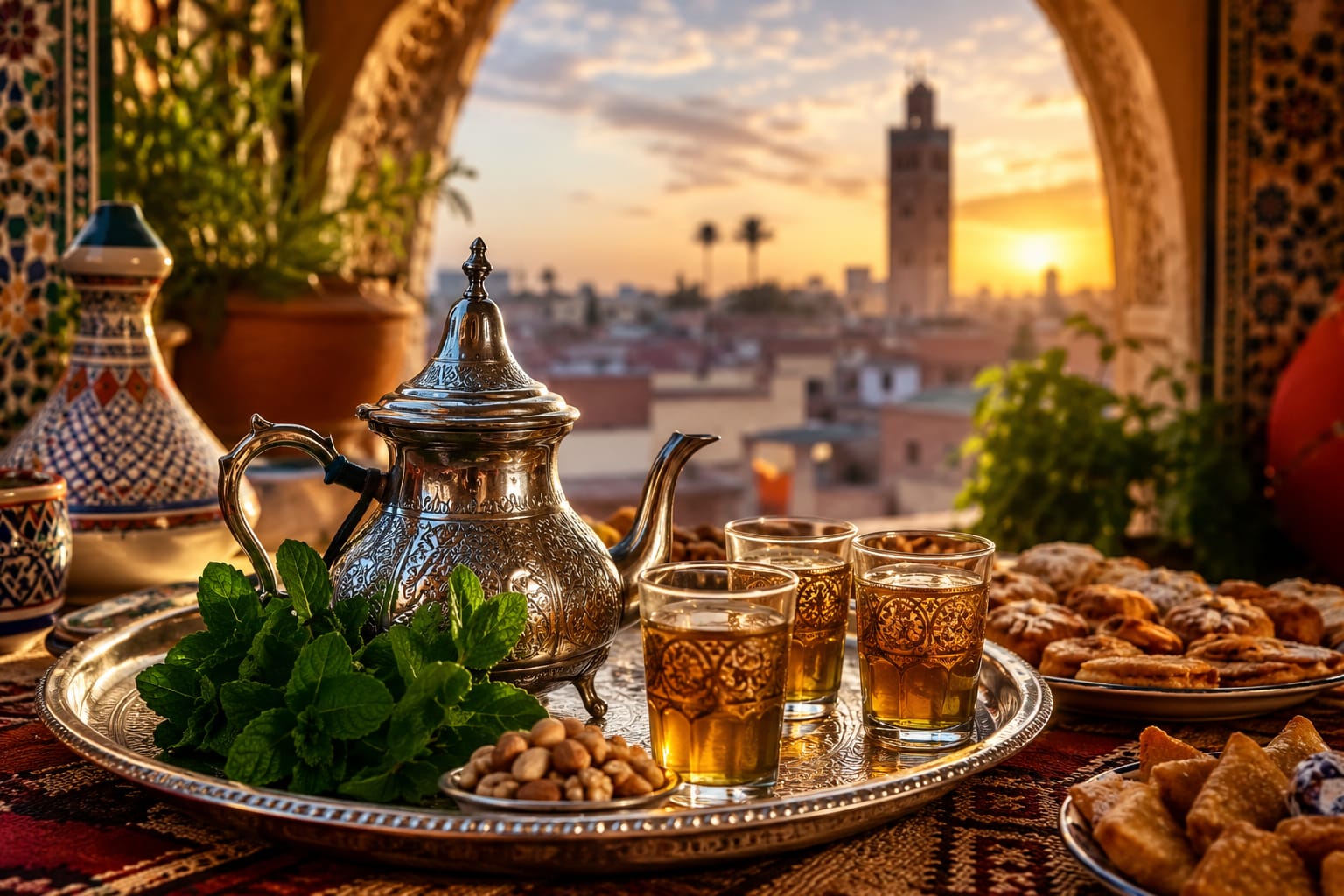
More Than a Drink… A Symbol of Moroccan Identity and Hospitality:

Moroccan tea is one of the strongest symbols of Moroccan culture and one of the most important elements of daily life in Morocco. Tea is not simply a hot drink served throughout the day; it is a social ritual that reflects generosity, hospitality, and Moroccan identity. From northern cities to southern desert regions, Moroccan tea has remained deeply connected to Moroccan traditions for generations.
Tea became widely popular in Morocco during the 18th and 19th centuries. Over time, Moroccans developed their own unique way of serving and enjoying tea using Chinese green tea, eventually transforming it into an essential part of Moroccan culinary culture that is appreciated both inside and outside Morocco.
Today, it is impossible to talk about Moroccan cuisine or Moroccan traditions without mentioning Moroccan tea, as it plays an important role in family gatherings, celebrations, holidays, and everyday hospitality.
Moroccan Tea Culture Varies from One Region to Another:
Although tea is enjoyed throughout Morocco, the way it is prepared, flavored, and served changes from one region to another. This diversity gives Moroccan tea a unique cultural richness that reflects the traditions and lifestyle of each area.
Tea in Northern Morocco:

Elegant Presentation and Simpler Flavors:
In northern Morocco, tea is often served differently compared to other parts of the country. In many northern cities, mint and herbs are not placed directly inside the teapot. Instead, fresh mint stems are added directly into tall tea glasses, which are often twice the size of the glasses used in other Moroccan regions.
Northern Morocco is also known for its elegant tea presentation style. Tea is usually served in a calm and refined atmosphere that reflects the urban and cultural character of the region. The flavor is often lighter and less concentrated compared to tea prepared in other areas of Morocco.
Tea in Central Morocco:

A Daily Tradition with Personalized Flavors:
In central Moroccan regions, especially cities such as Marrakech and nearby areas, tea is strongly connected to daily social life. The way tea is served often depends on the type of gathering or occasion.
During family conversations or gatherings with friends, people usually discuss the type of tea they want before preparing it. Some prefer sweet tea, others prefer little or no sugar, while some enjoy herbal flavors and others prefer plain tea made only with tea leaves.
When opinions differ, the tea is often prepared plain inside the teapot, while sugar and herbs are served separately so that each person can customize their own glass according to personal preference.
Some people also prefer preparing tea directly where the gathering takes place to create a warmer social atmosphere, while others prepare it in the kitchen before serving it.
During breakfast gatherings or family meals, Moroccan tea is commonly served alongside a variety of traditional Moroccan foods such as:

- Traditional Moroccan pastries
- Moroccan bread varieties
- Msemen
- Harcha
- Batbout
- Homemade Moroccan baked goods
- Olive oil and olives
- Natural honey and homemade jam
In these moments, tea becomes an essential part of the Moroccan dining experience.
Tea in Southern Morocco:
Tea in Southern Morocco:

In southern Morocco and desert regions, tea has a completely different and highly symbolic character. It is commonly prepared during long conversations, traditional music gatherings, and celebrations inside desert tents.
Tea preparation in the Sahara is considered a full cultural experience on its own. A special area is usually dedicated to making tea, and the preparation process is one of the most distinctive tea traditions in Morocco.
People in southern Morocco often use multiple glasses and trays while repeatedly pouring tea from one glass to another for a long period of time — sometimes up to twenty minutes — in order to create a thick foam and a stronger flavor.
The foam itself is considered an important sign of well-prepared tea. The aroma that fills the space during preparation often makes guests impatient to taste the tea before it is finally served.
Anyone who visits these desert regions quickly realizes that tea there is far more than a beverage; it is part of the spirit of desert life itself.
Moroccan Herbs Used in Tea:
Seasonal Flavors Inspired by Nature:
One of the most distinctive characteristics of Moroccan tea is the use of natural herbs and aromatic plants. These herbs are not chosen randomly; they are often connected to seasons, climate, and local traditions.
Summer Herbs:
Refreshing Flavors for Hot Weather:
During summer, Moroccans prefer refreshing herbs that create a cooling sensation, especially in warm regions such as Marrakech and central Morocco.
Popular summer herbs include:
- Mint
- Sage
- Marjoram

These herbs give Moroccan tea a fresh and cooling flavor that suits hot weather perfectly.
Winter Herbs:
Warm and Strong Seasonal Flavors:
During winter, many Moroccans prefer drinking plain tea made only with tea leaves for a stronger taste, while others add warming herbs that help the body feel warmer during cold weather.
Popular winter flavors include:
- Wormwood
- Thyme
- Saffron
- Rosemary

These herbs provide tea with rich and warming flavors ideal for winter gatherings.
Moroccan Tea and Health Benefits:
Herbs added to Moroccan tea are not used only for flavor; they are also appreciated for their traditional health benefits.
For example:
- Lemon verbena is known for helping the body relax after a long day.
- Thyme is appreciated for its energizing qualities.
- Mint is commonly associated with better digestion and freshness.
- Other traditional herbs are believed to help strengthen the body during colder seasons.
To fully enjoy the natural benefits of Moroccan tea and herbs, it is recommended to avoid excessive sugar and replace it with natural honey whenever possible.
Moroccan Tea During Celebrations and Holidays:
Moroccan tea plays an important role in social and religious celebrations throughout the country, where it symbolizes generosity and hospitality.
Tea During Eid al-Fitr:

On the morning of Eid al-Fitr, Moroccan families gather around tables filled with pastries, sweets, and baked goods, while tea remains one of the essential elements of the celebration.
Tea During Eid al-Adha:

During Eid al-Adha, many Moroccans prefer preparing strong plain tea without herbs, especially when serving it alongside grilled meat, as it is traditionally believed to help digestion.
Tea During Birth Celebrations:

During celebrations held on the seventh day after childbirth, Moroccan families prepare special meals for the mother, and tea is served alongside mixtures of nuts and natural honey that are traditionally believed to help restore strength and energy.
Tea During Ashura:

During Ashura, many Moroccan families buy and share different varieties of nuts among family members, while Moroccan tea remains an essential part of the celebration atmosphere.
More Than Just a Cup of Tea:
Over the centuries, Moroccan tea has evolved far beyond bein g an everyday drink. It has become part of Moroccan identity itself — present in simple daily moments as well as major celebrations and family traditions.
And despite the differences in preparation and presentation across Moroccan regions, Moroccan tea continues to represent generosity, authenticity, and the warm hospitality for which Morocco is known around the world.
For anyone visiting Morocco, tasting Moroccan tea is not simply a culinary experience; it is a true introduction to the heart of Moroccan culture.
note:
To learn how to prepare Moroccan tea, click on this link(How to Prepare Authentic Moroccan Tea).
Leave a Reply